JSTOR Global Plants Home
  • Home
  • Browse
  • About
  • Access
  • Account
    • Saved Items
    • Profile
  • Log in

Global Plants

Skip to Main Content
  • JSTOR Global Plants Home
  • Global Plants

    • Browse
    • About
    • Access
    • Account
      • Saved Items
      • Profile
Log in
  • Browse
  • About
  • Access
  • Account
    • Saved Items
    • Profile
Advanced Search

Compilation
Aster glaucodes

11 Images see all

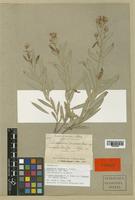
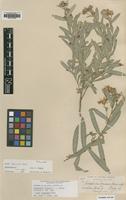
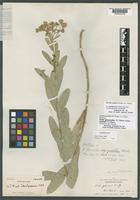
Eucephalus formosus Greene [family COMPOSITAE]
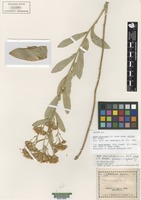
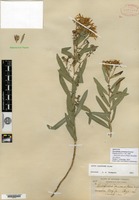
Isotype of Aster glaucodes Blake [family ASTERACEAE]
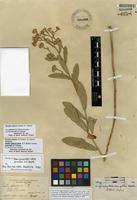
Type of Eucephalus formosus Greene [family ASTERACEAE]
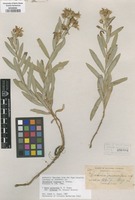
Holotype of Aster glaucodes subsp. pulcher Blake, S.F. 1922 [family ASTERACEAE]
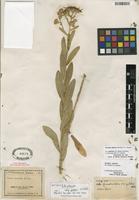
Type of Eucephalus formosus Greene [family ASTERACEAE]
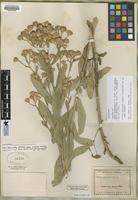
Isotype of Eucephalus formosus Greene [family ASTERACEAE]
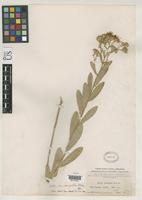
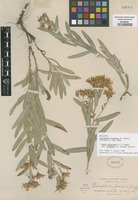
Isotype of Eurybia pulchra (S.F. Blake) G.L. Nesom [family ASTERACEAE]
Isotype of Aster glaucodes S. F. Blake ssp. pulcher S. F. Blake [family ASTERACEAE]
Isotype of Eucephalus formosus Greene [family ASTERACEAE]
Isotype of Aster glaucodes Blake ssp. pulcher Blake [family ASTERACEAE]
Previous
Next

Name

Identification
Aster glaucodes S.F.Blake [family ASTERACEAE ] (stored under name); Isotype of Eucephalus formosus Greene [family ASTERACEAE ]
Related name
  • Eucephalus formosus
  • Aster glaucodes
  • Eurybia glauca
  • Aster glaucus
  • Eurybia pulchra
Common name
  • Beautiful aster, Flora of North America Vol. 20
  • Gray’s aster, Flora of North America Vol. 20

Flora

Entry for Herrickia glauca (Nuttall) Brouillet [family COMPOSITAE]
Herbarium
Flora of North America (FNA)
Collection
Flora of North America
Resource Type
Reference Sources
Entry From
Flora of North America, Vol 20,
Names
Herrickia glauca (Nuttall) Brouillet [family COMPOSITAE], Sida, 21: 897. 2004
Eucephalus glaucus Nuttall [family ], Trans. Amer. Philos. Soc., n. s., 7: 299. 1840
Aster glaucus (Nuttall) Torrey & A. Gray [family COMPOSITAE]
Aster glaucodes S. F. Blake [family COMPOSITAE]
Eurybia glauca (Nuttall) G. L. Nesom [family ]
Treatment Author(s)
Luc Brouillet
Information
Perennials, 20–70 cm, colonial and cespitose, ± glaucous, sometimes stipitate-glandular distally; rhizomes woody, elongate and creeping, or short, erect, branched. Stems 1–7+, erect, sometimes branched proximally, straight, glabrous proximally, sometimes thinly scabridulous distally. Leaves cauline; proximal reduced, withering by flowering, firm; sessile; blades oblong or elliptic-oblong to lanceolate (sometimes narrowly), 40–120 × 5–25 mm, bases ± clasping, sometimes cuneate, main veins ± marked, margins entire, indurate, sparsely to densely scabridulous, apices acute to obtuse, mucronate (margins recurved at apex), faces glabrous. Heads 2–116+ usually in corymbiform, sometimes in open, paniculiform arrays. Peduncles glabrous to sometimes thinly scabridulous or villosulous; bracts 0–2, foliaceous, margins villose-ciliate or glabrous. Involucres campanulate, 6–9 mm. Phyllaries (15–35) in 4–5 series, keeled or rounded, ovate or oblong (outer) to lanceolate (inner), unequal, membranous, bases indurate, green zones in distal 1/5–1/3 or less (outer), reduced to midnerve or none (inner), margins erose, narrowly scarious, hyaline, sometimes purplish distally (inner), entire to villoso-ciliolate, apices ± appressed, obtuse or acute (outer), often purple and acute or acuminate (inner), sometimes apiculate, faces glabrous. Ray florets (8–)10–15(–19); corollas pale lavender, 8–18 × 0.7–1.3 mm. Disc florets 12–32; corollas yellow turning reddish purple, barely or not ampliate, 6.8–7.5 mm, tubes narrowly cylindric, shorter than funnelform throats, lobes spreading, lanceolate, 0.7–1.3 mm. Cypselae tan to stramineous, fusiform, ± compressed, 3.8–4.8 mm, ribs 7–10 (stramineous), faces glabrous or sparsely strigillose; pappi of (ca. 37) yellowish to cinnamonish bristles 6.4–7.2 mm.
Distribution
w United States.

Related Materials

  • Terms and Conditions
  • Privacy Policy
  • Cookie Policy
  • Cookie Settings
  • Accessibility
  • Help
  • Contact Us
  • Facebook
  • Twitter
ITHAKA

JSTOR is part of ITHAKA, a not-for-profit organization helping the academic community use digital technologies to preserve the scholarly record and to advance research and teaching in sustainable ways.

©2000-2026 ITHAKA. All Rights Reserved. JSTOR®, the JSTOR logo, JPASS®, Aluka®, and ITHAKA® are registered trademarks of ITHAKA.

╳