JSTOR Global Plants Home
  • Home
  • Browse
  • About
  • Access
  • Account
    • Saved Items
    • Profile
  • Log in

Global Plants

Skip to Main Content
  • JSTOR Global Plants Home
  • Global Plants

    • Browse
    • About
    • Access
    • Account
      • Saved Items
      • Profile
Log in
  • Browse
  • About
  • Access
  • Account
    • Saved Items
    • Profile
Advanced Search

Compilation
Aster eryngiifolius

8 Images see all

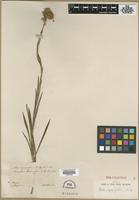
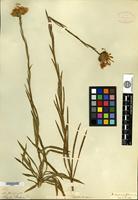
Type? of Prionopsis chapmanii Torr. & A.Gray [family ASTERACEAE]
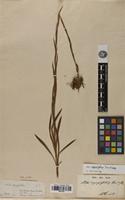
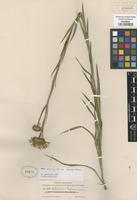
Type? of Aster eryngiifolius Torr. & A.Gray [family ASTERACEAE]
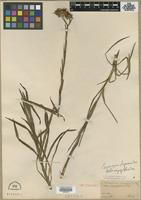
Filed as Prionopsis chapmanii (Torr. & A.Gray) Greene [family ASTERACEAE]
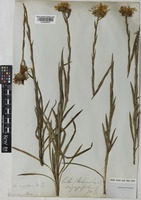
Aster eryngiifolius Torr. & A.Gray [family COMPOSITAE]
Type of Prionopsis chapmanii Torrey & A. Gray [family ASTERACEAE]
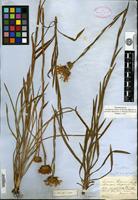
Original material of Heleastrum spinulosum (Chapm.) Greene [family ASTERACEAE]
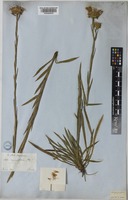
Aster eryngiifolius Torr. & A.Gray [family COMPOSITAE]
Type of Prionopsis chapmanii Torrey & A. Gray [family ASTERACEAE]
Previous
Next

Name

Identification
Aster eryngiifolius Torrey & A. Gray [family ASTERACEAE ] (stored under name); Verified by Not on Sheet, Prionopsis chapmanii Torrey & A. Gray [family ASTERACEAE ] Verified by Torrey & A. Gray,
Related name
  • Prionopsis chapmanii
  • Aster eryngiifolius
Common name
  • Thistleleaf aster, Flora of North America Vol. 20

Flora

Entry for Eurybia eryngiifolia (Torrey & A. Gray) G. L. Nesom [family ]
Herbarium
Flora of North America (FNA)
Collection
Flora of North America
Resource Type
Reference Sources
Entry From
Flora of North America, Vol 20,
Names
Eurybia eryngiifolia (Torrey & A. Gray) G. L. Nesom [family ], Phytologia, 77: 259. 1995
Aster eryngiifolius Torrey & A. Gray [family COMPOSITAE], Fl. N. Amer., 2: 502. 1843
Heleastrum chapmanii (Torrey & A. Gray) Greene [family ]
Prionopsis chapmanii Torrey & A. Gray [family COMPOSITAE]
Treatment Author(s)
Luc Brouillet
Information
Plants 30–70 cm; in scattered individuals or small clumps, eglandular; rhizomes short, stout, or strong, woody caudices (roots fleshy). Stems 1–3+, erect, coarse, villous. Leaves strongly basal and cauline, coriaceous, margins indurate, entire to remotely spinose-serrate, remotely and obscurely scabridulous, spines indurate-margined or wholly indurate, finely parallel-veined with evident midnerves, apices acute, revolute, indurate, abaxial faces glabrous; basal and proximal cauline persistent (bases ± marcescent when leaves deciduous), petioles scarcely distinct, blades linear (grasslike), 70–350 × 3–8 mm, adaxial faces glabrous; cauline sessile, blades linear to lance-linear, 15–130 × 1.5–7 mm, progressively reduced and more spinose distally, adaxial faces progressively more villous distally. Heads 1–11+, borne singly or in racemiform arrays, branches ascending to erect, stiff. Peduncles ± densely villous, sometimes sparsely stipitate-glandular distally; bracts 0–7, appressed, lanceolate, bases ± indurate, margins spinose, adaxial faces villous. Involucres campanulo-hemispheric, 9–12 mm, slightly shorter than pappi. Phyllaries 70–140 in 4–5 series, greenish, densely thick-nerved, lanceolate to linear (innermost), unequal, coriaceous, bases indurate and rounded (outer), margins entire, indurate or ± scarious, erose (inner), sometimes sparsely villoso-ciliate, ± densely stipitate-glandular, apices squarrose, green and often purplish-tinged, foliaceous, long-acuminate, adaxial faces villosulous, rarely also sparsely stipitate-glandular. Ray florets 25–60; corollas white or pinkish, coiling, 10–20 × 1–2.1 mm. Disc florets 115–260; corollas yellow, 5.5–7 mm, slightly ampliate, tubes shorter than tubular throats, lobes 0.75–1 mm, erect, lanceolate. Cypselae straw-colored, ellipsoid to obovoid, 2–3.5 mm, ribs 11–13 prominent, glabrous; pappi of (ca. 35) orangish tan (coarse, sometimes clavellate) bristles 7.8–8.2 mm, slightly longer than disc corollas.
Altitude range
0–100 m;
Distribution
USA Ala.USA Fla.USA Ga.
Discussion
Eurybia eryngiifolia is known from the Florida panhandle and adjacent areas of southern Georgia and Alabama. The species is of conservation concern in Alabama.

Related Materials

  • Terms and Conditions
  • Privacy Policy
  • Cookie Policy
  • Cookie Settings
  • Accessibility
  • Help
  • Contact Us
  • Facebook
  • Twitter
ITHAKA

JSTOR is part of ITHAKA, a not-for-profit organization helping the academic community use digital technologies to preserve the scholarly record and to advance research and teaching in sustainable ways.

©2000-2026 ITHAKA. All Rights Reserved. JSTOR®, the JSTOR logo, JPASS®, Aluka®, and ITHAKA® are registered trademarks of ITHAKA.

╳