JSTOR Global Plants Home
  • Home
  • Browse
  • About
  • Access
  • Account
    • Saved Items
    • Profile
  • Log in

Global Plants

Skip to Main Content
  • JSTOR Global Plants Home
  • Global Plants

    • Browse
    • About
    • Access
    • Account
      • Saved Items
      • Profile
Log in
  • Browse
  • About
  • Access
  • Account
    • Saved Items
    • Profile
Advanced Search

Compilation
Aster drummondii

19 Images see all

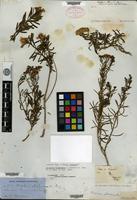
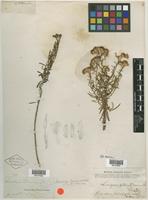
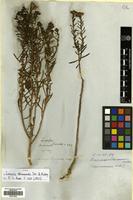
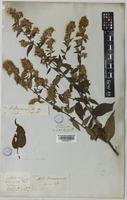
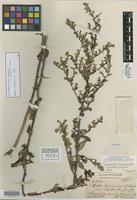
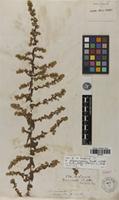
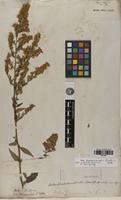
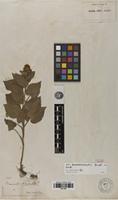
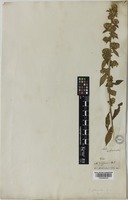
Type of Linosyris drummondii Torrey & A. Gray [family ASTERACEAE]
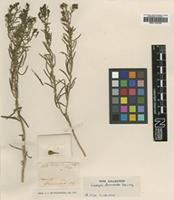
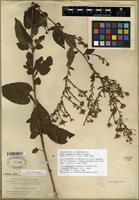
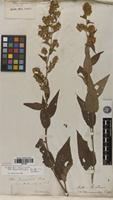
Type? of Aster drummondii Lindl. [family ASTERACEAE]
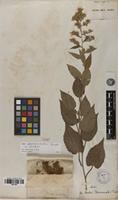
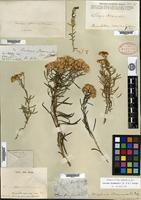
Type of Linosyris drummondii Torrey & A. Gray [family ASTERACEAE]
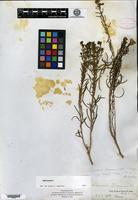
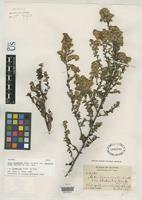
Type? of Aster drummondii Lindl. [family ASTERACEAE]
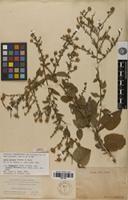
Isolectotype of Aster drummondii var. texanus (E.S. Burgess) A.G. Jones [family ASTERACEAE]
Isolectotype of Aster drummondii Lindl. ssp. texanus (E.S.Burgess) A.G.Jones [family ASTERACEAE]
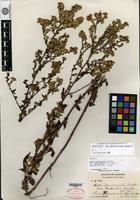
Isotype of Aster drummondii Lindley var. rhodactis Benke [family ASTERACEAE]
Syntype of Aster drummondii Lindl. [family ASTERACEAE]
Type of Linosyris drummondii Torr. & A. Gray [family ASTERACEAE]
Type of Linosyris drummondii Torr. & A.Gray [family COMPOSITAE]
Aster drummondii Lindl. [family COMPOSITAE]
Holotype of Aster drummondii Lindl. var. rhodactis Benke [family ASTERACEAE]
Type of Linosyris drummondii Torr.& A.Gray [family ASTERACEAE]
Type of Linosyris drummondii Torrey & A. Gray [family ASTERACEAE]
Isotype of Aster drummondii var. rhodactis Benke, H.C. 1929 [family ASTERACEAE]
Type? of Aster drummondii Lindl. [family ASTERACEAE]
Isolectotype of Aster drummondii Lindl. [family COMPOSITAE]
Aster lateriflorus unrecorded var. glomerullus (Torr. & A.Gray) E.S.Burgess [family COMPOSITAE]
Previous
Next

Name

Identification
Aster drummondii Lindl. [family ASTERACEAE ] (stored under name); Verified by Not on sheet,
Related name
  • Aster texanus
  • Aster drummondii
Common name
  • Drummond’s aster, Flora of North America Vol. 20
  • Texas aster, Flora of North America Vol. 20

Flora

Entry for Symphyotrichum drummondii (Lindley) G. L. Nesom [family ]
Herbarium
Flora of North America (FNA)
Collection
Flora of North America
Resource Type
Reference Sources
Entry From
Flora of North America, Vol 20,
Names
Symphyotrichum drummondii (Lindley) G. L. Nesom [family ], Phytologia, 77: 279. 1995
Aster drummondii Lindley [family COMPOSITAE], Compan. Bot. Mag., 1: 97. 1835
Aster sagittifolius Wedemeyer ex Willdenow var. drummondii (Lindley) Shinners [family COMPOSITAE]
Treatment Author(s)
Luc Brouillet
John C. Semple
Geraldine A. Allen
Kenton L. Chambers
Scott D. Sundberg†
Information
Perennials, 30–120 cm, cespitose; short-rhizomatous or with stout, often woody caudices. Stems 1–5+, erect (straight, stout), glabrate or glabrescent, sparsely pilose, or hirsuto-pilose proximally, ± densely so distally. Leaves (abaxially pale or grayish green, adaxially dark green) initially ± firm or membranous, becoming thicker, margins crenate-serrate to serrate, strigoso-ciliate to scabrous, apices acuminate to acute, mucronate, abaxial faces scabrous to densely piloso-strigose, more so on veins, adaxial scabrous to glabrate; basal withering by flowering, long-petiolate (petioles narrowly winged, sheathing, sometimes ciliate), blades ovate to ovate-oblong or -lanceolate to elliptic or suborbiculate, 10–85(–100) × 8–60 mm, bases deeply cordate to rounded or abruptly attenuate, margins crenate-serrate, apices usually rounded to obtuse, rarely acute; proximal cauline often withering by flowering, long-petiolate (petioles narrowly winged, more broadly so distally, ciliate), blades ovate or ovate-lanceolate, (25–)50–120(–150) × (15–)20–50(–65) mm, progres-sively to slightly reduced distally, bases deeply to shallowly cordate or rounded, margins crenate-serrate to sharply serrate; distal petiolate or subpetiolate or sessile, petioles broadly winged, blades ovate to ovate- or oblong-lanceolate, to oblong-elliptic or linear-lanceolate (4–)5–110 × 1–50 mm, reduced distally (sharply so on array branches in var. texanum), bases shallowly cordate or rounded to attenuate or cuneate (distally), margins crenate-serrate or -serrulate or entire. Heads in open, paniculiform arrays, branches ascending to divaricate, often densely racemiform or ± paniculiform (lateral ones open, racemiform) to subsecund, ± stiff to lax, long to relatively short, ± closely to ± remotely leafy, branch leaves progressively or ± abruptly reduced distally. Peduncles 0, or 0.2–1.5(–4) cm, densely ascending- or appressed-bracteate, pilosulous, bracts 4–17+, lanceolate or subulate to linear-oblanceolate, distally grading into phyllaries, pilosulous or strigoso-ciliate. Involucres campanulate, (3.5–)4.5–6(–6.5) mm. Phyllaries in 4–5 series, subulate or lanceolate (outermost) to narrowly oblong-lanceolate, unequal, bases indurate 1/4–3/4, margins narrowly scarious proximally, hyaline, ciliate, bodies sometimes green to margins distally, green zones lanceolate to linear-lanceolate, apices acute to acuminate or long-acuminate, tips often purple, sometimes involute, mucronulate, faces glabrous. Ray florets (8–)10–15(—20); corollas usually bright blue to purple or lavender, sometimes white, laminae (5–)7–10(–12) × 1–1.8 mm. Disc florets (10–)13–15(–22); corollas cream to yellow, becoming deep purple or reddish purple, 3.5–4.5(–5) mm, tubes shorter than funnelform to cylindric throats, lobes triangular to lanceolate, 0.4–0.7 mm. Cypselae dull purple or brown to tan (ribs tan to stramineous), obovoid, ± compressed, (1.5–)2–3 mm, 5–6-nerved, faces glabrate to sparsely strigillose distally; pappi cream to rose-tinged, 3–4 mm.
Distribution
e North Americane Mexico.
Discussion
Variety texanum is tetraploid; var. drummondii is both diploid and tetraploid. The tetraploid race of var. drummondii is most likely autopolyploid; origin of var. texanum has not been determined. The two taxa intergrade and do not appear to warrant species status.

Related Materials

  • Terms and Conditions
  • Privacy Policy
  • Cookie Policy
  • Cookie Settings
  • Accessibility
  • Help
  • Contact Us
  • Facebook
  • Twitter
ITHAKA

JSTOR is part of ITHAKA, a not-for-profit organization helping the academic community use digital technologies to preserve the scholarly record and to advance research and teaching in sustainable ways.

©2000-2026 ITHAKA. All Rights Reserved. JSTOR®, the JSTOR logo, JPASS®, Aluka®, and ITHAKA® are registered trademarks of ITHAKA.

╳