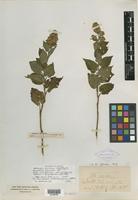
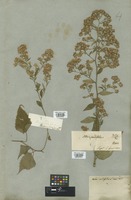
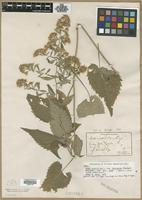
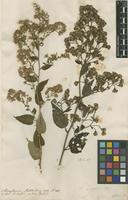
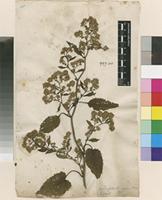
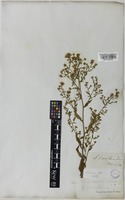
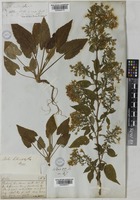
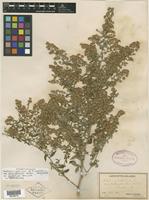
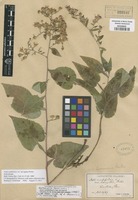
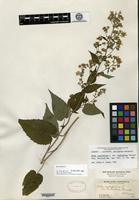
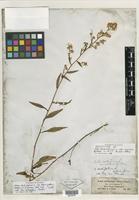
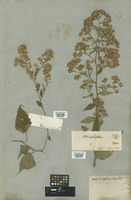
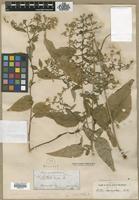
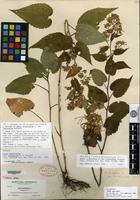
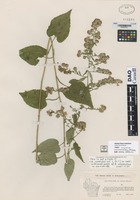
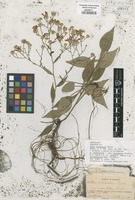
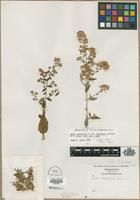
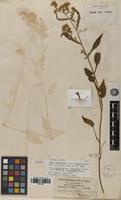
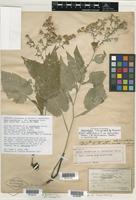
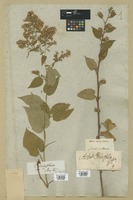
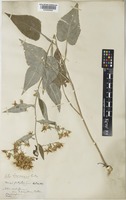
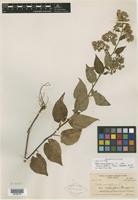
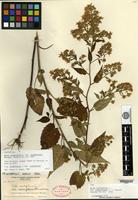
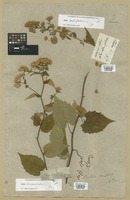
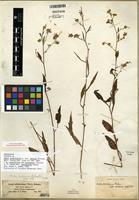
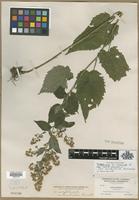
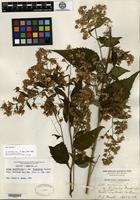
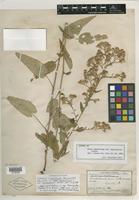
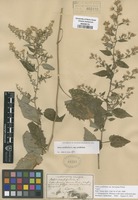
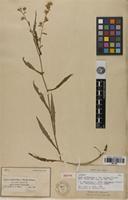
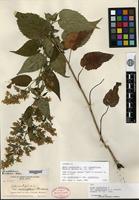
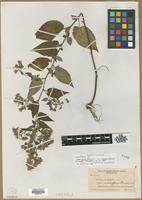
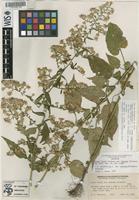
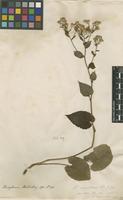
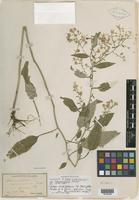
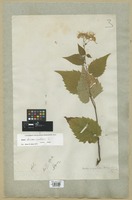
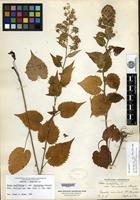
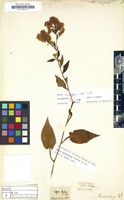
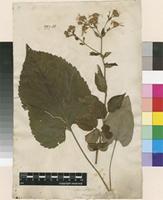
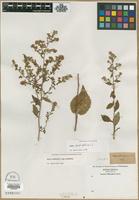
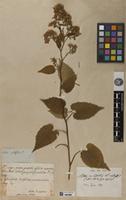
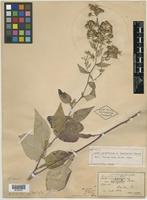
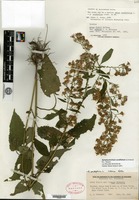
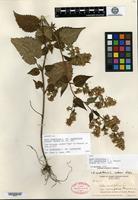
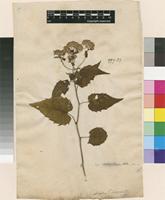
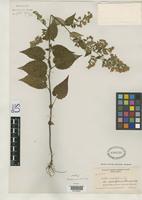
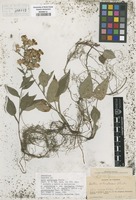
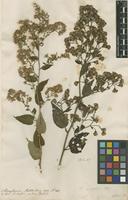
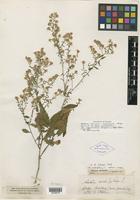
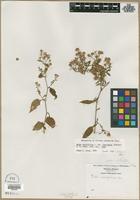
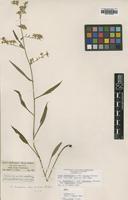
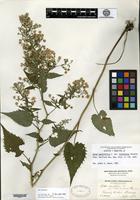
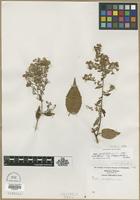
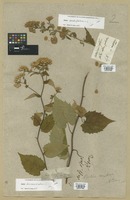
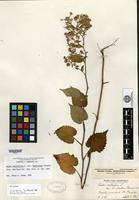
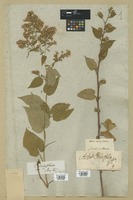
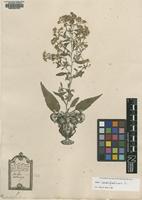
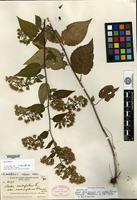
Perennials, 20–120 cm, colonial or cespitose; branched rhizomatous, or with branched caudices, becoming ± woody. Stems 1–5+, erect (straight to ± flexuous distally, often reddish, sometimes brown), usually glabrous, sometimes ± pilose, particularly distally. Leaves thin, margins serrate (often sharply, teeth acuminate, mucronulate) to serrate-crenate or subentire, strigose, apices acuminate to acute, mucronulate, abaxial faces glabrous or sparsely to densely strigose-pilose, often pilose on midveins, sometimes on other veins also, adaxial glabrous or sparsely to densely strigose, sometimes ± scabrous; basal withering by flowering, new vernal rosettes often present, long-petiolate (petioles ± narrowly winged, bases dilated, sheathing, ciliate), blades ovate to elliptic or suborbiculate, (10–)35–150 × (10–)25–75 mm, bases usually deeply cordate, sometimes rounded, margins coarsely, often irregularly serrate, apices sometimes obtuse or rounded; proximal cauline often withering by flowering, winged-petiolate (becoming shorter and more widely winged distally, petiole bases clasping), blades widely to narrowly ovate, 40–100(–140) × 20–40(–70) mm, reduced distally, bases ± deeply cordate to rounded, margins sharply serrate, apices acuminate; distal usually sessile or subsessile, rarely short-petiolate, blades ovate to lanceolate, 5–105 × 2–45 mm, bases cordate or rounded to attenuate or cuneate, margins serrate or entire (distalmost), apices acuminate. Heads [(5–)20–300+] in ± densely paniculiform arrays, branches divaricate to ascending, paniculiform, sometimes ± long-arching, leafy. Peduncles 0.3–2 cm, ± pilose, bracts linear-oblanceolate or -lanceolate to linear, foliaceous, distally grading into phyllaries, margins sparsely ciliolate, glabrous. Involucres cylindro-campanulate to cylindric, (3–)4.5–5(–6) mm. Phyllaries in (3–)4–6 series, linear-lanceolate to oblong-lanceolate, unequal, bases indurate 1/2–3/4, margins scarious, erose, hyaline, sparsely ciliolate, green zones lanceolate to ± diamond-shaped, apical, apices (often red-tipped) acute to obtuse-acuminate or acuminate, mucronulate, faces glabrous or sparsely strigillose. Ray florets (8–)10–16(–20); corollas usually blue to purple, seldom whitish or pink, laminae (5–)6–8(–10) × 1.4–1.8 mm. Disc florets (8–)10–15(–20); corollas cream-color or light yellow becoming purple, (3–)4–4.5(–5) mm, tubes slightly shorter than funnelform throats, lobes sometimes ± spreading, narrowly triangular to lanceolate, 0.6–0.9 mm. Cypselae dull purple or light brown, obovoid, ± compressed, 2–2.5 mm, 4–5-nerved, faces glabrous; pappi white or ± rose-tinged, 2.5–4.5 mm. 2n = 16, 32.