JSTOR Global Plants Home
  • Home
  • Browse
  • About
  • Access
  • Account
    • Saved Items
    • Profile
  • Log in

Global Plants

Skip to Main Content
  • JSTOR Global Plants Home
  • Global Plants

    • Browse
    • About
    • Access
    • Account
      • Saved Items
      • Profile
Log in
  • Browse
  • About
  • Access
  • Account
    • Saved Items
    • Profile
Advanced Search

Compilation
Asplenium scandicinum

14 Images see all

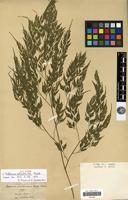
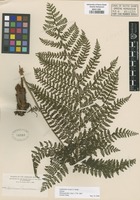
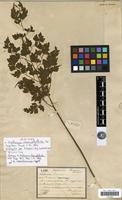
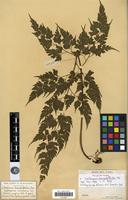
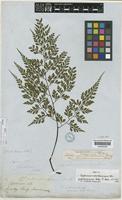
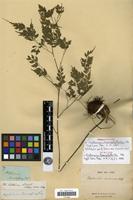
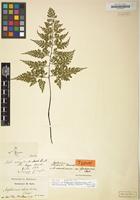
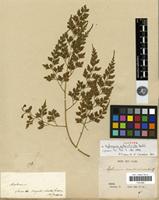
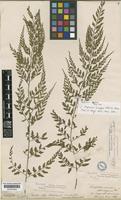
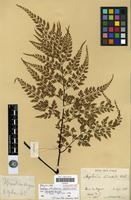
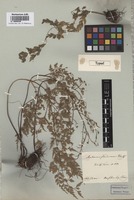
Syntype of Asplenium chaerophylloides Fée [family PTERIDOPHYTA]
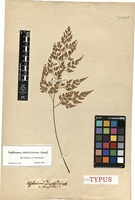
Holotype of Asplenium adiantoides Raddi [family ASPLENIACEAE]
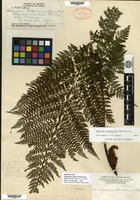
Isosyntype of Asplenium vexans Underwood [family ASPLENIACEAE]
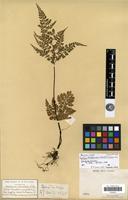
Isosyntype of Asplenium scandianum Kaulf. var. gardnerianum Gardner [family PTERIDOPHYTA]
Isotype of Asplenium vexans A. Heller [family ASPLENIACEAE]
Lectotype of Asplenium chaerophylloides Fée [family PTERIDOPHYTA]
Isolectotype of Asplenium chaerophylloides Fée [family PTERIDOPHYTA]
Asplenium wacketii Rosenst. [family ASPLENIACEAE]
Type of Asplenium scandicinum var. gardnerianum Baker in Mart. [family POLYPODIACEAE]
Syntype of Asplenium adiantoides (L.) C.Chr. [family PTERIDOPHYTA]
Asplenium auritum Sw. [family ASPLENIACEAE]
Isosyntype of Asplenium scandianum Kaulf. var. gardnerianum Gardner [family PTERIDOPHYTA]
Type of Asplenium scandicinum Kaulf. [family ASPLENIACEAE]
Syntype of Asplenium adiantoides (L.) C.Chr. [family PTERIDOPHYTA]
Previous
Next

Name

Identification
Asplenium scandicinum [family POLYPODIACEAE ] Verified by Hieronymus, G., Asplenium wacketii Rosenst. [family POLYPODIACEAE ] (stored under name); Verified by Not on sheet.,
Related name
  • Asplenium scandicinum
  • Asplenium divergens
  • Asplenium mandioccanum
  • Asplenium auritum
  • Asplenium wacketii
  • Asplenium adiantoides
  • Asplenium scandianum
  • Asplenium chaerophylloides

Flora

Entry for Athyrium scandicinum Willd. C. Presl [family ATHYRIACEAE]
Herbarium
Royal Botanic Gardens, Kew (K)
Collection
Flora Zambesiaca
Resource Type
Reference Sources
Entry From
FZ, Vol 0, Part 0, page 202, (1970) Author: E. A. C. L. E. Schelpe
Names
Athyrium scandicinum Willd. C. Presl [family ATHYRIACEAE], Tent. Pterid.: 98 (1836) reimpr. in Abh. Königl. Böhm. Ges. Wiss. Ser. 4, 5: 98 (1837). Type from Réunion.
Aspidium scandicinum Willd. [family ATHYRIACEAE], in L., Sp. Pl. ed. 4, 5: 285 (1810). Type as above.
Allantodia scandicina Willd. Kaulf. [family ATHYRIACEAE], Enum. Fil.: 179 (1824). Type as above.
Cystopteris scandicina Willd. Desv. [family ATHYRIACEAE], in Mém. Soc. Linn. Par. 6, 2: 264 (1828). Type as above.
Nephrodium scandicinum Willd. Bory [family ATHYRIACEAE], in Bélanger, Voy. Bot. 2: 63 (1833). Type as for Athyrium scandicinum.
Athyrium laxum Pappe & Raws. [family ATHYRIACEAE], Syn. Fil. Afr. Austr.: 16 (1859) non Schumach. (1803). Type from S. Africa.
Asplenium scandicinum Willd. Heller [family ATHYRIACEAE], Minn. Bot. Stud. 1: 775 (1897) non Kaulf. (1824). Type as for Athyrium scandicinum.
Asplenium laxum Pappe & Raws. Kuhn [family ATHYRIACEAE], Fil. Afr.: 105 (1868) non R. Br. (1810). Type as above.
Information
Rhizome up to 5 mm. in diam., erect, with tufted fronds and with oblong lanceolate brown entire rhizome scales up to 7 mm. long. Frond arching, softly herbaceous. Stipe pale-brown when dry, green or pink when fresh, up to 55 cm. long, nitid, glabrous, except for scattered pale-brown lanceolate acuminate scales up to 6 mm. long. Lamina up to 51 x 34 cm., narrowly ovate in outline, 3-pinnatifid to 3-pinnate, acute to acuminate-caudate at the apex, the basal pair of pinnae slightly reduced; pinnae up to 20 x 6 cm., lanceolate in outline, shortly acuminate to acuminate-caudate; pinnules developed somewhat more basiscopically than acroscopically, pinnule lobes oblong, shallowly crenate to strongly crenate-dentate, glabrous on both surfaces. Rhachis pale-brown, glabrous with narrow green wings ventrally, minutely pubescent at the junction of the pinnae ventrally. Sori up to 2 mm. long, oblong slightly curved to J-shaped. Indusia brown, subentire, glabrous.

Related Materials

  • Terms and Conditions
  • Privacy Policy
  • Cookie Policy
  • Cookie Settings
  • Accessibility
  • Help
  • Contact Us
  • Facebook
  • Twitter
ITHAKA

JSTOR is part of ITHAKA, a not-for-profit organization helping the academic community use digital technologies to preserve the scholarly record and to advance research and teaching in sustainable ways.

©2000-2026 ITHAKA. All Rights Reserved. JSTOR®, the JSTOR logo, JPASS®, Aluka®, and ITHAKA® are registered trademarks of ITHAKA.

╳