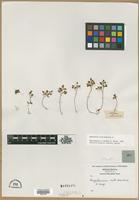
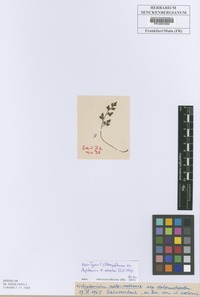
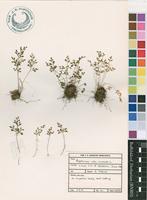
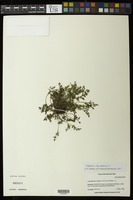
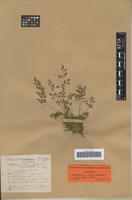
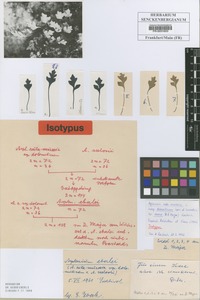
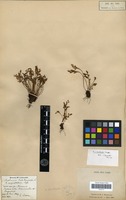
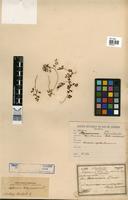
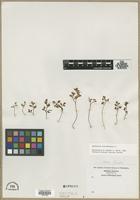
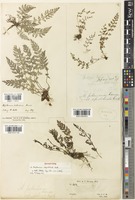
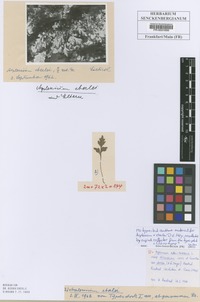
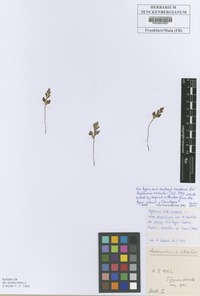
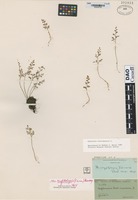
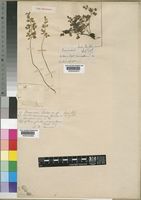
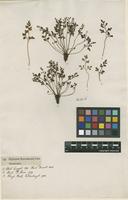
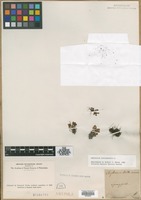
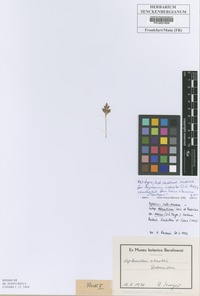
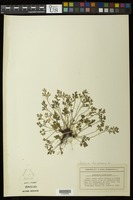
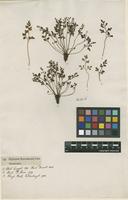
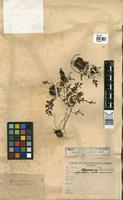
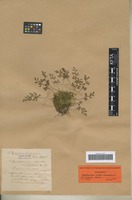
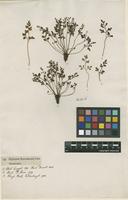
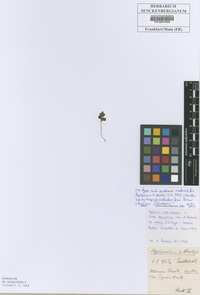
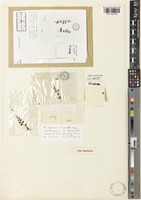
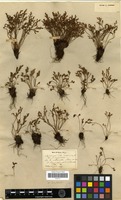
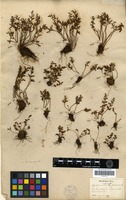
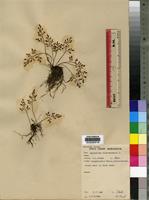
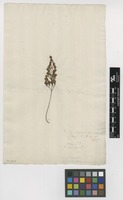
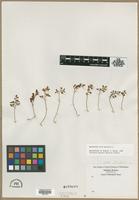
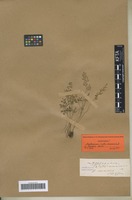
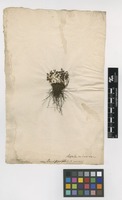
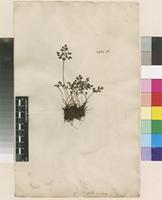
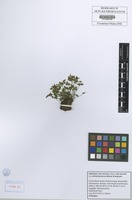
The relationship of North American Asplenium ruta-muraria to its European counterparts is incompletely understood and bears further investigation. Based on features of the stems, M. L. Fernald (1928) segregated the North American taxon as A . cryptolepis , but most current authors agree that morphologic differentiation of North American and European material is too slight and inconsistent for recognition at the specific level. In Europe, two ploidy levels are treated as subspecies, diploid A . ruta-muraria subsp. dolomiticum Lovis & Reichstein and tetraploid A . ruta-muraria subsp. ruta-muraria , the latter representing the most compelling case for true autopolyploidy (i.e., based on chromosomal homology) known in ferns (G. Vida 1970). Chromosome counts of North American plants are consistently tetraploid; whether or not these plants are referable to subsp. ruta-muraria will remain unclear until additional evidence (e.g., isozymes) is obtained. Meanwhile, North American material should be designated simply as A . ruta-muraria , the convention used in most current manuals.
Although M. L. Fernald (1928) recognized Asplenium cryptolepis var. ohionis (= A . ruta-muraria var. subtenuifolium Christ), based on its acute rather than rounded segment apices, leaves assignable to this variety may occur on plants also bearing leaves more similar to those of the type variety (R. Cranfill 1980). The former is not recognized taxonomically here.
Numerous hybrids of Asplenium ruta-muraria with various taxa are known from Europe (T. Reichstein 1981), but only three are known from North America, all exceedingly rare. These are the hybrids with A . rhizophyllum ( A . × inexpectatum ), with A . trichomanes ( A . × clermontae Syme), and with A . platyneuron ( A . × morganii ).