JSTOR Global Plants Home
  • Home
  • Browse
  • About
  • Access
  • Account
    • Saved Items
    • Profile
  • Log in

Global Plants

Skip to Main Content
  • JSTOR Global Plants Home
  • Global Plants

    • Browse
    • About
    • Access
    • Account
      • Saved Items
      • Profile
Log in
  • Browse
  • About
  • Access
  • Account
    • Saved Items
    • Profile
Advanced Search

Compilation
Asplenium preussii

12 Images see all

[family ]
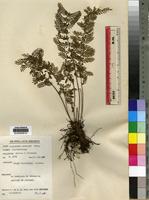
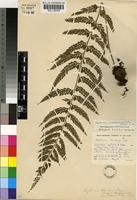
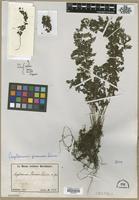
Syntype of Asplenium preussii Hieron. [family POLYPODIACEAE]
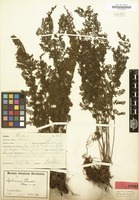
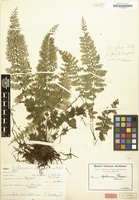
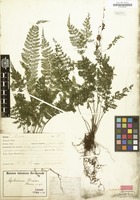
Isotype of Asplenium preussii Hieron [family ASPLENIACEAE]
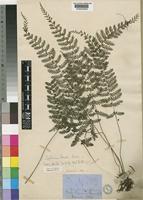
Asplenium preussii Hieron. ex Brause [family ASPLENIACEAE]
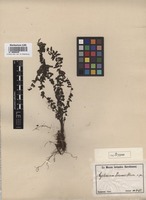
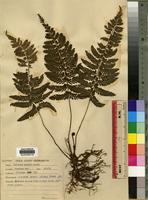
Holotype of Asplenium pseudoauriculatum Schelpe [family ASPLENIACEAE]
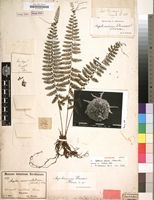
Type of Asplenium preussii Hieron. [family POLYPODIACEAE]
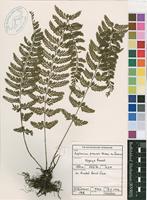
Filed as Asplenium preussii Hieron. [family ASPLENIACEAE]
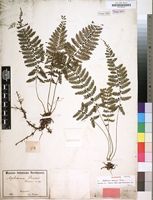
Filed as Asplenium preussii Hieron. ex Brause [family ASPLENIACEAE]
Filed as Asplenium preussii Hieron. [family ASPLENIACEAE]
Type of Asplenium preussii Hieron. [family POLYPODIACEAE]
[family ]
Filed as Asplenium preussii Hieron. [family ASPLENIACEAE]
Previous
Next

Name

Identification
Asplenium preussii Hieron. [family ASPLENIACEAE ] (stored under name); Verified by Viane, R.,
Related name
  • Asplenium pseudoauriculatum
  • Asplenium preussii
  • `

Flora

Entry for Asplenium preussii Hieron. [family ASPLENIACEAE]
Herbarium
Royal Botanic Gardens, Kew (K)
Collection
Flora of Tropical East Africa
Resource Type
Reference Sources
Entry From
Flora of Tropical East Africa, page 1, (2008) Author: Henk Beentje
Names
Asplenium preussii Hieron. [family ASPLENIACEAE], in Z.A.E. 2: 9 (1910); Alston, Ferns W.T.A.: 59 (1959); Burrows, S. Afr. Ferns: 234, map, figs. (1990); Johns, Pterid. trop. East Africa checklist: 66 (1991). Type: Cameroon, Mt Cameroon, Buea, Preuss 584 (B!, lecto.; B!, iso.), chosen by Tardieu (1964)
Asplenium pseudoauriculatum Schelpe [family ASPLENIACEAE], in Bol. Soc. Brot. ser. 2, 41: 206 (1967) & F.Z. Pteridophyta: 185 (1970); Johns, Pterid. trop. East Africa checklist: 66 (1991); Faden in U.K.W.F. ed. 2: 29 (1994). Type: Mozambique, Manica e Sofala, Garuso, Jaegersberg, Schelpe 5626 (BOL, holo.; BM!, iso.)
Information
Terrestrial, epiphyte or lithophyte; rhizome erect, 5–10 mm diameter, with dark brown subulate subentire concolorous rhizome scales 3–7x2 mm, hair-tipped. Frond tufted, arching, thinly coriaceous, to 60 cm long, proliferous at the base of the deeply pinnatifid lanceolate apical segment. Stipe green when fresh, greyish-green when dried, 8–20 cm long, with sparse dark brown lanceolate clathrate scales up to 2 mm long. Lamina 22–43x4.5–13 cm, 2-pinnatisect, oblong lanceolate in outline, acuminate, basal pinnae hardly reduced; pinnae variable, from shallowly incised to pinnatifid almost to costa, up to 8.5x2 cm, petiolate, lanceolate-attenuate, unequally cuneate at the base, deeply pinnatifid into linear or very narrowly oblong-acute or oblanceolate 2-fid lobes up to 8 mm long, basal acroscopic lobe broadly cuneate, shallowly incised in the upper 1/2 into 4–7 acute short lobes, glabrous except for a few substellate dark brown minute scales on the lower surface. Rachis matt-greyish-green with minute substellate to very narrowly lanceolate dark brown scales. Sori set along the veins, one per lobe, linear, 2–7 mm long, slightly curved; indusium very narrowly oblong, membranous, entire.
Range
DISTR. U 2; K 5; T 6 sporadic throughout tropical Africa, to South Africa
Altitude range
1400–2350 m
Distribution
KENYA Kakamega District Kakamega Forest, 5 km SE of Forest Station, Nov. 1969, Faden et al. 69/2018!TANZANIA Morogoro District S Uluguru Mts, slopes above Simbini, Mar. 1971, Pócs et al. 6418R!UGANDA Ruwenzori, Namwamba Valley, 5 Jan. 1935, G. Taylor 2866!
Notes
CONSERVATION Widespread; least concern (LC). A variable species. I agree with Burrows that the finely divided extreme form resembles A. dregeanum. A. bugoiense is also close, differing mainly in the dissection details; there are intermediates such as Faden 69/2117. When specimens lack gemmae, they will key to the A. rutifolium/loxoscaphoides group.

Related Materials

  • Terms and Conditions
  • Privacy Policy
  • Cookie Policy
  • Cookie Settings
  • Accessibility
  • Help
  • Contact Us
  • Facebook
  • Twitter
ITHAKA

JSTOR is part of ITHAKA, a not-for-profit organization helping the academic community use digital technologies to preserve the scholarly record and to advance research and teaching in sustainable ways.

©2000-2026 ITHAKA. All Rights Reserved. JSTOR®, the JSTOR logo, JPASS®, Aluka®, and ITHAKA® are registered trademarks of ITHAKA.

╳