JSTOR Global Plants Home
  • Home
  • Browse
  • About
  • Access
  • Account
    • Saved Items
    • Profile
  • Log in

Global Plants

Skip to Main Content
  • JSTOR Global Plants Home
  • Global Plants

    • Browse
    • About
    • Access
    • Account
      • Saved Items
      • Profile
Log in
  • Browse
  • About
  • Access
  • Account
    • Saved Items
    • Profile
Advanced Search

Compilation
Asplenium linckii

15 Images see all

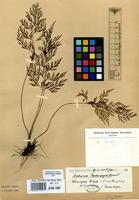
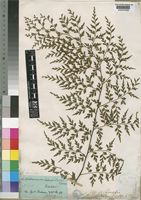
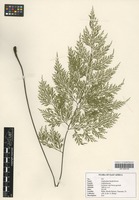
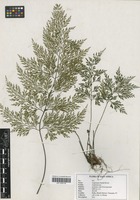
Type of Asplenium daubenbergeri Rosenst. [family ASPLENIACEAE]
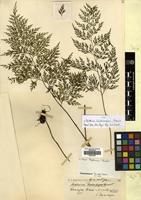
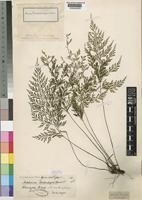
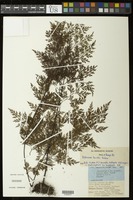
Filed as Asplenium linckii Kuhn [family ASPLENIACEAE]
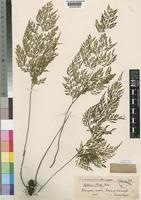
Type of Asplenium daubenbergeri Rosenst. [family ASPLENIACEAE]
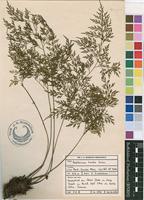
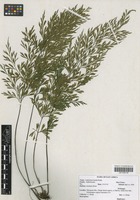
Asplenium aethiopicum (Burm. f.) Bech. subsp. tripinnatum (Baker) A.F. Braithw. [family ASPLENIACEAE]
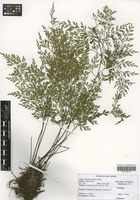
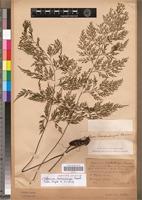
Asplenium linckii Kuhn [family ASPLENIACEAE]
Filed as Asplenium linckii Kuhn [family ASPLENIACEAE]
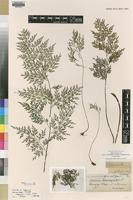
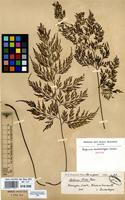
Isotype of Asplenium daubenbergii Rosenst. [family ASPLENIACEAE]
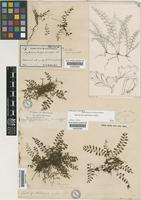
Asplenium quitense Hook. [family ASPLENIACEAE]
Type? of Asplenium daubenbergii Rosenst. [family PTERIDOPHYTA]
Filed as Asplenium linckii Kuhn [family ASPLENIACEAE]
Isotype of Asplenium daubenbergeri Rosenst. [family ASPLENIACEAE]
Asplenium linckii Kuhn [family ASPLENIACEAE]
Previous
Next

Name

Identification
Asplenium linckii Kuhn [family ASPLENIACEAE ] (stored under name); Verified by Roux,J.P., Isotype of Asplenium daubenbergii Rosenst. [family ASPLENIACEAE ]
Related name
  • Asplenium quitense
  • Asplenium daubenbergii
  • Asplenium furcatum
  • Asplenium laserpitiifolium
  • Asplenium aethiopicum
  • Asplenium daubenbergeri
  • Asplenium linckii

Flora

Entry for Asplenium linckii Kuhn [family ASPLENIACEAE]
Herbarium
Royal Botanic Gardens, Kew (K)
Collection
Flora of Tropical East Africa
Resource Type
Reference Sources
Entry From
Flora of Tropical East Africa, page 1, (2008) Author: Henk Beentje
Names
Asplenium linckii Kuhn [family ASPLENIACEAE], Fil. Deck.: 22 (1867) & Fil. Afr.: 22 (1868); Schelpe, F.Z. Pteridophyta: 183 (1970); Burrows, S. Afr. Ferns: 251, map, figs. (1990); Johns, Pterid. trop. East Africa checklist: 65 (1991); Faden in U.K.W.F. ed. 2: 29 (1994). Type: Tanzania, Kilimanjaro, [Dschagga], Kersten in von der Decken 40 (B!, holo.)
Asplenium daubenbergeri Rosenst. [family ASPLENIACEAE], in F.R. 4: 2 (1907). Type: Tanzania, Kilimanjaro, Kibosho, Daubenberger 43 (B!, holo., BM!, K!, iso.)
Asplenium albersii Hieron. var. eickii [family ASPLENIACEAE], in E.J. 46: 381 (1912). Type: Tanzania, Usambara, Kwai, Eick 119 (B!, holo.)
Asplenium decompositum Peter [family ASPLENIACEAE], in F.D.O. A.: 79 (1929) & Descr: 7, t. 2.5–2.6 (1929); Johns, Pterid. trop. East Africa checklist: 62, 63 (1991). Type: Tanzania, Kilimanjaro, above Moshi, Peter 1305, 1341 (both B!, syn.), syn. nov. Note: in B someone has written ‘lectotype’ on Peter 1305, but without leaving their name
Asplenium albersii var. kirkii [family ASPLENIACEAE], of Johns, Pterid. trop. East Africa checklist: 61 (1991) – misreading of eickii
Information
Terrestrial, low epiphyte, or lithophyte; rhizome shortly creeping to suberect, up to 5 mm diameter, with shining dark brown clathrate narrowly triangular entire rhizome scales up to 6x0.3–1 mm, attenuate and ending in a hair-tip. Frond shortly spaced or tufted, arching, firmly herbaceous, generally 30–50 cm long, not proliferous. Stipe matt brown to black, 9–40 cm long, with appressed scales similar to those of the rhizome near the base, subglabrous above. Lamina dark green on upper surface, ovate-triangular in outline, (8–)20–33(–60)x(4–)10–27 cm, 3–4-pinnate to 5-pinnatifid, finely dissected, basal pinnae the largest, apex decrescent. Pinnae in 15–20 pairs, broadly ovate or triangular in outline, up to 17x10 cm, ultimate segments wedge-shaped or narrowly obcuneate, up to 8–10x2–4 mm, apex doubly serrate-truncate with teeth to 2 mm long, glabrous on both surfaces or with a few minute scales beneath. Rachis and secondary rachises dark brown, with sparse pale brown ovate-acuminate clathrate scales 1–2 mm long. Sori 1–3 per ultimate segment, 1.5–6 mm long; indusium linear, membranous, entire, 0.3–0.4 mm wide. Fig. 8: 1–3, p. 47.
Range
DISTR. U 2; K 3, 4, 7; T 2, 3, 6, 7
Altitude range
(1600–)1700–2300(–2700) m
Distribution
KENYA Kiambu District Kieni Forest 8 km E of Kieni, June 1986, Beentje & Mungai 2928!KENYA Embu District Castle Forest Station, Dec. 1972, Gillett & Holttum 20095!KENYA Teita District Taita Hills, Ngangao, May 1985, NMK Taita Hills Expedition 270!TANZANIA Kilimanjaro: above Kilimanjaro Timbers, June 1993, Grimshaw 93/149!TANZANIA Morogoro District Nguru Mts, above Maskati, Mar. 1988, Bidgood et al. 510!TANZANIA Iringa District Udzungwa Mountain National Park, Mt Luhombero, Sep. 2000, Luke et al. 6821!UGANDA Toro District Ruwenzori, Mobuku Valley, Loveridge 274!UGANDA Kigezi District Bwindi Impenetrable Forest, Sep. 1961, Rose 10315! & Oct. 1961, Lind 3191!
Distribution (external)
Congo-Kinshasa
Rwanda
Burundi
Malawi
Zimbabwe
Notes
CONSERVATION Widespread; least concern (LC). The name has been spelled as linkii in some of the literature, but the protologue uses linckii with a ‘c’. Linck was a collector on the von der Decken expedition. There is a link with A. albersii, a 3-pinnatisect taxon. A. albersii var. eickii has very narrow rhizome scales, about 0.3 mm wide, but without the paler margin such as albersii is supposed to have; the lamina is 4-pinnatisect, and the sori 1.5–3 mm long. The protologue already stated “this variety resembles in habitat more A. linkii [sic] Kuhn, as the lamina shape is ovate; but rhizome scales are typically A. albersii.” With this last statement I disagree. Several specimens from U 2 that are 3-pinnatifid or 3-pinnatisect to 3-pinnate could be intermediate, but as they lack basal parts it is impossible to be quite certain: Thomas 2039 from Butale, Esterhuysen 25313 from Bujuku Valley, Thomas 1431 from Bwamba Pass, Thomas 2424 from Mt Mgahinga, Rwaburindore 2894. These specimens are from slightly higher altitudes, 2300–2600 m. Burrows states this resembles a finely-divided form of A. aethiopium or A. uhligii. I agree; Holst 3865 only has the lowermost 2nd-order pinnules divided, and so is only just 4-pinnatisect. Chaerle, in his unpublished Ph.D. thesis, keeps A. decompositum separate, distinct in its lamina dissection and thinner rhizome, as well as lamina shape.

Related Materials

  • Terms and Conditions
  • Privacy Policy
  • Cookie Policy
  • Cookie Settings
  • Accessibility
  • Help
  • Contact Us
  • Facebook
  • Twitter
ITHAKA

JSTOR is part of ITHAKA, a not-for-profit organization helping the academic community use digital technologies to preserve the scholarly record and to advance research and teaching in sustainable ways.

©2000-2026 ITHAKA. All Rights Reserved. JSTOR®, the JSTOR logo, JPASS®, Aluka®, and ITHAKA® are registered trademarks of ITHAKA.

╳