JSTOR Global Plants Home
  • Home
  • Browse
  • About
  • Access
  • Account
    • Saved Items
    • Profile
  • Log in

Global Plants

Skip to Main Content
  • JSTOR Global Plants Home
  • Global Plants

    • Browse
    • About
    • Access
    • Account
      • Saved Items
      • Profile
Log in
  • Browse
  • About
  • Access
  • Account
    • Saved Items
    • Profile
Advanced Search

Compilation
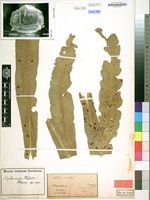
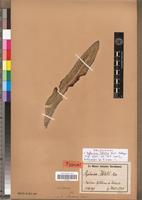
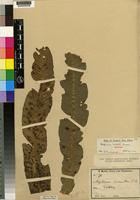
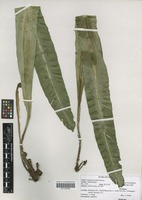
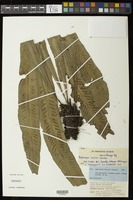
Asplenium holstii

9 Images see all

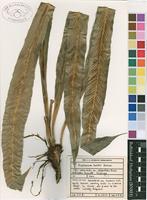
Filed as Asplenium holstii Hieron. [family ASPLENIACEAE]
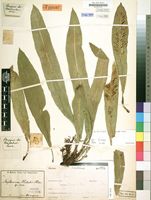
Isolectotype of Asplenium holstii Hier. [family PTERIDOPHYTA]
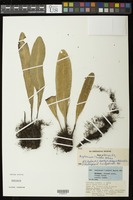
Syntype of Asplenium holstii Hieron. [family ASPLENIACEAE]
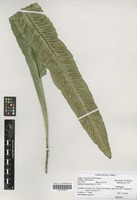
Filed as Asplenium holstii Hieron. [family ASPLENIACEAE]
Asplenium holstii Hieron. [family ASPLENIACEAE]
Filed as Asplenium holstii Hieron. [family ASPLENIACEAE]
Asplenium holstii Hieron. [family ASPLENIACEAE]
Previous
Next

Name

Identification
Asplenium holstii Hieron. [family ASPLENIACEAE ] (stored under name); Verified by Not on sheet.,
Related name
  • Asplenium holstii
  • Asplenium africanum

Flora

Entry for Asplenium holstii Hieron. [family ASPLENIACEAE]
Herbarium
Royal Botanic Gardens, Kew (K)
Collection
Flora of Tropical East Africa
Resource Type
Reference Sources
Entry From
Flora of Tropical East Africa, page 1, (2008) Author: Henk Beentje
Names
Asplenium holstii Hieron. [family ASPLENIACEAE], in E.J. 46: 348, t. 53/h (1911); Schelpe, F.Z. Pteridophyta: 170, t. 53h (1970); Johns, Pterid. trop. East Africa checklist: 63 (1991). Type: Tanzania, Usambara, Bumbu-Fustii near Masheua, Holst 8726 (B!, syn. – or lecto., chosen by R.Viane – on detslip at B, dated Sept. 1985); Shagaia near Mbaramu, Holst 3701 (B!, syn.)
Asplenium africanum (Hieron.) Tardieu var. holstii [family ASPLENIACEAE], in Mém. Inst. Fr. Afr. Noire, 28: 172 (1953)
Information
Epiphyte, lithophyte or rarely terrestrial; rhizome erect or shortly ascending, 5–20 mm diameter and 7 cm long, with narrowly triangular clathrate (dark cell walls, translucent lumen) rhizome scales up to 13x2.7 mm, wider and almost ovate at base, margin irregularly and sparsely hair-lobed, apex very acuminate and ending in a hair. Fronds tufted, rarely shortly spaced, erect or pendulous. Stipe pale matt grey-brown, gradually attenuate from lamina but sometimes up to 20 cm long and to 4 mm diameter, at the very base with scales similar to rhizome, elsewhere at first clothed with scales similar to those of rhizome but smaller, to 6x0.5 mm, soon becoming subglabrous. Lamina dark glossy green above, paler beneath, fleshy, elliptic to linear-oblong, 30–100x(2–)2.5–7 cm, simple, base attenuate, margin obscurely undulate or subentire to undulate-crenulate near apex, apex acute to acuminate or occasionally rounded or caudate, glabrous or occasionally with fimbriate-ciliate scales to 4x0.25 mm with hair-like apex; costa ± flat; lateral veins visible, furcate, not reaching margin. Sori along the veins, usually extending from near the costa to 1/2 –3/4 of the distance to the margin, linear, 5–33 mm long; indusium membranous, entire, 0.5–1.4 mm wide. Fig. 1: 3–5, p. 9.
Range
DISTR. K 6, 7; T 2, 3, 6, 7
Altitude range
400–1950 m
Distribution
KENYA Teita District Taita Hills, Mbololo, Ndaru ridge, July 1969, Faden et al. 69/834! & Mbololo, May 1985, Taita Hills Expedition 418!KENYA Teita District Kasigau, Rukanga route, Nov. 1994, Luke & Luke 4145!TANZANIA Lushoto District Baga Forest Reserve, May 1987, Kisena 535!TANZANIA Morogoro District Nguru Mts, Kwegoba Mt, June 1978, Thulin & Mhoro 3095!TANZANIA Iringa District Udzungwa Mountain National Park, Sonjo–Mwanihana route, Nov. 1997, Luke & Luke 5020!
Distribution (external)
Malawi
Mozambique
Zimbabwe
Notes
CONSERVATION Widespread; least concern (LC). Near A. africanum Desv.; only differs in rhizome scales which are slightly wider, with a margin that has protuberances; and geographically. Bob Johns has made a special study of this group and feels that there are some twelve taxa, distinguishable by spore characters.

Related Materials

  • Terms and Conditions
  • Privacy Policy
  • Cookie Policy
  • Cookie Settings
  • Accessibility
  • Help
  • Contact Us
  • Facebook
  • Twitter
ITHAKA

JSTOR is part of ITHAKA, a not-for-profit organization helping the academic community use digital technologies to preserve the scholarly record and to advance research and teaching in sustainable ways.

©2000-2026 ITHAKA. All Rights Reserved. JSTOR®, the JSTOR logo, JPASS®, Aluka®, and ITHAKA® are registered trademarks of ITHAKA.

╳