JSTOR Global Plants Home
  • Home
  • Browse
  • About
  • Access
  • Account
    • Saved Items
    • Profile
  • Log in

Global Plants

Skip to Main Content
  • JSTOR Global Plants Home
  • Global Plants

    • Browse
    • About
    • Access
    • Account
      • Saved Items
      • Profile
Log in
  • Browse
  • About
  • Access
  • Account
    • Saved Items
    • Profile
Advanced Search

Compilation
Asplenium gracile

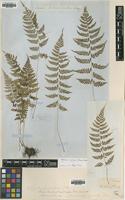
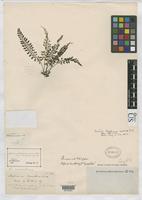
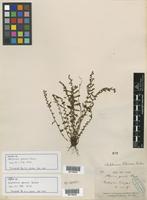
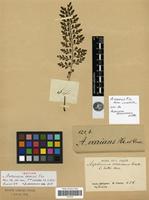
17 Images see all

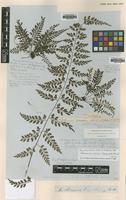
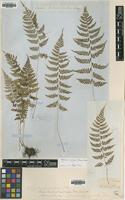
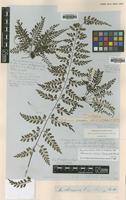
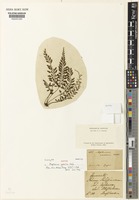
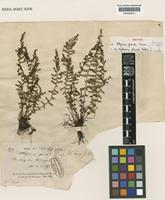
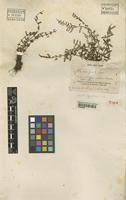
Type of Asplenium gracile Fée [family ASPLENIACEAE]
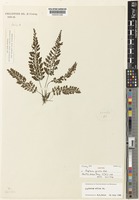
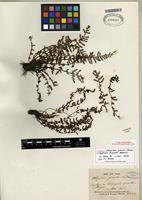
Type of Asplenium gracile D.Don [family ASPLENIACEAE]
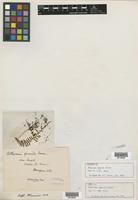
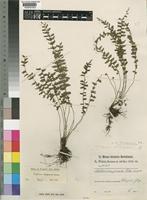
Type of Asplenium gracile Fée [family ASPLENIACEAE]
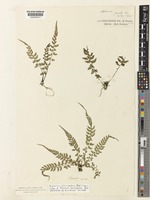
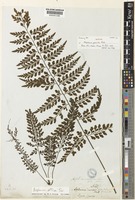
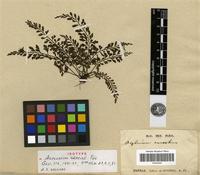
Isotype of Asplenium gracile Fée [family ASPLENIACEAE]
Type? of Asplenium gracile D.Don [family ASPLENIACEAE]
Filed as Asplenium gracile Fee, A.L.A. 1852 [family ASPLENIACEAE]
Isotype of Asplenium gracile Fée [family ASPLENIACEAE]
Holotype of Asplenium gracile E. Fourn. [family PTERIDOPHYTE]
Isotype of Asplenium brachypodum Baker [family ASPLENIACEAE]
Isotype of Asplenium gracile E. Fourn. [family PTERIDOPHYTE]
Isotype of Asplenium gracile Fée [family PTERIDOPHYTA]
Asplenium exiguum Bedd. [family ASPLENIACEAE]
Type of Asplenium glenniei Baker [family ASPLENIACEAE]
Isotype of Asplenium exiguum Bedd. [family ASPLENIACEAE]
Asplenium dregeanum Kunze [family ASPLENIACEAE]
Isotype of Asplenium gracile Fée [family ASPLENIACEAE]
Isotype of Asplenium gracile Fée [family PTERIDOPHYTA]
Previous
Next

Name

Identification
Asplenium gracile D.Don [family ASPLENIACEAE ] Athyrium nigripes (Blume) T.Moore [family WOODSIACEAE ] Verified by Xian-Chun Zhang, Athyrium setiferum C.Chr. [family WOODSIACEAE ] (stored under name);
Related name
  • Asplenium affine
  • Asplenium dregeanum
  • Asplenium baileyanum
  • Asplenium sandersonii
  • Asplenium varians
  • Asplenium gracile
  • Athyrium setiferum
  • Athyrium nigripes

Flora

Entry for Asplenium dregeanum Kunze [family ASPLENIACEAE]
Herbarium
Royal Botanic Gardens, Kew (K)
Collection
Flora of Tropical East Africa
Resource Type
Reference Sources
Entry From
Flora of Tropical East Africa, page 1, (2008) Author: Henk Beentje
Names
Asplenium dregeanum Kunze [family ASPLENIACEAE], in Linnaea, 10: 517 (1836); Alston, Ferns W.T.A.: 59 (1959); Schelpe, F.Z. Pteridophyta: 184 (1970); Pic. Serm. in B.J.B.B. 55: 130 (1985); Burrows, S. Afr. Ferns: 236, map, figs. (1990); Johns, Pterid. trop. East Africa checklist: 63 (1991); Faden in U.K.W.F. ed. 2: 29 (1994). Type: South Africa, Transkei, between Umzimvubu [Omsamwubo] and Umsikaba [Omsamcaba] Rs., Drège 158 (LZ†, holo.; BM, lecto. – not found, HBG, iso., photo.!)
Asplenium brachypterum Houlston & Moore [family ASPLENIACEAE], in Gard. Mag. Bot. 3: 260 (1851). Type: Sierra Leone, no details (often cited as brachypteron)
Asplenium gracile Peter [family ASPLENIACEAE], F.D.O.-A.: 73 (1929) & Descr.: 5, t. 5.2 (1929); Johns, Pterid. trop. East Africa checklist: 63 (1991), non D.Don (1825). Type: Tanzania, without locality, Peter 41361 (B, holo., not found)
Asplenium dregeanum (Houlst. & T.Moore) Pic.Serm. subsp. brachypterum [family ASPLENIACEAE], in B.J.B.B. 55: 130 (1985)
Information
Epiphyte, lithophyte or terrestrial; rhizome erect, to 5 mm diameter, with brown lanceolate to narrowly ovate dark brown clathrate rhizome scales to 3 (?–5) mm long with pale entire margin. Frond tufted, erect to arching, herbaceous, proliferous below the apex. Stipe greyish-brown, 4–17 cm long, with narrow green wings when fresh, usually less than half the length of the lamina, with occasional clathrate scales similar to those of the rhizome becoming more frequent towards the base. Lamina very narrowly oblong to narrowly oblong-elliptic in outline, 10–39x2.5–6 cm, 2-pinnatisect to 3-pinnatifid on basal acroscopic lobes, lowest pinnae hardly reduced, apical segment deeply pinnatifid with 3–5 lobes. Pinnae 13–32 pairs, petiolate, rhombic-oblong or narrowly oblong in outline, up to 3.5x1.1 cm, variously acute-auriculate with the acroscopic basal lobe 2–4-fid, base dimidiate with basiscopic margin formed by midrib for 1/3 of pinna, most of the other segments very narrowly oblong-obtuse (some larger segments 2-fid) up to 6x1.5 mm, subglabrous with a few minute substellate scales on the veins. Rachis matt-greyish-green when dry, with occasional pale brown minute substellate scales. Sori one central per pinna lobe, broadly elliptic at maturity, 2–3 mm long; indusium elliptic, membranous, entire, to 1 mm wide. Fig. 7: 8, p. 42.
Range
DISTR. U 1, 2, 4; K 4, 5, 7; T 1, 3, 4, 6–8 tropical Africa from Sierra Leone to East Africa and south to South Africa; Madagascar, Comoro Is.
Altitude range
850–1900(–2100) m
Distribution
KENYA Meru District Nyambeni [Jombeni] Hills, Aug. 1949, H.D. van Someren 585!KENYA North Kavirondo District along Isiukhu R. on Kambiri–Vihiga road, Dec. 1969, Faden & Rathbun 69/2103!KENYA Teita District Kasigau, Apr. 1969, Faden et al. 69/468! & idem, June 1998, Luke & Luke 5352!TANZANIA Bukoba District Minziro forest, Sep. 1952, Procter 112!TANZANIA Morogoro District North Uluguru Forest Reserve, Palu, Dec. 1993, Kisena 991!TANZANIA Rungwe District Livingstone Mts, SE of Bumbigi, Mar. 1991, Gereau & Kayombo 4170!UGANDA Ankole District Kasyoke-Kitomi forest, Nzozi, June 1998, Hafashimana 642!UGANDA Kigezi District Bwindi Impenetrable National Park, Aug. 1998, Hafashimana 699!UGANDA Mengo District 1.5 km NE of Nansagazi, Sep. 1969, Lye et al. 3887!
Notes
CONSERVATION Widespread; least concern (LC). Four collections from Kenya, but not uncommon in Uganda and Tanzania.. While the type of A. gracile does not seem to be present in the Berlin herbarium, another specimen from the Uluguru Mts, Mlari stream, Peter 32241! has been seen; this was cited by Peter with the nomen nudum. De Boer et al. 784 from T 7, Sanje Falls, has the pinnae longer and more regular than usual.

Related Materials

  • Terms and Conditions
  • Privacy Policy
  • Cookie Policy
  • Cookie Settings
  • Accessibility
  • Help
  • Contact Us
  • Facebook
  • Twitter
ITHAKA

JSTOR is part of ITHAKA, a not-for-profit organization helping the academic community use digital technologies to preserve the scholarly record and to advance research and teaching in sustainable ways.

©2000-2026 ITHAKA. All Rights Reserved. JSTOR®, the JSTOR logo, JPASS®, Aluka®, and ITHAKA® are registered trademarks of ITHAKA.

╳