JSTOR Global Plants Home
  • Home
  • Browse
  • About
  • Access
  • Account
    • Saved Items
    • Profile
  • Log in

Global Plants

Skip to Main Content
  • JSTOR Global Plants Home
  • Global Plants

    • Browse
    • About
    • Access
    • Account
      • Saved Items
      • Profile
Log in
  • Browse
  • About
  • Access
  • Account
    • Saved Items
    • Profile
Advanced Search

Compilation
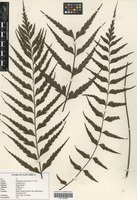
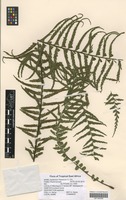
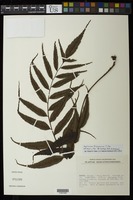
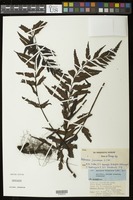
Asplenium friesiorum

22 Images see all

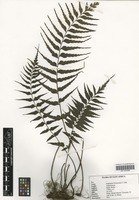
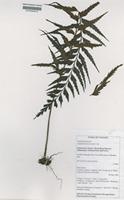
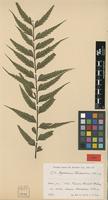
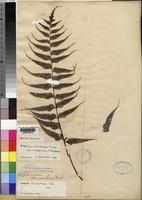
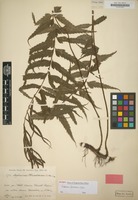
Asplenium friesiorum C. Chr. [family ASPLENIACEAE]
Filed as Asplenium friesiorum C.Chr. [family ASPLENIACEAE]
Filed as Asplenium friesiorum C. Chr. [family ASPLENIACEAE]
Asplenium friesiorum
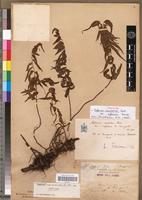
Isotype of Asplenium caudatum Forst. var. reflexum Bonap. [family PTERIDOPHYTA]
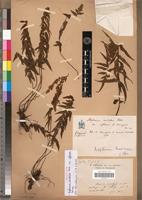
Holotype of Asplenium caudatum Forst. var. reflexum Bonap. [family PTERIDOPHYTA]
[family ]
Filed as Asplenium friesiorum C. Chr. [family ASPLENIACEAE]
Asplenium friesiorum C. Chr. [family ASPLENIACEAE]
Type of Asplenium friesiorum C. Chr. [family ASPLENIACEAE]
Asplenium friesiorum C. Chr. [family ASPLENIACEAE]
Filed as Asplenium friesiorum C. Chr. [family ASPLENIACEAE]
Asplenium friesiorum C. Chr. [family ASPLENIACEAE]
[family ]
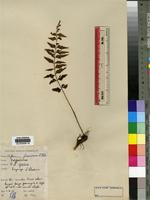
Isotype of Asplenium friesiorum C.Chr. [family ASPLENIACEAE]
Holotype of Asplenium friesiorum C.Chr. [family POLYPODIACEAE]
Holotype of Asplenium friesiorum C.Chr. var. nesophilum Ballard [family ASPLENIACEAE]
Holotype of Asplenium friesiorum C.Chr. [family ASPLENIACEAE]
Holotype of Asplenium friesiorum C. Chr. [family ASPLENIACEAE]
Asplenium friesiorum C. Chr. [family ASPLENIACEAE]
Previous
Next

Name

Identification
Asplenium friesiorum C.Chr. [family PTERIDOPHYTA ]
Related name
  • Asplenium friesiorum

Flora

Entry for Asplenium friesiorum C.Chr. [family ASPLENIACEAE]
Herbarium
Royal Botanic Gardens, Kew (K)
Collection
Flora of Tropical East Africa
Resource Type
Reference Sources
Entry From
Flora of Tropical East Africa, page 1, (2008) Author: Henk Beentje
Names
Asplenium friesiorum C.Chr. [family ASPLENIACEAE], in N.B.G.B. 9: 181 (1924); Alston, Ferns W.T.A.: 57 (1959); Schelpe, F.Z. Pteridophyta: 178 (1970); Burrows, S. Afr. Ferns: 232, map, figs. (1990); Johns, Pterid. trop. East Africa checklist: 63 (1991); Faden in U.K.W.F. ed. 2: 28, t. 172 (1994). Type: Kenya, West Mt Kenya Forest Station, Fries & Fries 573 (B!, holo., BM, K!, S, UPS, iso.)
Asplenium serra Baker var. natalensis [family ASPLENIACEAE], Syn. Fil., ed. 2: 485 (1883). Type: South Africa, Natal, Buchanan s.n. (K!, holo.)
Asplenium monilisorum Domin [family ASPLENIACEAE], in Preslia, 8: 7 (1929). Type: several syntypes including Kenya, “Karuris, E Kinobep”, Feb. 1905, Imp. For. Herb. s.n. (K!, syn.); Tanzania, Kilimanjaro, Volkens 1272 (ubi?, syn., not found in B)
Asplenium pseudoserra Domin [family ASPLENIACEAE], in Preslia, 8: 6 (1929). Type: Tanzania, mainland W of Zanzibar, probably Nguru Mts, comm. Mar. 1885, Last s.n. (K!, iso.)
Tarachia friesiorum (C. Chr.) Momose [family ASPLENIACEAE], in Journ. Jap. Bot. 35: 321, fig. 33–34 (1960)
Information
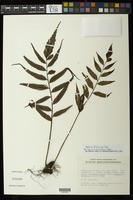
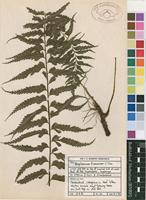
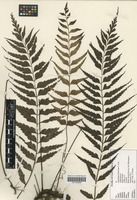
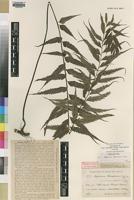
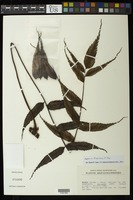
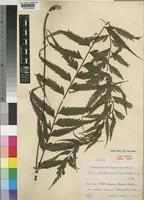
Low-epiphytic or less often terrestrial fern, occasionally in moist rock crevices; rhizome widely creeping, branching, up to 8 mm diameter, with fronds 3–4 cm apart and with iridescent brown narrowly triangular entire attenuate rhizome scales 3–5 mm long ending in a short hair-point. Fronds widely spaced, erect, not proliferous, 60–200 cm long with pinnae, thinly coriaceous. Stipe dark brown to almost black, (11–)15–70(–77?) cm long, with few brown lanceolate to ovate small scales similar to those on the rhizome. Lamina very narrowly elliptic to lanceolate in outline, 26–101x10–26 cm, 1-pinnate to 2-pinnatifid, acuminate, basal pinnae somewhat reduced, apical segment deeply pinnatifid or less often the apical pinnae decrescent. Pinnae 14–35 pairs, alternate or subopposite, (shiny) dark green above, narrowly lanceolate, 6–14(–25)x1–2.3(–3) cm, mostly shortly petiolate, unequally cuneate at the base tending to be slightly auriculate acroscopically, coarsely serrate to shallowly lobed with serrate lobes to 2/3 of the way to the costa, the lobes at a 45° angle, apex linear-attenuate, glabrous on both surfaces except for scattered pale brown ovate-acuminate scales ± 1 mm long; costa closer to basiscopic margin, veins forked and at very sharp angle with the costa. Rachis dull brown to purple-brown to black, not winged, glabrous at maturity or nearly so. Sori usually many, oblong, 3–9 mm long, 1–3 mm wide at maturity, borne in 2 rows closely set along and parallel to the costa; indusium linear, membranous, entire, ± 1 mm wide, occasionally hidden when the sori are almost contiguous and sporangia are at full development. Fig. 4: 6–7, p. 25.
Range
DISTR. U 2, 4; K 1, 3–7; T 1–7
Altitude range
1100–2750(–3000) m
Distribution
KENYA Northern Frontier District Ndoto Mts, Manmanet ridge, Oct. 1995, Bytebier & Kirika 32!KENYA Kericho District SW Mau Forest, Kiptiget R. 16 km SSE of Kericho, June 1962, Faden & Grumbley 72/341!KENYA Masai District Chyulu Hills, Main forest N, Dec. 1993, Luke & Luke 3902!TANZANIA Bukoba District Minziro Forest Reserve, July 2000, Bidgood et al. 4867!TANZANIA Lushoto District Magamba Kosti, Sep. 1981, Mtui & Sigara 69!TANZANIA Iringa District Ihangana Forest Reserve, Feb. 1962, Polhill & Paulo 1494!UGANDA Ankole District Rugongo, Nyagoma R., Jan. 1971, Rwaburindore 506!UGANDA Kigezi District Kachwekano Farm, Sep. 1949, Purseglove 3113!UGANDA Masaka District Lake Nabugabo, Aug. 1935, Chandler 1407!
Distribution (external)
Congo-Kinshasa
Rwanda
Burundi
Zambia
Malawi
Mozambique
Zimbabwe
South Africa
Notes
CONSERVATION Widespread; least concern (LC). Looks slightly like A. protensum, but that has thinly pubescent proliferous fronds.

Related Materials

  • Terms and Conditions
  • Privacy Policy
  • Cookie Policy
  • Cookie Settings
  • Accessibility
  • Help
  • Contact Us
  • Facebook
  • Twitter
ITHAKA

JSTOR is part of ITHAKA, a not-for-profit organization helping the academic community use digital technologies to preserve the scholarly record and to advance research and teaching in sustainable ways.

©2000-2026 ITHAKA. All Rights Reserved. JSTOR®, the JSTOR logo, JPASS®, Aluka®, and ITHAKA® are registered trademarks of ITHAKA.

╳