JSTOR Global Plants Home
  • Home
  • Browse
  • About
  • Access
  • Account
    • Saved Items
    • Profile
  • Log in

Global Plants

Skip to Main Content
  • JSTOR Global Plants Home
  • Global Plants

    • Browse
    • About
    • Access
    • Account
      • Saved Items
      • Profile
Log in
  • Browse
  • About
  • Access
  • Account
    • Saved Items
    • Profile
Advanced Search

Compilation
Asplenium ebenoides

5 Images see all

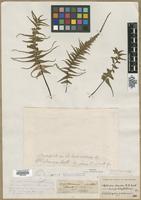
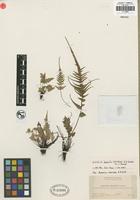
Type? of Asplenium planchoni Scott. [family ASPLENIACEAE]
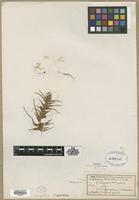
Filed as Asplenium ebenoides R.R.Scott [family ASPLENIACEAE]
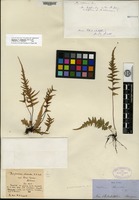
Isotype of Asplenium ebenoides R. R. Scott [family ASPLENIACEAE]
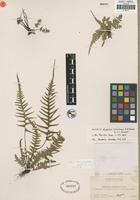
Isotype of Asplenium tutwilerae B. R. Keener and L. J. Davenpt. [family ASPLENIACEAE]
Previous
Next

Name

Identification
Asplenium ebenoides R.R.Scott [family ASPLENIACEAE ] (stored under name); Verified by Not on Sheet, Asplenium planchoni Scott. [family ASPLENIACEAE ] Verified by Not on Sheet,
Related name
  • Asplenium ebenoides
  • Asplenium tutwilerae
  • Asplenium planchoni
Common name
  • Scott's spleenwort, Flora of North America Vol. 2

Flora

Entry for Asplenium ebenoides R. R. Scott [family ASPLENIACEAE]
Herbarium
Flora of North America (FNA)
Collection
Flora of North America
Resource Type
Reference Sources
Entry From
Flora of North America, Vol 2,
Names
Asplenium ebenoides R. R. Scott [family ASPLENIACEAE], Gard. Monthly & Hort. Advertiser, 7: 267. 1865
Asplenosorus ebenoides (R. R. Scott) Wherry [family ASPLENIACEAE]
Treatment Author(s)
Warren H. Wagner Jr.
Robbin C. Moran
Charles R. Werth
Information
Roots not proliferous. Stems ascending to erect, rarely branched; scales dark brown to blackish throughout, narrowly deltate, 2--4 × 0.25--0.45 mm, margins entire. Leaves weakly subdimorphic, fertile leaves taller and more erect than sterile leaves. Petiole reddish or purplish brown throughout, lustrous, 1--10 cm, 1/5--1 times length of blade; indument of dark brown to black scales, narrowly deltate at very base, grading into hairs distally. Blade highly variable and typically irregularly shaped, narrowly deltate to lanceolate, pinnatifid or 1-pinnate in proximal 1/3, 2--20 × 1--6(--13) cm, medium thick, sparsely pubescent adaxially only; base ± truncate; apex acute to long-attenuate, apical buds borne occasionally but not known to root in nature. Rachis reddish or purplish brown abaxially, fading to green distally, lustrous, glabrous. Pinnae in 0--3 pairs, often irregular in size and shape, deltate to narrowly deltate; proximal pinnae 5--30(--80) × 3--10(--15) mm; base truncate to obtuse, auriculate on both sides; margins entire to finely serrate or crenulate; apex obtuse to acute or occasionally attenuate. Veins somewhat evident, mostly free, rarely anastomosing. Sori 1--10(--15+) pairs per pinna, on both acroscopic and basiscopic lobes. Spores malformed (sterile form) or 64 per sporangium (fertile form). 2 n = 72, 144.
Altitude range
70 m
Distribution
USA Ala.
Discussion
The above description applies to the sterile hybrid Asplenium platyneuron × rhizophyllum and its allopolyploid derivative. The allotetraploid form is known only from Hale County, Alabama, where it occurs with A . platyneuron (but not with A . rhizophyllum ) on conglomerate boulders (K. S. Walter et al. 1982). The sterile diploid form of A . ebenoides occurs at elevations of 70 to 500 m within the region where the ranges of the parental species overlap, always occurring with both parents on limestone, sandstone, or other rock strata. A hybrid between the allopolyploid and A . platyneuron [ A . × boydstoniae (K. S. Walter) J. W. Short] was discovered at Havana Glen. An unnamed hybrid between the sterile diploid (presumably via unreduced spores) and A . rhizophyllum is known from West Virginia and Missouri (K. S. Walter et al. 1982).
This fern has been pivotal in the study of fern hybridization. Called the "most famous hybrid fern," it was one of the first crosses to be synthesized deliberately in culture (M. Slosson 1902) and the first to be converted from the sterile diploid state to the fertile tetraploid state experimentally (W. H. Wagner Jr. and R. S. Whitmire 1957).

Related Materials

  • Terms and Conditions
  • Privacy Policy
  • Cookie Policy
  • Cookie Settings
  • Accessibility
  • Help
  • Contact Us
  • Facebook
  • Twitter
ITHAKA

JSTOR is part of ITHAKA, a not-for-profit organization helping the academic community use digital technologies to preserve the scholarly record and to advance research and teaching in sustainable ways.

©2000-2026 ITHAKA. All Rights Reserved. JSTOR®, the JSTOR logo, JPASS®, Aluka®, and ITHAKA® are registered trademarks of ITHAKA.

╳