JSTOR Global Plants Home
  • Home
  • Browse
  • About
  • Access
  • Account
    • Saved Items
    • Profile
  • Log in

Global Plants

Skip to Main Content
  • JSTOR Global Plants Home
  • Global Plants

    • Browse
    • About
    • Access
    • Account
      • Saved Items
      • Profile
Log in
  • Browse
  • About
  • Access
  • Account
    • Saved Items
    • Profile
Advanced Search

Compilation
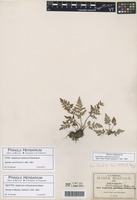
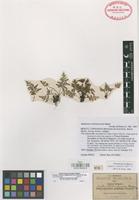
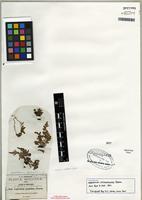
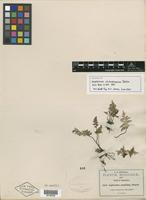
Asplenium chihuahuense

13 Images see all

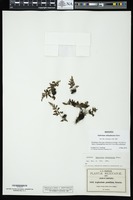
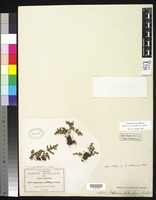
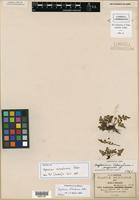
Type of Asplenium dubiosum Davenp. [family ASPLENIACEAE]
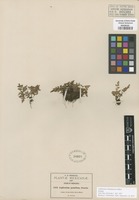
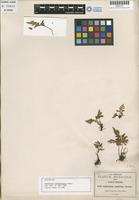
Isotype of Asplenium chihuahuense Baker [family POLYPODIACEAE]
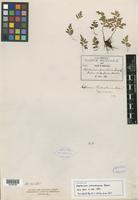
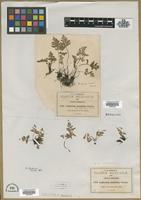
Isotype of Asplenium chihuahuense Baker [family ASPLENIACEAE]
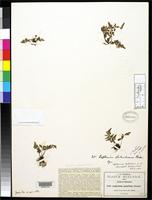
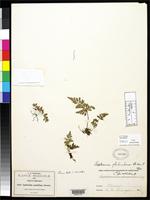
Isotype of Asplenium chihuahuense Baker [family PTERIDOPHYTE]
Isotype of Asplenium chihuahuense Baker [family ASPLENIACEAE]
Isotype of Asplenium chihuahuense Baker [family PTERIDOPHYTE]
Filed as Asplenium chihuahuense Baker, J.G. 1891 [family ASPLENIACEAE]
Isotype of Asplenium chihuahuense Baker, J. G. 1891Davenport, G. E. 1891 [family ASPLENIACEAE]
Isotype of Asplenium chihuahuense Baker [family ASPLENIACEAE]
Type? of Asplenium dubiosum Davenp. [family ASPLENIACEAE]
Filed as Asplenium chihuahuense Baker, J.G. 1891 [family ASPLENIACEAE]
Isotype of Asplenium chihuahuense Baker [family ASPLENIACEAE]
Previous
Next

Name

Identification
Isotype of Asplenium chihuahuense Baker [family ASPLENIACEAE ] (stored under name); Verified by Tiehm, Arnold, 1988
Related name
  • Asplenium dubiosum
  • Asplenium pumilum
  • Asplenium chihuahuense
Common name
  • Black spleenwort, Flora of North America Vol. 2

Flora

Entry for Asplenium adiantum-nigrum Linnaeus [family ASPLENIACEAE]
Herbarium
Flora of North America (FNA)
Collection
Flora of North America
Resource Type
Reference Sources
Entry From
Flora of North America, Vol 2,
Names
Asplenium adiantum-nigrum Linnaeus [family ASPLENIACEAE], Sp. Pl., 2: 1081. 1753
Asplenium andrewsii A. Nelson [family ASPLENIACEAE]
Asplenium chihuahuense J. G. Baker [family ASPLENIACEAE]
Asplenium dubiosum Davenport [family ASPLENIACEAE]
Treatment Author(s)
Warren H. Wagner Jr.
Robbin C. Moran
Charles R. Werth
Information
Roots not proliferous. Stems ascending or short-creeping, infrequently branched; scales dark brown to blackish throughout, narrowly deltate, 2--4(--5) × 0.2--0.5 mm, margins entire or shallowly denticulate to serrulate. Leaves monomorphic. Petiole dark reddish brown proximally, often fading to green distally, lustrous, 2--20 cm, 2/3--2 times length of blade; indument of black filiform scales and minute hairs. Blade deltate, 2--3-pinnate, 2.5--10 × 2--6.5 cm, thick, hairs dark, scattered, minute; base truncate; apex acute to acuminate, not rooting. Rachis greenish throughout or sometimes reddish brown proximally, lustrous, sparsely pubescent. Pinnae in 4--10 pairs, deltate to lanceolate; most proximal (largest) pinnae 1.5--4 × 1--2.5 cm; base obliquely obtuse; segment margins coarsely incised; apex acute. Veins free, evident. Sori 1--numerous pairs per pinna [1--6 pairs per segment], on both basiscopic and acroscopic sides. Spores 64 per sporangium. 2 n = 144.
Altitude range
1675--2300 m
Distribution
EurasiaAfrica.USA Ariz.USA Colo.USA Utah
Discussion
Asplenium adiantum-nigrum is principally a Eurasian species and occurs extremely rarely in North America (see M. G. Shivas 1969 and M. D. Windham 1983 for a discussion of the conspecificity of Western Hemisphere and Eastern Hemisphere material). It is an allotetraploid derived from hybridization of two European taxa, A . cuneifolium Viviani and A . onopteris Linnaeus (M. G. Shivas 1969). Hybrids involving A . adiantum-nigrum and other Asplenium species occur in Europe but are unknown in North America.

Related Materials

  • Terms and Conditions
  • Privacy Policy
  • Cookie Policy
  • Cookie Settings
  • Accessibility
  • Help
  • Contact Us
  • Facebook
  • Twitter
ITHAKA

JSTOR is part of ITHAKA, a not-for-profit organization helping the academic community use digital technologies to preserve the scholarly record and to advance research and teaching in sustainable ways.

©2000-2026 ITHAKA. All Rights Reserved. JSTOR®, the JSTOR logo, JPASS®, Aluka®, and ITHAKA® are registered trademarks of ITHAKA.

╳