JSTOR Global Plants Home
  • Home
  • Browse
  • About
  • Access
  • Account
    • Saved Items
    • Profile
  • Log in

Global Plants

Skip to Main Content
  • JSTOR Global Plants Home
  • Global Plants

    • Browse
    • About
    • Access
    • Account
      • Saved Items
      • Profile
Log in
  • Browse
  • About
  • Access
  • Account
    • Saved Items
    • Profile
Advanced Search

Compilation
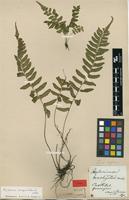
Asplenium brachyotus

5 Images see all

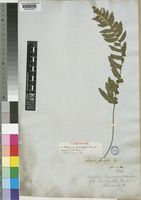
Isolectotype of Asplenium brachyotus Kunze [family ASPLENIACEAE]
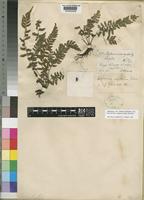
Syntype of Asplenium brachyotus Kunze [family ASPLENIACEAE]
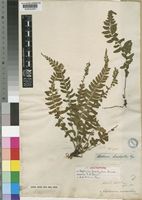
Type? of Asplenium brachyotus Kunze [family ASPLENIACEAE]
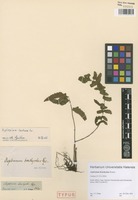
Asplenium suppositum Hieron. [family ASPLENIACEAE]
Asplenium inaequilaterale Willd. [family ASPLENIACEAE]
Previous
Next

Name

Identification
Asplenium inaequilaterale Willd. [family ASPLENIACEAE ] (stored under name); Asplenium brachyotus Kunze [family ASPLENIACEAE ] Verified by Roux, J.P., Asplenium laetum Sw. [family ASPLENIACEAE ] Asplenium lunulatum Sw. [family ASPLENIACEAE ] Asplenium monanthon unrecorded [family ASPLENIACEAE ]
Related name
  • Asplenium lunulatum
  • Asplenium laetum
  • Asplenium inaequilaterale
  • Asplenium monanthon
  • Asplenium brachyotus
  • Asplenium suppositum

Flora

Entry for Asplenium inaequilaterale Willd. [family ASPLENIACEAE]
Herbarium
Royal Botanic Gardens, Kew (K)
Collection
Flora of Tropical East Africa
Resource Type
Reference Sources
Entry From
Flora of Tropical East Africa, page 1, (2008) Author: Henk Beentje
Names
Asplenium inaequilaterale Willd. [family ASPLENIACEAE], Sp. Pl. ed. 4, 5: 322 (1810); Tardieu in Mém. Inst. Fr. Afr. Noire, 28: t. 34/4–5 (1953); Alston, Ferns W.T.A.: 57 (1959); Schelpe, F.Z. Pteridophyta: 176, t. 53c (1970); Burrows, S. Afr. Ferns: 222, map, figs. (1990); Johns, Pterid. trop. East Africa checklist: 65 (1991); Schippers in Fern Gaz. 14, 6: 201 (1993); Faden in U.K.W.F. ed. 2: 29, t. 173 (1994). Type: Réunion, Bory de St Vincent in herb. Willdenow 19896 (B-W, holo.)
Asplenium brachyotus Kunze [family ASPLENIACEAE], in Linnaea, 10: 512 (1836); Johns, Pterid. trop. East Africa checklist: 62 (1991). Type: South Africa, between Umzimvubu [Omsamwubo] and Umsikaba [Omsamcaba], Drège s.n. (not found; a K specimen without locality data has been chosen as ‘lectotype’ by Roux)
Asplenium erectum (Kunze) Sim var. brachyotus [family ASPLENIACEAE], Ferns S. Afr. ed. 2: 138, t. 66 (1892)
Asplenium laetum [family ASPLENIACEAE], sensu Sim, Ferns S. Afr. ed. 2: 150, t. 50 (1915); Johns, Pterid. trop. East Africa checklist: 65 (1991), as A. lactum; non Sw. (1806)
Asplenium laetum (Kunze) Bonap. var. brachyotus [family ASPLENIACEAE], Not. Ptérid. 16: 60 (1925)
Asplenium suppositum Hieron. [family ASPLENIACEAE], in E.J. 46: 353 (1911); Alston, Ferns W.T.A.: 57 (1959); Johns, Pterid. trop. East Africa checklist: 67 (1991); Faden in U.K.W.F. ed. 2: 29 (1994). Type: Angola, Pungo Andongo, Soyaux 234 (B!, holo.; K!, iso.)
Information
Terrestrial or on rocks, rarely a low epiphyte; rhizome erect, 4–8 mm diameter, with dark brown entire clathrate lanceolate attenuate rhizome scales 2–3x0.6 mm, the margin mid-brown. Frond tufted, erect, not proliferous. Stipe pale to dark matt-brown or greenish-brown, 4–19 cm long, sparsely covered at first with minute hair-like scales, rarely with a few stalked glands, glabrous at maturity. Lamina narrowly ovate, 12–32x4–13 cm, 1-pinnate, with lowest pinnae not markedly reduced; apical segment lobed, crenate, attenuate. Pinnae in 8–20 pairs, herbaceous, narrowly to very narrowly oblong or roughly lanceolate, sometimes falcate, 1.5–6.3x0.7–1.2 cm, unequally cuneate at the base, acroscopic lobe well-developed, crenate or doubly crenate, apex obtuse to attenuate, shortly petiolate; glabrous on both surfaces. Rachis pale brown, narrowly winged on the upper part of the lamina. Sori 3–16, linear (to oblong in small fronds), set at an angle of 30–45° to the costa, 2–7 mm long; indusium linear to oblong, membranous, entire, 0.5–1 mm wide. Fig. 6: 5–6, p. 37.
Range
DISTR. U 1–4; K 3–5, 7; T 1–4, 6–8 tropical Africa and south to South Africa; Comoro Is., Réunion
Altitude range
700–2100 m
Distribution
KENYA Meru District Lower Imenti Forest, Mar. 1970, Faden & Evans 70/123!KENYA North Kavirondo District Kakamega Forest along Kubiranga stream, Mar. 1977, Faden & Faden 77/828!KENYA Teita District Taita Hills, Mbololo, May 1985, NMK Taita Hills Expedition 409!TANZANIA Meru District S slopes of Mt Meru, 1917, Leighton s.n.TANZANIA Lushoto District Baga Forest Reserve, May 1987, Kisena 631!TANZANIA Iringa District Udzungwa Mountain National Park, Mwaya–Mwanihana route, Nov. 1997, Luke & Luke 4890!UGANDA Bunyoro District Rabongo forest, May 1993, Sheil 1662!; Mt Elgon, Sipi Bugishu, Dec. 1938, A.S. Thomas 2597!UGANDA Mengo District 1.5 km NE of Nansagazi, Sep. 1969, Faden et al. 69/1029!
Notes
CONSERVATION Widespread; least concern (LC). This taxon differs from A. unilaterale chiefly in its erect rhizome and tufted fronds. It is also close to A. macrophlebium which is usually proliferous, and has the veins mostly unbranched. The mention of Asplenium pulchellum Hiern in P.O.A. C is probably based on this taxon. Faden felt several specimens from Meru, which he named A. suppositum, differed in the smaller, more finely toothed and more numerous pinnae, which give this plant a look different from A. inaequilaterale and he considered them distinct; they grow side by side with A. inaequilaterale in the lower Imenti forest near Meru. The type of A. suppositum, from Angola, is certainly A. inaequilaterale. A series of specimens from U 1, Mt Debasien, collected by H.D. van Someren (602, 603, 613, 614, 627) all key to this taxon but have a slightly different look to the pinnae, with 2-toothed sub-lobes. Richards 14239 from T 7 is similar. A specimen from Tanzania, Tanga District: Mtai Forest Reserve, Lovett & Hamilton 891! has a different look and feel from A. inaequilaterale, to which it seems closest. It might otherwise be close to A. christii from which it differs in obtuse pinna apices. It is a low epiphyte with scales dark brown, clathrate, narrowly ovate to triangular, to 1.2x0.5 mm. Lamina oblong, 12x3–4.5 cm. Pinnae in 6 pairs, asymmetrically ovate, the largest 1.8–2.3x1.3–1.5 cm, obtuse, margin crenualate, glabous or nearly so; terminal pinna similar to laterals. Sori 9–13 per lobe, reaching neither costa nor margin, on the branched veins and 3–5 mm long; involucre whitish, membranous, entire, to 0.4 mm wide. Epiphytic on base of tree trunks in ‘elfin’ forest, at an altitude of 1045 m.

Related Materials

  • Terms and Conditions
  • Privacy Policy
  • Cookie Policy
  • Cookie Settings
  • Accessibility
  • Help
  • Contact Us
  • Facebook
  • Twitter
ITHAKA

JSTOR is part of ITHAKA, a not-for-profit organization helping the academic community use digital technologies to preserve the scholarly record and to advance research and teaching in sustainable ways.

©2000-2026 ITHAKA. All Rights Reserved. JSTOR®, the JSTOR logo, JPASS®, Aluka®, and ITHAKA® are registered trademarks of ITHAKA.

╳