JSTOR Global Plants Home
  • Home
  • Browse
  • About
  • Access
  • Account
    • Saved Items
    • Profile
  • Log in

Global Plants

Skip to Main Content
  • JSTOR Global Plants Home
  • Global Plants

    • Browse
    • About
    • Access
    • Account
      • Saved Items
      • Profile
Log in
  • Browse
  • About
  • Access
  • Account
    • Saved Items
    • Profile
Advanced Search

Compilation
Asplenium blastophorum

9 Images see all

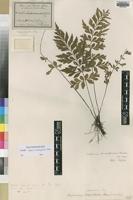
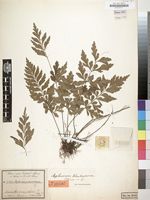
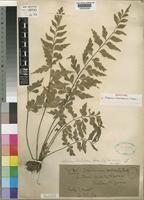
Isotype of Asplenium blastophorum Hieron. [family ASPLENIACEAE]
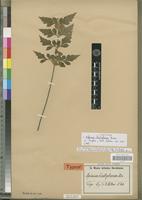
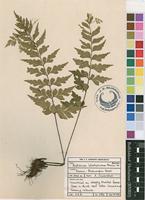
Syntype of Asplenium blastophorum Hieron. [family PTERIDOPHYTA]
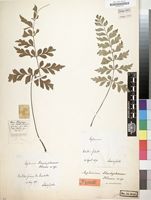
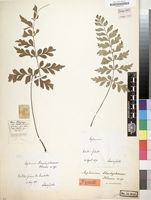
Type of Asplenium blastophorum Hieron. [family ASPLENIACEAE]
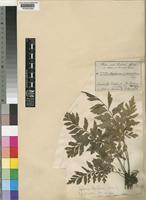
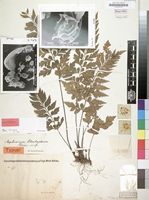
Filed as Asplenium blastophorum Hieron. [family ASPLENIACEAE]
Filed as Asplenium blastophorum var. [family ASPLENIACEAE]
Asplenium blastophorum Hieron. [family ASPLENIACEAE]
Filed as Asplenium blastophorum Hieron. [family ASPLENIACEAE]
Asplenium blastophorum Hieron. [family ASPLENIACEAE]
Previous
Next

Name

Identification
Asplenium blastophorum Hieron. [family ASPLENIACEAE ] (stored under name); Verified by Viane, R.,
Related name
  • Asplenium furcatum
  • Asplenium blastophorum
  • Asplenium praemorsum

Flora

Entry for Asplenium blastophorum Hieron. [family ASPLENIACEAE]
Herbarium
Royal Botanic Gardens, Kew (K)
Collection
Flora of Tropical East Africa
Resource Type
Reference Sources
Entry From
Flora of Tropical East Africa, page 1, (2008) Author: Henk Beentje
Names
Asplenium blastophorum Hieron. [family ASPLENIACEAE], in E.J. 46: 378 (1911); Alston, Ferns W.T.A.: 59 (1959); Schelpe, F.Z. Pteridophyta: 183 (1970); Burrows, S. Afr. Ferns: 251, map, figs. (1990); Johns, Pterid. trop. East Africa checklist: 62 (1991); Faden in U.K.W.F. ed. 2: 29 (1994). Type: Sudan, Niamniam/Monbuttu border, Schweinfurth 3295 (B!, lecto., BM!, K (not found), iso.), chosen by ?Burrows
Information
Terrestrial or lithophyte; rhizome short-creeping, to 7 mm diameter, with dark brown subulate entire rhizome scales up to 5 mm long. Fronds shortly spaced, arching, narrowly deltoid, proliferous at base of terminal pinna (and sometimes on pinna costa) near the apex, thinly coriaceous. Stipe matt black, 12–35 cm long, set with brown subulate scales similar to rhizome scales, glabrescent. Lamina ovate to deltate, 15–48x8–20 cm, 2-pinnate to 3-pinnatifid near the base of the lamina, the lowest pinnae longest, apical pinna similar to upper pinnae. Pinnae dark green above, ovate or lanceolate in outline, up to 11x4.5 cm, unequally cuneate at the base, attenuate, progressively deeply divided towards the base into obcuneate or rhombic pinnules with the outer margins sharply serrate and irregularly shallowly incised, free pinnules with cuneate to narrowly cuneate bases, glabrous except for small lanceolate dark scales near the extreme base. Rachis matt brown, with occasional dark subulate scales, sulcate ventrally. Sori along the veins, linear, 4–30 mm long; indusium linear, narrow, membranous, entire, 0.3–0.4 mm wide. Fig. 7: 1–2, p. 42.
Range
DISTR. U 2; K 5; T 6, 7 tropical Africa from Ivory Coast to Sudan and south to South Africa
Altitude range
900–1600 m
Distribution
KENYA North Kavirondo District Malava Forest, Nov. 1969, Faden & Evans 69/2040!TANZANIA Morogoro District NE Uluguru Mts, Kinole, Apr. 1970, Pócs 6165/s! & idem, Sep. 1970, Faden et al. 70/672!TANZANIA Iringa/Morogoro District Mwanihana Forest reserve above Sanje, Sep. 1984, D.W. Thomas 3688!UGANDA Toro District Mwamba Forest, Dec. 1957, Allen 3687!
Notes
CONSERVATION Widespread; least concern (LC). I agree with Faden that in habit and cutting of the fronds this species most closely resembles the non-proliferous A. buettneri, which however has more dissected pinnae. However, in Zambia there are populations without gemmae – fide Kornaś.

Related Materials

  • Terms and Conditions
  • Privacy Policy
  • Cookie Policy
  • Cookie Settings
  • Accessibility
  • Help
  • Contact Us
  • Facebook
  • Twitter
ITHAKA

JSTOR is part of ITHAKA, a not-for-profit organization helping the academic community use digital technologies to preserve the scholarly record and to advance research and teaching in sustainable ways.

©2000-2026 ITHAKA. All Rights Reserved. JSTOR®, the JSTOR logo, JPASS®, Aluka®, and ITHAKA® are registered trademarks of ITHAKA.

╳