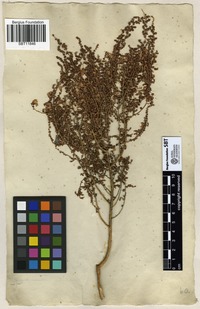
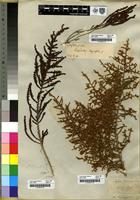
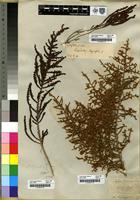
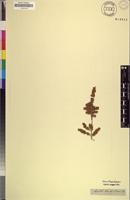
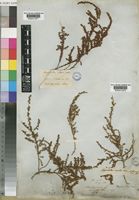
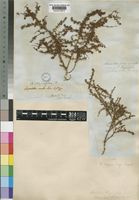
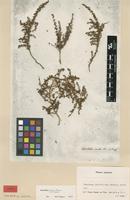
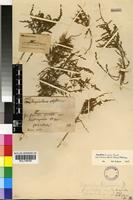
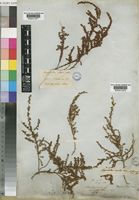
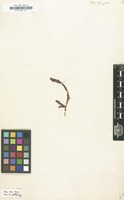
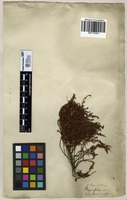
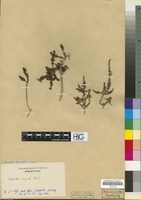
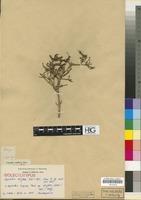
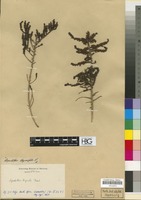
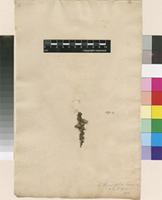
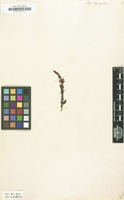
branches villous; leaves tufted, setaceo-filiform, curved, hairy or subglabrous, acute; flowers lateral, solitary, sessile in the leaf-tufts; calyx-tube campanulate, pubescent, 13–15 nerved, its segments setaceo-subulate, mucronate, recurved, about equalling the tube; vexillum silky, narrow-obovate, carina much shorter than the alæ, glabrous; ovary 2-ovuled, silky. A rigid, suberect or spreading, small shrub, 6–12 inches high; the branches curved, with grey bark; the older ones naked and tubercled, the younger hairy. Leaftufts densely crowded or imbricate. Leaves 3–4 lines long, very slender, subterete, the younger softly pilose. Flowers small, slender, 3–4 lines long, pale. Cal. 2 lines long, the base of the teeth 3-ribbed, the ribs continued, and partly confluent on the tube. Vexillum twice as long as the calyx, tapering to a cuneate base. Claws of the lower petals adnate with the staminal tube for at least 1/3 of their length! Alæ nearly equalling the vexillum; carina not half so long. This has quite the aspect of one of the Leptanthæ section, among which it is placed by Bentham, but its petals are distinctly adnate to the stamens, and the 15-ribbed calyx accords with the 3-nerved sepals of the Synpetalæ. It is the A. comosa of Thunberg's Herbarium, and also his A. thymifolia, on the same authority.