JSTOR Global Plants Home
  • Home
  • Browse
  • About
  • Access
  • Account
    • Saved Items
    • Profile
  • Log in

Global Plants

Skip to Main Content
  • JSTOR Global Plants Home
  • Global Plants

    • Browse
    • About
    • Access
    • Account
      • Saved Items
      • Profile
Log in
  • Browse
  • About
  • Access
  • Account
    • Saved Items
    • Profile
Advanced Search

Compilation
Aspalathus rosea

2 Images see all

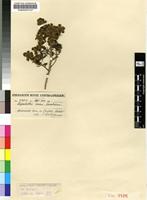
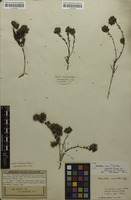
Isotype of Aspalathus rosea Garab. ex R.Dahlgren [family FABACEAE]
Filed as Aspalathus rosea R.Dahlgren [family FABACEAE]
Previous
Next

Name

Identification
Isotype of Aspalathus rosea Garab. ex R.Dahlgren [family FABACEAE ] (stored under name); Verified by Not on sheet,
Related name
  • Aspalathus rosea

Flora

Entry for Aspalathus rosea [family FABACEAE]
Herbarium
South African National Biodiversity Institute, Compton Herbarium, Cape Town (SAM)
Collection
Flora of Southern Africa
Resource Type
Reference Sources
Entry From
Flora of South Africa, (2003) Author: Dr J.P. Roux
Names
Aspalathus rosea [family FABACEAE]
Information
Decumbent shrublet, rarely higher than 150 mm, with 200-400 mm long branches; stem base sometimes up to 8 mm thick. Branch-lets tomentose. Leaflets usually 3 to 9 together (i. e. with short-shoots of only up to 2 leaves) on the younger branches, linear, straight or only slightly curved, often somewhat flattened (those of short-shoots subterete), pointed, with sparse, short, spreading hairs. Inflorescence capitate, with 3-12 flowers. Bracts trifoliolate-trilobate, simple from peripheral to central flowers, ± flat, c. 7-9 mm long, with spread­ing hairs. Bracteoles linear to subfiliform, 5-8 mm long. Calyx long-sericeous, lobes linear, 4-7 mm long. Petals rose-coloured to flesh-coloured. Standard blade c. 7 X 6-7,5 mm long, gradually tapering basally into the claw, sericeous on most of the back. Wing petals long and linear-truncate, 11-12,5 x 2,2-3,2 mm, sericeous only on lower basal portions. Keel blades rostrate, pointed, 7,8-9 x 2,5-3,5 mm, sericeous on lower parts. Pistil sericeous on distal part of ovary and style base. Pod not seen. Figure 63:1-11.
Habitat
The species is undoubtedly closely allied to A. cepha-lotes (no. 120) but highly distinctive by its decumbent growth, long wings and rostrate keel.
Use
123. Aspalathus rosea Garab. ex Dahlg. in Op. bot. Soc. bot. Lund 6 (2): 16 (1961). Type: Guthrie, Herb. BOL 17717.
Range
Known from central parts of Caledon Division nearly as far east as Bredasdorp, growing on rocky or gravelly ground in low fynbos. Map 61.

Related Materials

  • Terms and Conditions
  • Privacy Policy
  • Cookie Policy
  • Cookie Settings
  • Accessibility
  • Help
  • Contact Us
  • Facebook
  • Twitter
ITHAKA

JSTOR is part of ITHAKA, a not-for-profit organization helping the academic community use digital technologies to preserve the scholarly record and to advance research and teaching in sustainable ways.

©2000-2026 ITHAKA. All Rights Reserved. JSTOR®, the JSTOR logo, JPASS®, Aluka®, and ITHAKA® are registered trademarks of ITHAKA.

╳