JSTOR Global Plants Home
  • Home
  • Browse
  • About
  • Access
  • Account
    • Saved Items
    • Profile
  • Log in

Global Plants

Skip to Main Content
  • JSTOR Global Plants Home
  • Global Plants

    • Browse
    • About
    • Access
    • Account
      • Saved Items
      • Profile
Log in
  • Browse
  • About
  • Access
  • Account
    • Saved Items
    • Profile
Advanced Search

Compilation
Aspalathus papillosa

14 Images see all

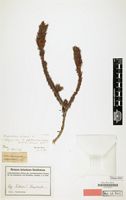
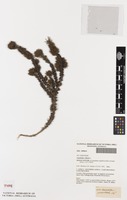
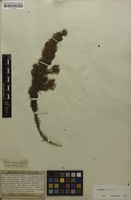
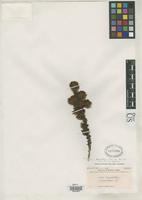
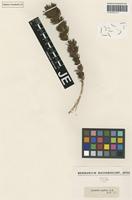
Isotype of Aspalathus papillosa Eckl.&Zeyh. [family LEGUMINOSAE]
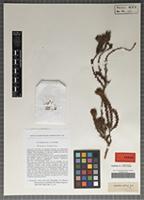
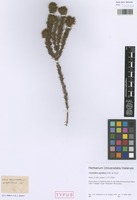
Isotype of Aspalathus papillosa Eckl. & Zeyh. [family FABACEAE]
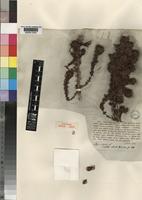
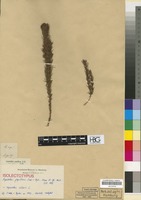
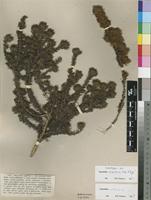
Lectotype of Aspalathus papillosa Eckl. & Zeyh. [family LEGUMINOSAE-PAPILIONOIDEAE]
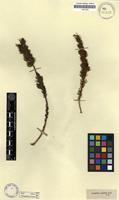
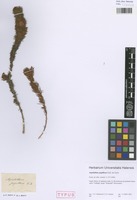
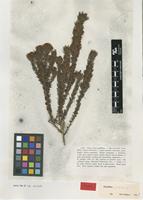
Filed as Aspalathus papillosa Eckl. & Zeyh. [family FABACEAE]
Isolectotype of Aspalathus papillosa Eckl. & Zeyh. [family FABACEAE]
Isotype of Aspalathus papillosa Eckl. & Zeyh. [family FABACEAE]
Type? of Aspalathus papillosa Eckl. & Zeyh. [family FABACEAE]
Lectotype of Aspalathus papillosa Eckl. & Zeyh. [family FABACEAE]
Isolectotype of Aspalathus papillosa Eckl. & Zeyh. [family FABACEAE]
Isolectotype of Aspalathus papillosa Eckl. & Zeyh. [family LEGUMINOSAE/FABACEAE]
Isolectotype of Aspalathus papillosa Eckl. & Zeyh. [family FABACEAE]
Isotype of Aspalathus papillosa Ecklon, C.F. & Zeyher, C.L.P. 1836 [family FABACEAE]
Isotype of Aspalathus papillosa Eckl. & Zeyh. [family FABACEAE]
Previous
Next

Name

Identification
Isotype of Aspalathus papillosa Eckl.&Zeyh. [family LEGUMINOSAE ] Verified by Steinhof, M., Aspalathus ciliaris L. [family LEGUMINOSAE ] (stored under name); Verified by Not on sheet.,
Related name
  • Aspalathus papillosa
  • Aspalathus ciliaris

Flora

Entry for ASPALATHUS ciliaris Linn. [family LEGUMINOSAE-PAPILIONOIDEAE]
Herbarium
Royal Botanic Gardens, Kew (K)
Collection
Flora Capensis
Resource Type
Reference Sources
Entry From
Flora Capensis, Vol 2, page 1, (1894) Author: (By W. H. HARVEY).
Names
ASPALATHUS ciliaris Linn. [family LEGUMINOSAE-PAPILIONOIDEAE], Mant. p. 262;—Benth.! l. c. p. 611. E. & Z. 1469.
ASPALATHUS appendiculata E. Mey. [family LEGUMINOSAE-PAPILIONOIDEAE], ! E. & Z.! 1470.
ASPALATHUS dubia E. Mey. [family LEGUMINOSAE-PAPILIONOIDEAE], ! E. & Z.! 1475.
ASPALATHUS Meyeriana E. & Z. [family LEGUMINOSAE-PAPILIONOIDEAE], No. 1473.
ASPALATHUS papillosa E. & Z. [family LEGUMINOSAE-PAPILIONOIDEAE], ! 1472.
ASPALATHUS oresigena E. & Z. [family LEGUMINOSAE-PAPILIONOIDEAE], 1471.
ASPALATHUS aulonogena E & Z. [family LEGUMINOSAE-PAPILIONOIDEAE], ! 1465.
Information
pilose; leaves fascicled, subulate, linear-trigonous, or filiform, short or long; flowers terminal, capitate or 2–3 together, or sometimes solitary; calyx hirsute, its segments narrow-linear-lanceolate, ribbed, sub-trinerved, acute, much longer than the tube; vexillum villous, carina glabrous or villous; ovary very hairy. A very variable plant, sometimes robust, tall and woody, with densely tufted, short, straight or curved leaves; sometimes slender, decumbent or diffuse, with scarcely tufted or ternate, very long, filiform, curved leaves, as in A. araneosa, from which, in all cases, the present may be known by its broader, ribbed and nerved calyx-lobes. The young leaves are pilose, the older glabrescent or glabrous; they vary extremely in length, often on the same bush. In A. dubia, E. M., all but the floral are 2–3 lines long; commonly they are 4–5 lines; and in slender specimens 6–7 lines. Flowers deep yellow or fulvescent, 5–6–8 lines long. The carina varies much in pubescence, and is often quite glabrous.
Distribution
SOUTH AFRICA Mountains and hills of Cape, Stellenbosch, Worcester, and Caledon, common. Krum River, Uitenhage, E. & Z.! No. 1471. Klynhowhoek, Zeyher, 2341. (Herb. Th., Bth., Hk., D., Sd.)

Related Materials

  • Terms and Conditions
  • Privacy Policy
  • Cookie Policy
  • Cookie Settings
  • Accessibility
  • Help
  • Contact Us
  • Facebook
  • Twitter
ITHAKA

JSTOR is part of ITHAKA, a not-for-profit organization helping the academic community use digital technologies to preserve the scholarly record and to advance research and teaching in sustainable ways.

©2000-2026 ITHAKA. All Rights Reserved. JSTOR®, the JSTOR logo, JPASS®, Aluka®, and ITHAKA® are registered trademarks of ITHAKA.

╳