JSTOR Global Plants Home
  • Home
  • Browse
  • About
  • Access
  • Account
    • Saved Items
    • Profile
  • Log in

Global Plants

Skip to Main Content
  • JSTOR Global Plants Home
  • Global Plants

    • Browse
    • About
    • Access
    • Account
      • Saved Items
      • Profile
Log in
  • Browse
  • About
  • Access
  • Account
    • Saved Items
    • Profile
Advanced Search

Compilation
Aspalathus neglecta

9 Images see all

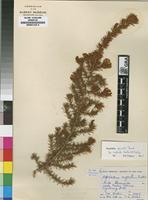
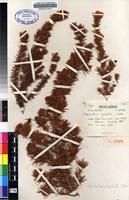
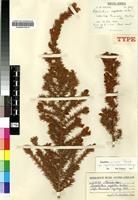
Isotype of Aspalathus neglecta T.M.Salter [family FABACEAE]
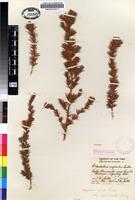
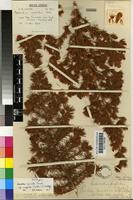
Type? of Aspalathus neglecta T.M.Salter [family FABACEAE]
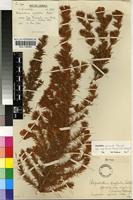
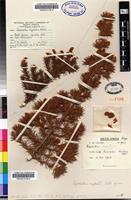
Isotype of Aspalathus neglecta T.M.Salter [family FABACEAE]
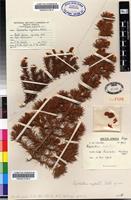
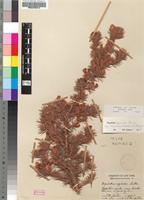
Holotype of Aspalathus neglecta T.M.Salter [family FABACEAE]
Isotype of Aspalathus neglecta T.M.Salter [family FABACEAE]
Isotype of Aspalathus spicata Thunb. subsp. neglecta (T.M.Salter) R.Dahlgren [family FABACEAE]
Previous
Next

Name

Identification
Aspalathus neglecta T.M.Salter [family FABACEAE ] (stored under name); Verified by Not on sheet, Aspalathus spicata Thunb. [family FABACEAE ] Verified by Not on sheet,
Related name
  • Aspalathus spicata
  • Aspalathus neglecta

Flora

Entry for Aspalathus neglecta [family FABACEAE]
Herbarium
South African National Biodiversity Institute, Compton Herbarium, Cape Town (SAM)
Collection
Flora of Southern Africa
Resource Type
Reference Sources
Entry From
Flora of South Africa, (2003) Author: Dr J.P. Roux
Names
Aspalathus neglecta [family FABACEAE]
Common names
A. spicata Thunb. subsp. neglecta (Salter) Dahlg. in Op. bot. Soc. bot. Lund 8(1): 113 (1963); ibid. 9(1): 114 (1963); in Bot. Notiser 121: 508 (1968).
Information
An erect, much branched shrub 0,7-2 m tall, with main trunk basally up to more than 10 mm thick. Young branches densely villous or tomentose. Leaves of long-shoots alternate. Leaflets spreading, linear, needle-like, 6-13 mm long, ± angular, straight, rigid, spine-tipped (pungent) with sparse, half-spreading hairs; green when fresh, ferruginous when dry (withered). Inflorescence a terminal group of (1-) 2-4 densely-grouped flowers or unifloral on short-shoots adjacent to the branch tips, so that the flowers are aggregated up to c. 8 to­gether. Flowers large, conspicuous. Bracts nor­mally simple (rarely trifoliolate), with the leaf­let similar to leaflets of vegetative leaves; (3-) 5-12 mm long, 0,3-0,6 mm thick. Pedicel 1-2 mm long, tomentose. Bracteoles similar to the bract, (2,5-) 4,5-10 mm long. Calyx tube sparsely tomentose (-sericeous); lobes linear-subulate, 5-10 mm long, straight, rigid, spine-tipped, ciliate with long hairs. Petals bright yel­low-orange or ferruginous, in late stages bright or dark red. Standard blade obovate, (11-) 12,5-17 X (9-) 10,5-14 mm, densely to­mentose on the back and usually short-hairy on apical marginal parts of front, apex obtuse, with a less than 1 mm long, glabrous hook. Wing blades narrowly ovate-elliptic, 7,5-12 x (2,5-) 3-5 mm. Keel blades lunate, (9,5-) 10-12 X (3,8-) 4,2-5,5 mm, with slightly concave upper margin and prominent basal pouch, the apical-lower parts usually sparsely sericeous, seldom totally glabrous. Wing and keel claws attached at the base to the staminal sheath. Pistil: ovary long-pubescent on apical half. Pod triangular-ovate, c. 7-8 x 4-4,5 mm, tomentose at least on apical half; smooth, brown when ripe. Figure 45:1 -9.
Habitat
Probably very closely related to forms of A. spicata (no. 92) in which it has formerly been included, differing in having long, rigid, spine-tipped leaves, large flowers turn­ing ± red, and usually a standard ± pubescent near apex of the front and a keel ± pubescent on the lower apical parts. It is quite close to some forms of A. ciliaris (no. 96), which have, however, less rigid leaves and trifoliolate bracts.
Use
93. Aspalathus neglecta Salter in G. J. Lewis, Salter and W. F. Barker in Jl S. Afr. Bot. 15: 35 (1949); Adamson & Salter, Fl. Cape Penins. 485 (1950). Type: Cape, near Exeter Avenue, Wynberg Hill, Cape Peninsula, Salter 9007 (BOL, holo.!; GB, NBG, PRE).
Range
Restricted to the northern parts of the Cape Peninsula and the Hottentots Holland, French Hoek, Drakenstein and Wemmershoek Mountains in the Cape Town, Somerset West, Stellenbosch, Paarl and Caledon Divisions. Growing on sandy and rocky slopes at low altitudes, in fynbos vege­tation. Map 46.

Related Materials

  • Terms and Conditions
  • Privacy Policy
  • Cookie Policy
  • Cookie Settings
  • Accessibility
  • Help
  • Contact Us
  • Facebook
  • Twitter
ITHAKA

JSTOR is part of ITHAKA, a not-for-profit organization helping the academic community use digital technologies to preserve the scholarly record and to advance research and teaching in sustainable ways.

©2000-2026 ITHAKA. All Rights Reserved. JSTOR®, the JSTOR logo, JPASS®, Aluka®, and ITHAKA® are registered trademarks of ITHAKA.

╳