JSTOR Global Plants Home
  • Home
  • Browse
  • About
  • Access
  • Account
    • Saved Items
    • Profile
  • Log in

Global Plants

Skip to Main Content
  • JSTOR Global Plants Home
  • Global Plants

    • Browse
    • About
    • Access
    • Account
      • Saved Items
      • Profile
Log in
  • Browse
  • About
  • Access
  • Account
    • Saved Items
    • Profile
Advanced Search

Compilation
Aspalathus confusa

11 Images see all

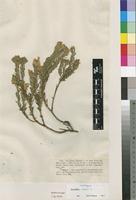
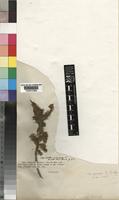
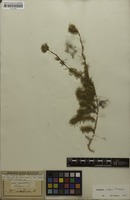
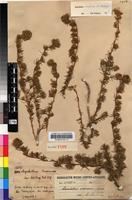
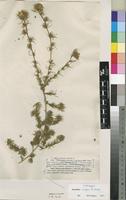
Lectotype of Aspalathus simsiana Eckl. & Zeyh. [family FABACEAE]
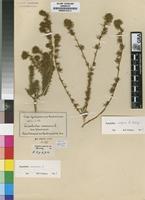
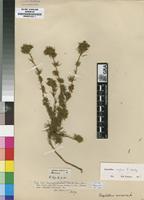
Isolectotype of Aspalathus simsiana Eckl.&Zeyh. [family FABACEAE]
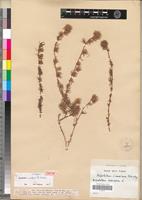
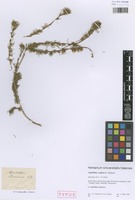
Isotype of Aspalathus confusa R. Dahlgr. [family FABACEAE-PAPILIONOIDEAE]
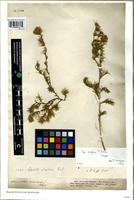
Isolectotype of Aspalathus confusa R. Dahlgren [family FABACEAE]
Aspalathus confusa R.Dahlgren [family LEGUMINOSAE-PAPILIONOIDEAE]
Isolectotype of Aspalathus simsiana Eckl.&Zeyh. [family FABACEAE]
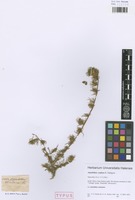
Type? of Aspalathus confusa R. Dahlgren [family FABACEAE]
Isotype of Aspalathus confusa R. Dahlgren [family FABACEAE]
Isolectotype of Aspalathus confusa R.Dahlgren [family FABACEAE]
Lectotype of Aspalathus confusa R.Dahlgren [family FABACEAE]
Previous
Next

Name

Identification
Isotype of Aspalathus confusa R. Dahlgren [family FABACEAE ] (stored under name); Verified by R. Dahlgren, 1963 Aspalathus simsiana Eckl. [family FABACEAE ] Verified by Not on Sheet, Aspalathus araneosa L. [family FABACEAE ] Verified by Johan Lange, 1845
Related name
  • Aspalathus callosa
  • Aspalathus araneosa
  • Aspalathus simsiana
  • Aspalathus confusa

Flora

Entry for Aspalathus confusa [family FABACEAE]
Herbarium
South African National Biodiversity Institute, Compton Herbarium, Cape Town (SAM)
Collection
Flora of Southern Africa
Resource Type
Reference Sources
Entry From
Flora of South Africa, (2003) Author: Dr J.P. Roux
Names
Aspalathus confusa [family FABACEAE]
Common names
Aspalathus simsiana Eckl. & Zeyh., Enum. 2: 216 (no. 1464) (1836)—non Aspalathus simsiana Eckl. & Zeyh., Enum. 2: 200 (no. 1372) (1836); Walp. in Linnaea 13: 488 (1839; as a synonym of A. araneosa. The unusual homo-nymy in the same publication is the reason for the new epithet 'confusa'. IParaspalathus simsiana (Eckl. & Zeyh.) Presl, Bot. Bemerk. 130 (1845).
Information
A decumbent or ascending, sparingly branched shrublet up to c. 0,25 m tall. Young branches usually dark reddish, but covered with white-woolly pubescence. Leaves of long-shoots alternate, subsequently with lateral leafy short-shoots. Leaflets of young long-shoot leaves linear, 10-16(-19) mm long and up to c. 0,8 mm broad, slightly flattened, weak, green, acute or acuminate, with sparse, rather long, spreading hairs; leaflets of lower branches (short-shoot-leaflets) much smaller and subgla-brous. Inflorescence a terminal head of 3-4(-6) flowers. Bract simple, similar to a leaflet of a vegetative leaf, 6-14,5 x 0,2-0,5 mm, with sparse spreading hairs from ± promi­nent hair base tubercles. Pedicel c. 1 mm long, pubescent. Bracteoles similar to the bract, 7-11 mm long. Calyx tube white-sericeous (-woolly); lobes linear-filiform, 7-12 X 0,5-0,7 mm, weak, flexible, of same texture as the bract. Petals light yellow. Standard broadly obovate, 10-12 X 9,5-14 mm, to-mentose on the back, glabrous on the front, with a straight, green, apical 'tip' up to 1 mm long. Wing blades elliptic-obovate,
Habitat
Differs from A. ciliaris (no. 96) in the simple bracts and soft, slightly flat leaflets on the young branches (A. ciliaris in the same region is represented by forms quite unlike A. confusa). Perhaps closest to A. spicata (no. 92), but different from this, too, in the leaflet shape.
Use
95. Aspalathus confusa Dahlg. in Op. bot. Soc. bot. Lund (8) (1): 117 (1963); ibid. 9 (1): 114 (1963). Type: Cape, mountain slopes in Tulbagh Valley near Waterfall, Ecklon & Zeyher 1464 (S, lecto.!; K, L, M, SAM, W).
Range
Distributed in the Tulbagh, Ceres and Clanwilliam Di­visions, on mountain slopes, at least sometimes with clayey soil. Map 49.

Related Materials

  • Terms and Conditions
  • Privacy Policy
  • Cookie Policy
  • Cookie Settings
  • Accessibility
  • Help
  • Contact Us
  • Facebook
  • Twitter
ITHAKA

JSTOR is part of ITHAKA, a not-for-profit organization helping the academic community use digital technologies to preserve the scholarly record and to advance research and teaching in sustainable ways.

©2000-2026 ITHAKA. All Rights Reserved. JSTOR®, the JSTOR logo, JPASS®, Aluka®, and ITHAKA® are registered trademarks of ITHAKA.

╳