JSTOR Global Plants Home
  • Home
  • Browse
  • About
  • Access
  • Account
    • Saved Items
    • Profile
  • Log in

Global Plants

Skip to Main Content
  • JSTOR Global Plants Home
  • Global Plants

    • Browse
    • About
    • Access
    • Account
      • Saved Items
      • Profile
Log in
  • Browse
  • About
  • Access
  • Account
    • Saved Items
    • Profile
Advanced Search

Compilation
Asepalum eriantherum

9 Images see all

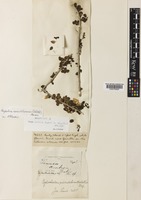
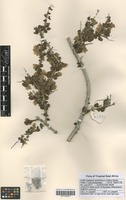
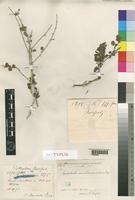
Holotype of Tinnea arabica Baker [family LAMIACEAE]
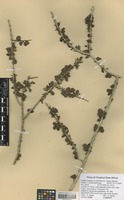
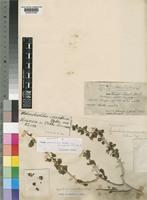
Asepalum eriantherum (Vatke) Marais [family CYCLOCHEILACEAE]
Filed as Asepalum eriantherum (Vatke) Marais [family CYCLOCHEILACEAE]
Asepalum eriantherum (Vatke) Marais [family CYCLOCHEILACEAE]
Filed as Asepalum eriantherum (Vatke) Marais [family CYCLOCHEILACEAE]
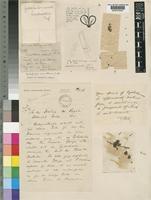
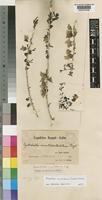
Holotype of Tinnea erianthera Vatke [family LABIATAE]
Asepalum eriantherum (Vatke) Marais [family CYCLOCHEILACEAE]
Holotype of Asepalum eriantherum (Vatke) Marais var. decurrens Chiov. [family CYCLOCHEILACEAE]
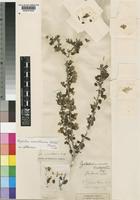
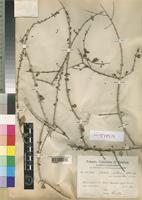
Syntype of Asepalum eriantherum (Vatke) Marais [family CYCLOCHEILACEAE]
Previous
Next

Name

Identification
Asepalum eriantherum (Vatke) Marais [family CYCLOCHEILACEAE ] (stored under name); Verified by Data not digitized, Cyclocheilon eriantherum (Vatke) Engl. [family CYCLOCHEILACEAE ] Verified by Data not digitized,
Related name
  • Tinnea erianthera
  • Asepalum eriantherum
  • Cyclocheilon minutibracteolatum
  • Cyclocheilon eriantherum
  • Tinnea arabica
  • Cyclocheilon [nudum]
  • Holmskioldia erianthera

Flora

Entry for ASEPALUM eriantherum (Vatke) Marais [family CYCLOCHEILACEAE]
Herbarium
Royal Botanic Gardens, Kew (K)
Collection
Flora Somalia
Resource Type
Reference Sources
Entry From
Flora Somalia, (2000) Author: by Sebsebe Demissew [updated by M. Thulin 2008]
Names
ASEPALUM eriantherum (Vatke) Marais [family CYCLOCHEILACEAE], (1981);. type: N2, near “Meid”, Hildebrandt 1515 (K part of holo.). Fig. 207.
Tinnea erianthera Vatke [family LABIATAE], (1882);. type: N2, near “Meid”, Hildebrandt 1515 (K part of holo.). Fig. 207.
Cyclocheilon eriantherum (Vatke) Engl. [family CYCLOCHEILACEAE], (1897);. type: N2, near “Meid”, Hildebrandt 1515 (K part of holo.). Fig. 207.
Tinnea arabica Baker [family LABIATAE], (1894).
Cyclocheilon minutibracteolatum Engl. [family CYCLOCHEILACEAE], (1897);. types from Ethiopia and Ethiopia/S1 border, ”Dolo”, Riva 1175 (FT syn., K fragment).
Cyclocheilon eriantherum Chiov. var. decurrens [family CYCLOCHEILACEAE], Fl. Somala: 272 (1929);. type: C1, “Biomàl”, Puccioni & Stefanini 552 (FT holo.).
Information
Shrub 0.5–2(–3) m tall; bark white or pale grey, peeling off in thin, fibrous strips; young stems densely covered with appressed hairs with thick bases and with shortly stalked glands. Leaves mostly clustered, but opposite or subopposite on young shoots, fleshy, 5–12(–25) x 1.5–5(–8) mm, obovate or oblanceolate, with scattered flattened hairs inserted on a raised multicellular cushion, very young leaves with stalked glands. Flowers usually clustered on older branches, but solitary and axillary on younger branches; pedicels 5–6.5 mm long, glabrous or with a few scattered hairs; bracts oblanceolate, up to 2 mm long; bracteoles 7–9 x 6.5–8 mm in flower, broadly oblong to circular, membranous with conspicuous netted vein pattern, light green with a purple edge, joined for 2–5 mm at the base, enlarging in fruit up to 12–16 x 9–14 mm. Corolla white or pink, 1.4–1.7 cm long. Fruit strongly flattened with a narrow wing and an oblique thickened ridge on each half, usually with the persistent base of the style on top.
Range
N1–3; C1, 2; S1, 2
Altitude range
120–1500 m.
Distribution
SOMALIA Thulin & Warfa 4650, 5842; Thulin & al. 10523.
Distribution (external)
Ethiopia
Kenya
N Tanzania
E Uganda
Yemen
Notes
Dainya, hanya aseyi, jaja boot, mirow, xairamad (Som.). The root is said to be used against snake bite.

Related Materials

  • Terms and Conditions
  • Privacy Policy
  • Cookie Policy
  • Cookie Settings
  • Accessibility
  • Help
  • Contact Us
  • Facebook
  • Twitter
ITHAKA

JSTOR is part of ITHAKA, a not-for-profit organization helping the academic community use digital technologies to preserve the scholarly record and to advance research and teaching in sustainable ways.

©2000-2026 ITHAKA. All Rights Reserved. JSTOR®, the JSTOR logo, JPASS®, Aluka®, and ITHAKA® are registered trademarks of ITHAKA.

╳