JSTOR Global Plants Home
  • Home
  • Browse
  • About
  • Access
  • Account
    • Saved Items
    • Profile
  • Log in

Global Plants

Skip to Main Content
  • JSTOR Global Plants Home
  • Global Plants

    • Browse
    • About
    • Access
    • Account
      • Saved Items
      • Profile
Log in
  • Browse
  • About
  • Access
  • Account
    • Saved Items
    • Profile
Advanced Search

Compilation
Asclepias lineolata

8 Images see all

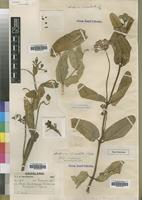
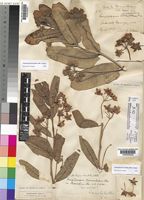
Type? of Asclepias lineolata (Decne.) Schltr. [family ASCLEPIADACEAE]
Filed as Pachycarpus lineolatus (Decne.) Bullock [family ASCLEPIADACEAE]
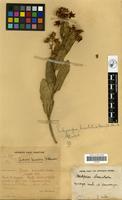
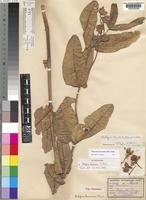
Type of Gomphocarpus bisacculatus Oliv. [family ASCLEPIADACEAE]
Filed as Asclepias lineolata (Decne.) Schltr. [family ASCLEPIADACEAE]
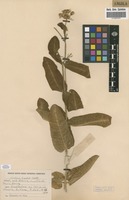
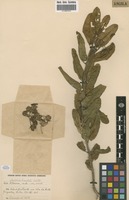
Type of Asclepias lineolata (Decne.) Schltr. [family ASCLEPIADACEAE]
Isosyntype of Asclepias browniana S.Moore [family ASCLEPIADACEAE]
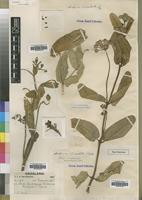
Filed as Asclepias lineolata (Decne.) Schltr. [family ASCLEPIADACEAE]
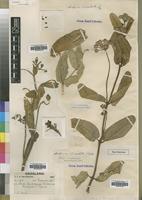
Type of Asclepias lineolata (Decne.) Schltr. [family ASCLEPIADACEAE]
Previous
Next

Name

Identification
Asclepias lineolata (Decne.) Schltr. [family ASCLEPIADACEAE ] Pachycarpus lineolatus (Decne.) Bullock [family ASCLEPIADACEAE ] (stored under name);
Related name
  • Asclepias unrecorded
  • Asclepias browniana
  • Gomphocarpus bisacculatus
  • Asclepias lineolata
  • Pachycarpus bisacculatus
  • Pachycarpus lineolatus
Common name
  • (Guinea-Bissau) cupunco (EPdS) (GUINEA-BISSAU, FULA-PULAAR), Burkill, H.M. 1985. The useful plants of west tropical Africa, Vol. 1
  • rízgár kùreégeé, rízgá: the tuber of Plectanthus esculentus (Labiatae); kùreégeé: a ground squirrel (JMD; ZOG) (NIGERIA, HAUSA), Burkill, H.M. 1985. The useful plants of west tropical Africa, Vol. 1
  • bafurma (EPdS) (GUINEA-BISSAU, MANDING-MANDINKA), Burkill, H.M. 1985. The useful plants of west tropical Africa, Vol. 1
  • fiyé (JB) (SENEGAL, MANDING-BAMBARA), Burkill, H.M. 1985. The useful plants of west tropical Africa, Vol. 1
  • mullibe (JMD) (NIGERIA, GWARI), Burkill, H.M. 1985. The useful plants of west tropical Africa, Vol. 1

Information

Entry for Pachycarpus lineolata (Dec’ne) Bullock [family ASCLEPIADACEAE]
Herbarium
Royal Botanic Gardens, Kew (K)
Collection
Useful Plants of West Tropical Africa
Resource Type
Reference Sources
Entry From
Burkill, H.M. 1985. The useful plants of west tropical Africa, Vol 1
Names
Asclepias lineolata Schltr. [family ASCLEPIADACEAE]
Pachycarpus lineolata (Dec’ne) Bullock [family ASCLEPIADACEAE]
Common names
SENEGAL: MANDING-BAMBARA fiyé (JB) GUINEA-BISSAU: FULA-PULAAR (Guinea-Bissau) cupunco (EPdS) MANDING-MANDINKA bafurma (EPdS) NIGERIA: GWARI mullibe (JMD) HAUSA rízgár kùreégeé, rízgá: the tuber of Plectanthus esculentus (Labiatae); kùreégeé: a ground squirrel (JMD; ZOG)
Uses
root Food: general root Medicines: sedatives, etc. root Medicines: naso-pharyngeal affections root Medicines: stomach troubles sap Medicines: skin, mucosae root Medicines: "intestines" root Medicines: genital stimulants/depressants seed-sap Medicines: lactation stimulants (incl. veterinary) root Phytochemistry: glycosides, saponims, steroids root Phytochemistry: starch, sugar root Products: exudations-gums, resins, etc.
Description
An erect simple-stemmed perennial, recorded from Senegal, Ghana, N Nigeria and W Cameroon in savanna lands, and occurring widely in the savanna of tropical Africa.The plant (part unstated) is used in Sudan to treat dog-bite (4). Sap which oozes from the wood when heated is used in Zambia on the skin to relieve itch (9, 10).The roots are thick and spindle-shaped with a white flesh and a milky resinous sap. In Nigeria a root-decoction is taken with local soda for gastrointestinal troubles, and a weak cold infusion is given to new-born babies (5). In E Africa they are used as a stomachic (8), an effect attributable probably to the resin (1). In Uganda the swollen roots are eaten for sore-throat (7). In Tanganyika the dry, powdered tuber is drunk with local beer as an aphrodisiac, and a root-macerate is similarly used (2). In Zambia the root is used to catch birds by virtue of an alleged narcotic effect (9, 10). Glycoside is reported in the roots (5). Inulin and starch are also present, and the Kyama of Lower Ivory Coast are said to eat the roots like tapioca, pounded and boiled, or even uncooked (1, 3, 6).Juice extracted from the seeds is mixed with red peppers (Capsicum, Solenaceae) in Tanganyika for application to the breasts to encourage milk-flow (8).
References
References:1. Dalziel, 1937. 2. Haerdi, 1964: 135. 3. Irvine, 1952, a: 27, as Asclepias lineolata. 4. Jackson 2290, K. 5. Oliver, 1960: 19, 48, as Asclepias lineolata. 6. Portères, s.n.: as Asclepias lineolata Schltr. 7. Thomas, A. S., Th. 3569, K. 8. Wallace 44, K. 9. Watt, 1967: as Asclepias lineolata Schltr. 10. Watt & Bryer Brandwijk, 1962: 123, as Asclepias lineolata Schltr.
Contributor
Royal Botanic Gardens, Kew (K)

Related Materials

  • Terms and Conditions
  • Privacy Policy
  • Cookie Policy
  • Cookie Settings
  • Accessibility
  • Help
  • Contact Us
  • Facebook
  • Twitter
ITHAKA

JSTOR is part of ITHAKA, a not-for-profit organization helping the academic community use digital technologies to preserve the scholarly record and to advance research and teaching in sustainable ways.

©2000-2026 ITHAKA. All Rights Reserved. JSTOR®, the JSTOR logo, JPASS®, Aluka®, and ITHAKA® are registered trademarks of ITHAKA.

╳