JSTOR Global Plants Home
  • Home
  • Browse
  • About
  • Access
  • Account
    • Saved Items
    • Profile
  • Log in

Global Plants

Skip to Main Content
  • JSTOR Global Plants Home
  • Global Plants

    • Browse
    • About
    • Access
    • Account
      • Saved Items
      • Profile
Log in
  • Browse
  • About
  • Access
  • Account
    • Saved Items
    • Profile
Advanced Search

Compilation
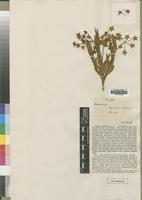
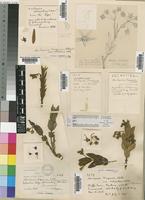
Asclepias calceolus

2 Images see all

Type of Asclepias calceolus S.Moore [family ASCLEPIADACEAE]
Previous
Next

Name

Identification
Asclepias calceolus S.Moore [family ASCLEPIADACEAE ] Asclepias dregeana (S.Moore) N.E.Br. [family ASCLEPIADACEAE ] (stored under name);
Related name
  • Asclepias viridiflora
  • Asclepias dregeana
  • Asclepias calceolus

Flora

Entry for ASCLEPIAS dregeana N. E. Br. var. β, Calceolus [family ASCLEPIADACEAE]
Herbarium
Royal Botanic Gardens, Kew (K)
Collection
Flora Capensis
Resource Type
Reference Sources
Entry From
Flora Capensis, Vol 4, page 518, (1909) Author: By N. E. BROWN.
Names
ASCLEPIAS dregeana N. E. Br. var. β, Calceolus [family ASCLEPIADACEAE]
ASCLEPIAS Calceolus S. Moore [family ASCLEPIADACEAE], in Journ. Bot. 1903, 312, 338.
Gomphocarpus marginatus Schlechter [family ASCLEPIADACEAE], in Engl. Jahrb. xx. Beibl. 51, 33, not of Decne.
Information
leaves 3/4–3 in. long, 1/6–1 1/2 in. broad, ovate-anceolate to elliptic-oblong, obtuse or acute; corolla-lobes 3–4 1/2 lin. long, 2–2 1/3 lin. broad, green; corona-lobes usually shaped as in the type, with a distinct fissure-like or open-mouthed cavity extending to half-way down, not solid to the top, usually with the top margins recurved forming a rim, but occasionally subquadrate in side view and truncate at the top, with the margins erect and slightly gaping, usually marked with violet on the basal rim; follicles 4–4 1/2 in. long, 3/4 in. or more thick, lanceolate-fusiform, about equally tapering at both ends, with 4 serrate wings, puberulous. null

Related Materials

  • Terms and Conditions
  • Privacy Policy
  • Cookie Policy
  • Cookie Settings
  • Accessibility
  • Help
  • Contact Us
  • Facebook
  • Twitter
ITHAKA

JSTOR is part of ITHAKA, a not-for-profit organization helping the academic community use digital technologies to preserve the scholarly record and to advance research and teaching in sustainable ways.

©2000-2026 ITHAKA. All Rights Reserved. JSTOR®, the JSTOR logo, JPASS®, Aluka®, and ITHAKA® are registered trademarks of ITHAKA.

╳