JSTOR Global Plants Home
  • Home
  • Browse
  • About
  • Access
  • Account
    • Saved Items
    • Profile
  • Log in

Global Plants

Skip to Main Content
  • JSTOR Global Plants Home
  • Global Plants

    • Browse
    • About
    • Access
    • Account
      • Saved Items
      • Profile
Log in
  • Browse
  • About
  • Access
  • Account
    • Saved Items
    • Profile
Advanced Search

Compilation
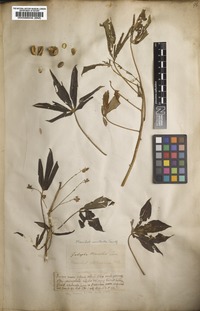
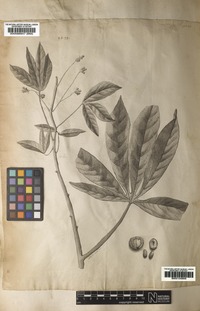
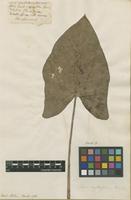
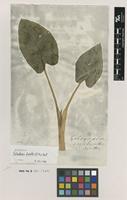
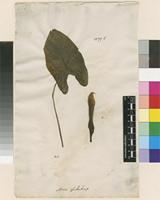
Arum esculentum

5 Images see all

Filed as Arum esculentum L. [family ARACEAE]
Filed as Arum sagittifolium L. [family ARACEAE]
Filed as Caladium bicolor (Aiton) Vent. [family ARACEAE]
Filed as Arum esculentum L. [family ARACEAE]
Previous
Next

Name

Identification
Arum esculentum L. [family ARACEAE ] (stored under name); Manihot esculenta Crantz [family EUPHORBIACEAE ] Verified by J.E. Dandy, Jatropha manihot L. [family EUPHORBIACEAE ] Verified by D. Solander,
Related name
  • Arum sagittifolium
  • Colocasia esculenta
  • Manihot esculenta
  • Arum esculentum
  • Xeranthemum annuum
  • Caladium bicolor
  • Jatropha manihot
Common name
  • wild taro, Flora of North America Vol. 22
  • Elephant's-ear, Flora of North America Vol. 22

Flora

Entry for Colocasia esculenta (Linnaeus) Schott [family ARACEAE]
Herbarium
Flora of North America (FNA)
Collection
Flora of North America
Resource Type
Reference Sources
Entry From
Flora of North America, Vol 22,
Names
Colocasia esculenta (Linnaeus) Schott [family ARACEAE], in H. W. Schott and S. L. Endlicher,Meletemata Botanica, 18. 1832
Arum esculentum Linnaeus [family ARACEAE], Sp. Pl., 2: 965. 1753
Colocasia antiquorum Schott [family ARACEAE]
Information
Corms underground, starchy; stolons elongate, with nodes produced at or near surface, spreading horizontally. Leaves: petiole green, often purple apically, 30--80(--180) cm, spongy and filled with air spaces; blade green to dark green or glaucous blue-green on adaxial surface, usually with red or purple spot at point of petiole attachment, peltate for 2.5--7 cm, 17--70 ´ 10--40 cm; primary lateral veins parallel, secondary lateral veins netted, forming collective vein between primary lateral veins; apex mucronate. Inflorescences: spathe 20--35 cm; tube green; blade orange outside and in, opening basally and reflexing apically at anthesis to expose spadix, more than 3 times longer than tube; spadix 9--15 cm. Flowers: pistillate flowers pea green, interspersed with white pistillodes; ovaries 1-locular; ovules 36--67; sterile flowers white to pale yellow; staminate flowers and sterile tip pale orange, stamens 3--6, connate. Fruits orange. Seeds 1--1.5 mm, not observed in flora area. 2n = 28, 42 (Old World).
Phenology
Flowering late spring--late fall
Altitude range
0--100 m
Distribution
MexicoWest IndiesBermudaCentral AmericaSouth AmericaAsiaAfricaPacific IslandsAustralia.USA Ala.USA Fla.USA Ga.USA La.USA Miss.USA Tex.USA Indian Ocean Islands
Discussion
Weedy plants of Colocasia esculenta in the United States are essentially all one morphologic form (usually with long stolons and with a red to purple spot on the adaxially surface of on the leaf opposite the point junction where of the petiole joins the leaf and blade and with long stolons). This taxon has been called C. esculenta var. aquatilis Hasskarl in some treatments (K. A. Wilson 1960). Other forms of C. esculenta are cultivated in the flora area both for food and as ornamentals. The species is extremely variable and many varieties have been recognized taxonomically with little of agreement on the application of names. Because of their weedy status and their infrequent flowering, specimens of C. esculenta are not frequently collected, and the distribution indicated here reflects this deficiency. Plants may occur beyond the boundary outlined on the map, but the species does not become established in areas subjected to cold temperatures.
Native/Introduced
introduced

Related Materials

  • Terms and Conditions
  • Privacy Policy
  • Cookie Policy
  • Cookie Settings
  • Accessibility
  • Help
  • Contact Us
  • Facebook
  • Twitter
ITHAKA

JSTOR is part of ITHAKA, a not-for-profit organization helping the academic community use digital technologies to preserve the scholarly record and to advance research and teaching in sustainable ways.

©2000-2026 ITHAKA. All Rights Reserved. JSTOR®, the JSTOR logo, JPASS®, Aluka®, and ITHAKA® are registered trademarks of ITHAKA.

╳