JSTOR Global Plants Home
  • Home
  • Browse
  • About
  • Access
  • Account
    • Saved Items
    • Profile
  • Log in

Global Plants

Skip to Main Content
  • JSTOR Global Plants Home
  • Global Plants

    • Browse
    • About
    • Access
    • Account
      • Saved Items
      • Profile
Log in
  • Browse
  • About
  • Access
  • Account
    • Saved Items
    • Profile
Advanced Search

Compilation
Artemisia potentilloides

5 Images see all

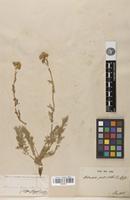
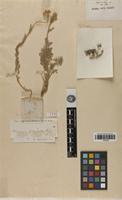
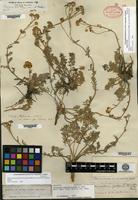
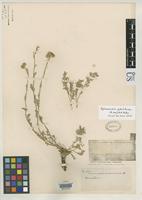
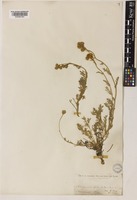
Isotype of Tanacetum potentilloides (A.Gray) A.Gray [family ASTERACEAE]
Holotype of Artemisia potentilloides A. Gray [family ASTERACEAE]
Isotype of Artemisia potentilloides Gray, A. 1865 [family ASTERACEAE]
Sphaeromeria potentilloides (A.Gray) A.Heller [family COMPOSITAE]
Previous
Next

Name

Identification
Sphaeromeria potentilloides (A. Gray) A. Heller [family ASTERACEAE ] (stored under name); Verified by T. K. Lowrey (UNM), 2007 Artemisia potentilloides A. Gray [family ASTERACEAE ] Verified by A. Gray, 1865 Artemisia potentilloides A. Gray [family ASTERACEAE ] Verified by A. Gray, Tanacetum potentilloides (A. Gray) A. Gray [family ASTERACEAE ] Verified by A. Gray,
Related name
  • Tanacetum potentilloides
  • Sphaeromeria potentilloides
  • Artemisia potentilloides
Common name
  • cinquefoil false sagebrush, Flora of North America Vol. 19
  • Fivefinger chickensage, Flora of North America Vol. 19

Flora

Entry for Sphaeromeria potentilloides (A. Gray) A. Heller [family COMPOSITAE]
Herbarium
Flora of North America (FNA)
Collection
Flora of North America
Resource Type
Reference Sources
Entry From
Flora of North America, Vol 19,
Names
Sphaeromeria potentilloides (A. Gray) A. Heller [family COMPOSITAE], Muhlenbergia, 1: 7. 1900
Artemisia potentilloides A. Gray [family COMPOSITAE], Proc. Amer. Acad. Arts, 6: 551. 1866
Tanacetum potentilloides (A. Gray) A. Gray [family COMPOSITAE]
Vesicarpa potentilloides (A. Gray) Rydberg [family COMPOSITAE]
Treatment Author(s)
Timothy K. Lowrey
Leila M. Shultz
Information
Perennials, 3–30 cm. Stems lax. Leaves basal and cauline; basal (20–70 mm) 2-pinnately lobed (ultimate lobes linear to filiform, ca. 1 mm wide); cauline (5–18 mm) usually pinnately lobed, faces silky-tomentose. Heads 2–20 in corymbiform to paniculiform arrays or borne singly. Involucres 2.3–5.2 mm. Phyllaries 8–10, hairy. (Receptacles villous, hairs white, curly, 0.5–1 mm.) Cypselae 0.8–1.5 mm (faces obscurely nerved, becoming mucilaginous when wet).
Distribution
w United States.

Related Materials

  • Terms and Conditions
  • Privacy Policy
  • Cookie Policy
  • Cookie Settings
  • Accessibility
  • Help
  • Contact Us
  • Facebook
  • Twitter
ITHAKA

JSTOR is part of ITHAKA, a not-for-profit organization helping the academic community use digital technologies to preserve the scholarly record and to advance research and teaching in sustainable ways.

©2000-2026 ITHAKA. All Rights Reserved. JSTOR®, the JSTOR logo, JPASS®, Aluka®, and ITHAKA® are registered trademarks of ITHAKA.

╳