JSTOR Global Plants Home
  • Home
  • Browse
  • About
  • Access
  • Account
    • Saved Items
    • Profile
  • Log in

Global Plants

Skip to Main Content
  • JSTOR Global Plants Home
  • Global Plants

    • Browse
    • About
    • Access
    • Account
      • Saved Items
      • Profile
Log in
  • Browse
  • About
  • Access
  • Account
    • Saved Items
    • Profile
Advanced Search

Compilation
Artemisia kansana

6 Images see all

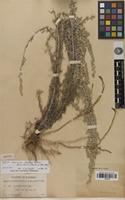
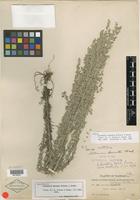
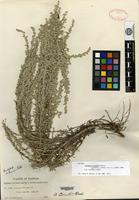
Isotype of Artemisia kansana Britton [family ASTERACEAE]
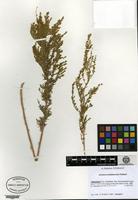
Isotype of Artemisia kandaharensis Podlech [family ASTERACEAE]
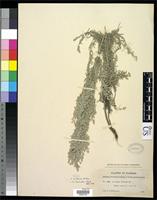
Isotype of Artemisia kansana Britton, N.L. 1898 [family ASTERACEAE]
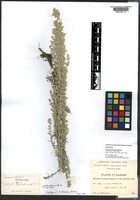
Isotype of Artemisia kansana Britton [family ASTERACEAE]
Holotype of Artemisia kansana Britton [family ASTERACEAE]
Isotype of Artemisia kansana Britton [family ASTERACEAE]
Previous
Next

Name

Identification
Artemisia kansana Britton [family ASTERACEAE ] (stored under name); Verified by D. Podlech, Isotype of Artemisia kandaharensis Podlech [family ASTERACEAE ] Verified by Podlech, 1986
Related name
  • Artemisia kandaharensis
  • Artemisia wrightii
  • Artemisia kansana
Common name
  • Carruth wormwood, Flora of North America Vol. 19

Flora

Entry for Artemisia carruthii Alph. Wood ex Carruth [family COMPOSITAE]
Herbarium
Flora of North America (FNA)
Collection
Flora of North America
Resource Type
Reference Sources
Entry From
Flora of North America, Vol 19,
Names
Artemisia carruthii Alph. Wood ex Carruth [family COMPOSITAE], Trans. Kansas Acad. Sci., 5: 51. 1877
Artemisia bakeri Greene [family COMPOSITAE]
Artemisia coloradensis Osterhout [family COMPOSITAE]
Artemisia kansana Britton [family COMPOSITAE]
Artemisia vulgaris Linnaeus subsp. wrightii (A. Gray) H. M. Hall & Clements [family COMPOSITAE]
Artemisia wrightii A. Gray [family COMPOSITAE]
Treatment Author(s)
Leila M. Shultz
Information
Perennials, 15–40(–70) cm, faintly aromatic (rhizomatous). Stems mostly 3–8, ascending, brown to gray-green, simple (bases curved, somewhat woody), sparsely to densely tomentose. Leaves cauline, bicolor (± gray-green); blades narrowly elliptic, 0.1–2.5(–3) × 0.5–1 cm (gradually smaller distally), relatively deeply pinnatifid (lobes 3–5), faces densely tomentose (abaxial) to sparsely hairy (adaxial). Heads (usually nodding) in (leafy) paniculiform arrays 10–30 × 3–9 cm (branches erect). Involucres campanulate, 2–2.5(–3) × 1.5–3 mm. Phyllaries lanceolate, gray-tomentose. Florets: pistillate 1–5; bisexual 7–25; corollas pale yellow, 1–2 mm, glandular-pubescent. Cypselae (light brown) cylindro-elliptic, ca. 0.5 mm, (curved at summits, scarcely nerved), glabrous (shining). 2n = 18.
Phenology
jun-aug (summer), sep-nov (fall)
Altitude range
600–2900 m;
Distribution
Mexico (Chihuahua).Mexico (Sonora).USA Ariz.USA Colo.USA Kans.USA Mich.USA Mo.USA N.Mex.USA Okla.USA Tex.USA Utah
Discussion
Artemisia carruthii is closely related to members of the A. ludoviciana complex, with which it may intergrade.

Related Materials

  • Terms and Conditions
  • Privacy Policy
  • Cookie Policy
  • Cookie Settings
  • Accessibility
  • Help
  • Contact Us
  • Facebook
  • Twitter
ITHAKA

JSTOR is part of ITHAKA, a not-for-profit organization helping the academic community use digital technologies to preserve the scholarly record and to advance research and teaching in sustainable ways.

©2000-2026 ITHAKA. All Rights Reserved. JSTOR®, the JSTOR logo, JPASS®, Aluka®, and ITHAKA® are registered trademarks of ITHAKA.

╳