JSTOR Global Plants Home
  • Home
  • Browse
  • About
  • Access
  • Account
    • Saved Items
    • Profile
  • Log in

Global Plants

Skip to Main Content
  • JSTOR Global Plants Home
  • Global Plants

    • Browse
    • About
    • Access
    • Account
      • Saved Items
      • Profile
Log in
  • Browse
  • About
  • Access
  • Account
    • Saved Items
    • Profile
Advanced Search

Compilation
Artemisia arctica

12 Images see all

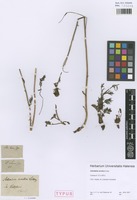
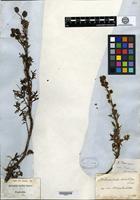
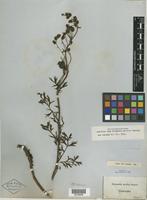
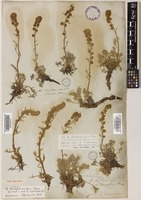
Type of Artemisia arctica Less. [family ASTERACEAE]
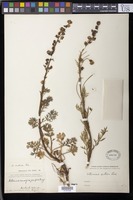
Type of Artemisia cooleyae Rydb. [family ASTERACEAE]
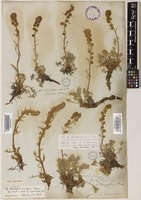
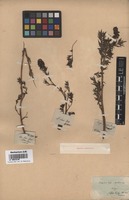
Artemisia arctica Less. [family COMPOSITAE]
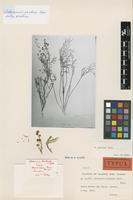
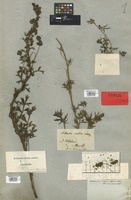
Isosyntype of Artemisia arctica Less. [family COMPOSITAE]
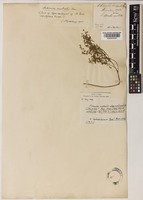
Type? of Artemisia arctica Lessing [family ASTERACEAE]
Filed as Artemisia arctica Less. [family ASTERACEAE]
Original material of Artemisia arctica Less. [family ASTERACEAE]
Filed as Artemisia arctica Less. [family COMPOSITAE]
Type? of Artemisia arctica Less. [family ASTERACEAE]
Artemisia arctica Less. [family COMPOSITAE]
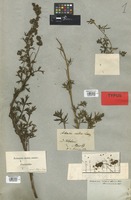
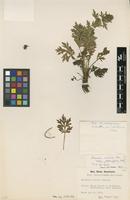
Type of Artemisia eschscholtziana Besser [family COMPOSITAE]
Isotype of Artemisia arctica Less. subsp. glabriflora Hultén [family ASTERACEAE]
Previous
Next

Name

Identification
Artemisia arctica Lessing [family ASTERACEAE ] (stored under name); Verified by Less., 1831
Related name
  • Artemisia arctica
  • Artemisia cooleyae

Flora

Entry for Artemisia norvegica Fries subsp. saxatilis (Besser) H. M. Hall & Clements [family COMPOSITAE]
Herbarium
Flora of North America (FNA)
Collection
Flora of North America
Resource Type
Reference Sources
Entry From
Flora of North America, Vol 19,
Names
Artemisia norvegica Fries subsp. saxatilis (Besser) H. M. Hall & Clements [family COMPOSITAE], Publ. Carnegie Inst. Wash., 326: 58. 1923
Artemisia chamissoniana Besser var. saxatilis Besser [family COMPOSITAE], in W. J. Hooker, Fl. Bor.-Amer., 1: 324. 1833
Artemisia arctica Lessing [family COMPOSITAE]
Artemisia arctica subsp. beringensis (Hultén) Hultén [family COMPOSITAE]
Artemisia arctica subsp. comata (Rydberg) Hultén [family COMPOSITAE]
Artemisia arctica subsp. ehrendorferi Korobkov [family COMPOSITAE]
Artemisia arctica var. saxatilis (Besser) Y. R. Ling [family COMPOSITAE]
Artemisia comata Rydberg [family COMPOSITAE]
Artemisia norvegica var. piceetorum S. L. Welsh & Goodrich [family COMPOSITAE]
Treatment Author(s)
Leila M. Shultz
Information
Perennials, 25–40(–60) cm (not cespitose), mildly aromatic (roots often horizontal, woody). Stems 1–3, erect to ascending, green or reddish, simple, glabrous or sparsely tomentose. Leaves mostly basal (in rosettes, petiolate), bright green; blades (basal) broadly lanceolate, 5–8(–10) × 2–3(–4) cm, 1–3-pinnately lobed (apical lobes 1–7 × 1.5–3 mm; mid cauline sessile, pinnately lobed; on flowering stems, sessile, linear, entire), faces glabrous or hairy. Heads (nodding, proximalmost on peduncles to 50 mm) in racemiform arrays 10–17 × 1–2 cm. Involucres globose, (4–)5–8 × 4–10 mm. Phyllaries ovate-lanceolate to elliptic (margins dark brown to black), sparsely hairy to villous. Florets: pistillate 6–20; bisexual (30–)50–70; corollas yellow or red-tinged, 1.5–2.5(–3.5) mm, long-hairy. Cypselae ovoid-oblong (angular), ca. 2.5 mm, glabrous or villous. 2n = 18, 36.
Altitude range
0–3800 m;
Distribution
e Asia (Russian Far East).USA AlaskaUSA Calif.USA Colo.USA Mont.USA UtahUSA Wash.USA Wyo.Canada Alta.Canada B.C.Canada Yukon
Discussion
Variation within Artemisia norvegica in North America is not well understood and, for that reason, this treatment represents a conservative taxonomy with only one subspecies for the flora area. Subspecies saxatilis differs from typical A. norvegica primarily by its larger heads. European plants have involucres less than 10 mm in diameter. Chromosome number may be used to justify separation of taxa either at the level of subspecies or species. If separated as distinct species, then A. arctica is the name for North American plants. The diploid A. arctica (2n = 18) and tetraploid A. comata (2n = 36) are treated as separate species by R. Elven et al. (pers. comm.).

Related Materials

  • Terms and Conditions
  • Privacy Policy
  • Cookie Policy
  • Cookie Settings
  • Accessibility
  • Help
  • Contact Us
  • Facebook
  • Twitter
ITHAKA

JSTOR is part of ITHAKA, a not-for-profit organization helping the academic community use digital technologies to preserve the scholarly record and to advance research and teaching in sustainable ways.

©2000-2026 ITHAKA. All Rights Reserved. JSTOR®, the JSTOR logo, JPASS®, Aluka®, and ITHAKA® are registered trademarks of ITHAKA.

╳