JSTOR Global Plants Home
  • Home
  • Browse
  • About
  • Access
  • Account
    • Saved Items
    • Profile
  • Log in

Global Plants

Skip to Main Content
  • JSTOR Global Plants Home
  • Global Plants

    • Browse
    • About
    • Access
    • Account
      • Saved Items
      • Profile
Log in
  • Browse
  • About
  • Access
  • Account
    • Saved Items
    • Profile
Advanced Search

Compilation
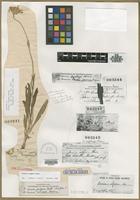
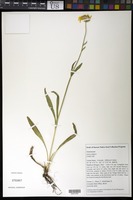
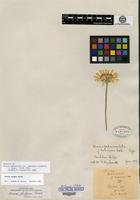
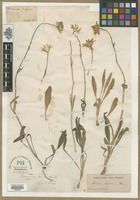
Arnica fulgens

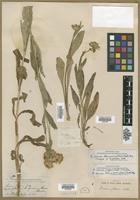
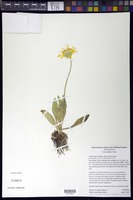
8 Images see all

Filed as Arnica fulgens Nutt. [family ASTERACEAE]
Isotype of Arnica rydbergii Greene [family ASTERACEAE]
Arnica fulgens Pursh [family ASTERACEAE]
Holotype of Arnica pedunculata Cockerell var. tubularis Cockerell [family ASTERACEAE]
Filed as Arnica fulgens Pursh [family ASTERACEAE]
Type? of Arnica fulgens Nutt. [family ASTERACEAE]
Original material of Arnica rydbergii Greene [family ASTERACEAE]
Arnica fulgens Pursh [family ASTERACEAE]
Previous
Next

Name

Identification
Arnica fulgens Pursh [family ASTERACEAE ] (stored under name); Verified by Not on Sheet, Arnica pedunculata Cockerell [family ASTERACEAE ] Verified by Cockerell, 1916
Related name
  • Arnica foliosa
  • Arnica pedunculata
  • Arnica sp.
  • Arnica sororia
  • Arnica fulgens
  • Arnica rydbergii
Common name
  • Twin arnica, Flora of North America Vol. 21
  • Foothill arnica, Flora of North America Vol. 21

Flora

Entry for Arnica fulgens Pursh [family COMPOSITAE]
Herbarium
Flora of North America (FNA)
Collection
Flora of North America
Resource Type
Reference Sources
Entry From
Flora of North America, Vol 21,
Names
Arnica fulgens Pursh [family COMPOSITAE], Fl. Amer. Sept., 2: 527. 1813
Arnica monocephala Rydberg [family COMPOSITAE]
Arnica pedunculata Rydberg [family COMPOSITAE]
Treatment Author(s)
Steven J. Wolf
Information
Plants 10–75 cm. Stems solitary, simple. Leaves 3–5 pairs, crowded toward stem bases (some or all axils with dense tufts of brown wool); petiolate (petioles at least basal leaves, narrow or broadly winged); blades (with 3 or 5 prom-inent, subparallel veins) usually narrowly oblanceolate to oblong, rarely oval or broadly spatulate, 4.5–20 × 0.5–2.5 cm, margins denticulate, apices obtuse, faces moderately uniformly hairy, stipitate-glandular. Heads 1(–3). Involucres broadly hemispheric. Phyllaries 13–21, elliptic-oblong or narrowly to broadly lanceolate. Ray florets 8–16; corollas yellow-orange. Disc florets: corollas yellow; anthers yellow. Cypselae brown, 3.5–7 mm, densely hirsute, sometimes sparingly stipitate-glandular; pappi usually white, sometimes tawny, bristles barbellate. 2n = 38, 57.
Phenology
may (spring), jun-jul (summer)
Altitude range
500–3000 m;
Distribution
USA Calif.USA Colo.USA IdahoUSA Mont.USA Nev.USA N.Dak.USA Oreg.USA S.Dak.USA UtahUSA Wash.USA Wyo.Canada Alta.Canada B.C.Canada Man.Canada Sask.

Related Materials

  • Terms and Conditions
  • Privacy Policy
  • Cookie Policy
  • Cookie Settings
  • Accessibility
  • Help
  • Contact Us
  • Facebook
  • Twitter
ITHAKA

JSTOR is part of ITHAKA, a not-for-profit organization helping the academic community use digital technologies to preserve the scholarly record and to advance research and teaching in sustainable ways.

©2000-2026 ITHAKA. All Rights Reserved. JSTOR®, the JSTOR logo, JPASS®, Aluka®, and ITHAKA® are registered trademarks of ITHAKA.

╳