JSTOR Global Plants Home
  • Home
  • Browse
  • About
  • Access
  • Account
    • Saved Items
    • Profile
  • Log in

Global Plants

Skip to Main Content
  • JSTOR Global Plants Home
  • Global Plants

    • Browse
    • About
    • Access
    • Account
      • Saved Items
      • Profile
Log in
  • Browse
  • About
  • Access
  • Account
    • Saved Items
    • Profile
Advanced Search

Compilation
Aristida filiformis

2 Images see all

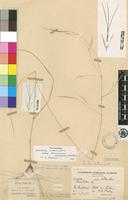
Holotype of Aristida filiformis Henrard [family POACEAE]
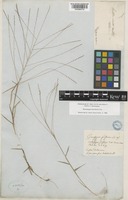
Gymnopogon brevifolius Trin. [family POACEAE]
Previous
Next

Name

Identification
Aristida filiformis Henrard [family POACEAE ] Aristida scabrivalvis Hack. [family POACEAE ] (stored under name);
Related name
  • Aristida filiformis
  • Aristida scabrivalvis

Flora

Entry for Aristida scabrivalvis subsp. borumensis Henrard Melderis [family GRAMINEAE]
Herbarium
Royal Botanic Gardens, Kew (K)
Collection
Flora Zambesiaca
Resource Type
Reference Sources
Entry From
FZ, Vol 10, Part 1, (1971) Author: E. Launert
Names
Aristida scabrivalvis subsp. borumensis Henrard Melderis [family GRAMINEAE], in Bol. Soc. Brot., Sér. 2, 44: 287 (1970). Type: Mozambique, Boroma, xii.1890, Menyharth (L, holotype).
Aristida borumensis Henrard [family GRAMINEAE], Monogr. Aristida 2 in Meded. Rijks-Herb. 58a: 203, t. 91 (1932); Crit. Rev. Aristida Suppl. in Meded. Rijks-Herb. 54c: 706 (1933). — Sturgeon in Rhod. Agric. Journ. 51: 506 (1954). Type as above.
Aristida filiformis Henrard [family GRAMINEAE], Monogr. Aristida 2 in Meded. Rijks-Herb. 58a: 203, t. 117 (1932); Crit. Rev. Aristida Suppl. in Meded. Rijks-Herb. 54c: 717 (1933). — Sturgeon in Rhod. Agric. Journ. 51: 506 (1954). Type: Rhodesia, Wankie, near Fuller, c. 900 m., 11.iii.1929, Pardy HC. 4934 (SRGH, holotype; K, isotype).
Aristida scabrivalvis Hack., Stent & Rattray [family GRAMINEAE], in Proc. Rhod. Sci. Ass. 32: 46 (1933) pro parte.
Habitat
On sandy and basalt soils and on clayey loam in “mopane” tree-savanna, in paddocks, along roadsides and on waste or disturbed ground
Range
Not known from elsewhere
Distribution
Zimbabwe S Beitbridge, 9·6 km. ENE. of Tuli Police Camp, 23.iii.1959, Drummond 5966 (BM; K; SRGH).Zimbabwe E Melsetter, 1220-1830 m., iv.1907, Swynnerton 1603 (BM; SRGH).Zimbabwe C Gatooma, c. 1142 m., 20.iii.1930, Brain 951 (K; SRGH).Zimbabwe W Wankie Distr., opposite Kazungula, 910 m., iv.1955, Davies 1058 (K; LISC; SRGH).Malawi N Karonga Distr., iii.1954, Jackson 1257 (K).Zimbabwe N Bindura, Leaopard’s Vlei, 27.iii.1948, Rattray 1482 (K; SRGH).Zambia S Mapanza N., 1070 m., 9.iv.1955, Robinson 1222 (K; SRGH).Botswana N Okavanga, Nokaneng, Taokhe flood plain, 21.iii.1961, Vesey-FitzGerald 3315 (BM; SRGH).
Notes
With glabrous lemmas.Botswana. SE: 24·8 km. N. of Mahalapye, 15.iv.1931, Pole Evans 3205 (SRGH).Zambia. S: Mazabuka, v.1932, Trapnell 1070 (SRGH). Rhodesia. W: Wankie, c. 900 m., 11.iii.1929, Pardy 4934 (SRGH).Examination of the holotype of A. filiformis Henrard (Pardy 4934) shows that it represents a slender plant which agrees very well, in nearly all panicle and spikelet characters, with subsp. borumensis except for the lemmas which are glabrous. The presence or absence of the scabridity on the lemmas is not of great taxonomic importance since the forms with glabrous lemmas are met with also in the other subsp. As this feature is not accompanied with any other essential diagnostic characters, these forms are not treated here as separate taxa. The absence of long hairs on leaf-sheaths is also not an important character, because the forms with scabrid lemmas, also do not always possess such hairs.In its very lax panicle with branches bearing a few spikelets at the ends, subsp. borumensis resembles A. bipartita, from which it could be distinguished mainly by having a superior glume longer than the inferior and by the scabridity or pubescence of the glumes. The lemma of A. scabrivalvis subsp. borumensis is usually coarsely scabrid towards the apex, while in A. bipartita it is glabrous and smooth.

Related Materials

  • Terms and Conditions
  • Privacy Policy
  • Cookie Policy
  • Cookie Settings
  • Accessibility
  • Help
  • Contact Us
  • Facebook
  • Twitter
ITHAKA

JSTOR is part of ITHAKA, a not-for-profit organization helping the academic community use digital technologies to preserve the scholarly record and to advance research and teaching in sustainable ways.

©2000-2026 ITHAKA. All Rights Reserved. JSTOR®, the JSTOR logo, JPASS®, Aluka®, and ITHAKA® are registered trademarks of ITHAKA.

╳