JSTOR Global Plants Home
  • Home
  • Browse
  • About
  • Access
  • Account
    • Saved Items
    • Profile
  • Log in

Global Plants

Skip to Main Content
  • JSTOR Global Plants Home
  • Global Plants

    • Browse
    • About
    • Access
    • Account
      • Saved Items
      • Profile
Log in
  • Browse
  • About
  • Access
  • Account
    • Saved Items
    • Profile
Advanced Search

Compilation
Aristida cassanellii

2 Images see all

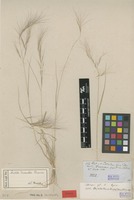
Syntype of Aristida mutabilis Trin. & Rupr. var. laeviglumis Henrard [family POACEAE]
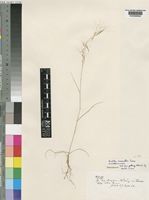
Aristida mutabilis Trin. & Rupr. [family POACEAE]
Previous
Next

Name

Identification
Aristida cassanellii A.Terracc. [family POACEAE ] Verified by Clayton, W. D., Aristida mutabilis Trin. & Rupr. [family POACEAE ] (stored under name);
Related name
  • Aristida mutabilis
  • Aristida cassanellii

Flora

Entry for ARISTIDA mutabilis Trin. & Rupr. [family POACEAE]
Herbarium
Royal Botanic Gardens, Kew (K)
Collection
Flora of Tropical East Africa
Resource Type
Reference Sources
Entry From
Flora of Tropical East Africa, Part (Part 1), page 1, (1970) Author: W. D. Clayton
Names
ARISTIDA mutabilis Trin. & Rupr. [family POACEAE], Sp. Gram. Stip.: 150 (1842); F.P.S. 3: 397 (1956); R.K.G.: 33 (1958); G.T.: 23 (1965). Type: Sudan Republic, Kordofan, Kotschy 103 (K, isolecto.!)
ARISTIDA meccana Trin. & Rupr. [family POACEAE], Sp. Gram. Stip.: 152 (1842). Type: Saudi Arabia, near Mecca, Schimper (LE, holo.!)
ARISTIDA tenuis Hochst. [family POACEAE], in Flora 38: 200 (1855), non Kunth (1829), nom. illegit. Type: Ethiopia, Schimper 1271 in Herb. Buchinger (P, iso.!)
ARISTIDA schweinfurthii Boiss. [family POACEAE], Fl. Or. 5: 493 (1884). Type: Egypt, near Ras Banas, Schweinfurth 2517 (G, holo.!)
ARISTIDA cassanellii Terr. [family POACEAE], in Ann. Ist. Bot. Roma 5: 94 (1892); F.P.S. 3: 396 (1956). Type: Eritrea, Ras Morah, Terracciano 1523 (FI, holo. †)
ARISTIDA astroclada Chiov. [family POACEAE], in Ann. Bot. Roma 10: 409 (1912). Type: Eritrea, Beni Amer, Ducambia, Pappi 8793 (FI, holo.!)
ARISTIDA mutabilis Henr. var. tangensis [family POACEAE], in Med. Rijks Herb. 54A: 368 (1927). Type: Tanganyika, Tanga, Holst 2021 (M, holo.!)
Information
Loosely tufted annual; culms (10–)30–70 cm. high, glabrous. Leaf-blades linear, 6–14 cm. long, narrow or convolute; sheaths glabrous, those at the base of the plant laterally compressed, the auricles bearded or not. Panicle narrowly ovate, 12–20 cm. long, loose or ± contracted, the spikelets congested in narrow spikes at the tips of the main branches. Spikelets grey or pallid; glumes typically subequal, lanceolate, scaberulous on the keel and sometimes also on the flanks, the lower 4–5 mm. long, the upper 6–7 mm. long, acute or apiculate, less often with a short awn-point; lemma terete, 4–5 mm. long, scabrid upwards; callus linear, 1–1.5 mm. long, finely obtuse at the tip; column 2–5 mm. long, articulated just below the branching point of the awns; awns 10–30 mm. long, slender, parallel or divergent.
Range
DISTR. U1; K1–4, 6, 7; T2, 3, 6 from Mauritania to India
Altitude range
100–1400 m.
Distribution
KENYA Northern Frontier Province 33 km. SW. of Mandera, 26 May 1952, Gillett 13318!KENYA Turkana District Loburiangiromo, Aug. 1962, J. Wilson 1259!KENYA Masai District 69 km. on Nairobi-Magadi road, 25 June 1951, Bogdan 3109! & Magadi, 8 Oct. 1955, Greenway 8843!TANGANYIKA Masai District Ol Doinyo Langai [Lengai], 11 Mar. 1964, Greenway & Hunter 11349!TANGANYIKA Pare District E. of Ndungu-Kihurio road, 11 Dec. 1961, Greenway 10401!TANGANYIKA Lushoto District Lasa Mt., 16 June 1942, Greenway 6469!UGANDA Karamoja District Timu, Aug. 1963, J. Wilson 1513!
Notes
A. mutabilis is an annual species closely resembling the perennial A. barbicollis. The glumes tend to be subequal and acute or apiculate, rather than markedly unequal and aristulate, while the awns tend to be more slender and less divergent, but these characters are not constant and the two species are not always easy to separate. The geographical distribution is different, A. mutabilis extending from West Africa through Arabia to India, whereas A. barbicollis occurs from Kenya southwards.

Related Materials

  • Terms and Conditions
  • Privacy Policy
  • Cookie Policy
  • Cookie Settings
  • Accessibility
  • Help
  • Contact Us
  • Facebook
  • Twitter
ITHAKA

JSTOR is part of ITHAKA, a not-for-profit organization helping the academic community use digital technologies to preserve the scholarly record and to advance research and teaching in sustainable ways.

©2000-2026 ITHAKA. All Rights Reserved. JSTOR®, the JSTOR logo, JPASS®, Aluka®, and ITHAKA® are registered trademarks of ITHAKA.

╳