JSTOR Global Plants Home
  • Home
  • Browse
  • About
  • Access
  • Account
    • Saved Items
    • Profile
  • Log in

Global Plants

Skip to Main Content
  • JSTOR Global Plants Home
  • Global Plants

    • Browse
    • About
    • Access
    • Account
      • Saved Items
      • Profile
Log in
  • Browse
  • About
  • Access
  • Account
    • Saved Items
    • Profile
Advanced Search

Compilation
Aristida canescens

7 Images see all

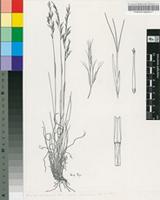
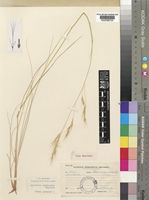
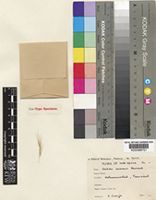
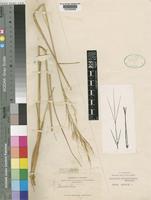
Aristida canescens Henrard subsp. canescens
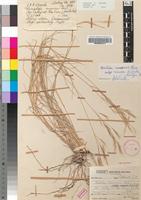
Type of Aristida canescens Henrard [family POACEAE]
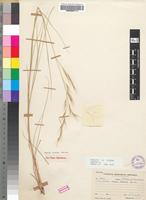
Isotype of Aristida canescens Henrard [family POACEAE]
Type of Aristida chrysochlaena Henrard [family POACEAE]
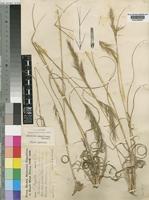
Holotype of Aristida canescens Henrard subsp. ramosa De Winter [family POACEAE]
Isotype of Aristida canescens Henrard subsp. canescens [family POACEAE]
Aristida canescens Henrard [family POACEAE]
Previous
Next

Name

Identification
Aristida canescens Henrard [family POACEAE ]
Related name
  • Aristida canescens

Flora

Entry for Aristida canescens Henrard [family GRAMINEAE]
Herbarium
Royal Botanic Gardens, Kew (K)
Collection
Flora Zambesiaca
Resource Type
Reference Sources
Entry From
FZ, Vol 10, Part 1, (1971) Author: E. Launert
Names
Aristida canescens Henrard [family GRAMINEAE], Monogr. Aristida 2 in Meded. Rijks-Herb. 58a: 210, 309, t. 95 (1932); Crit. Rev. Aristida Suppl. in Meded. Rijks-Herb. 54c: 708 (1933). — Stent & Rattray in Proc. Rhod. Sci. Ass. 32: 46 (1933). — Schweickerdt in Bothalia, 4: 139 (1941). — Sturgeon in Rhod. Agric. Journ. 51: 506 (1954). — Chippindall in Meredith, Grasses & Pastures of S. Afr.: 308, map 41 (1955). — de Winter in Bothalia, 8: 260, fig. 31, 32, 33, 159/10 (1965). Type from S. Africa (Transvaal).
Information
Perennial, up to 1 m. high, densely caespitose. Culms erect, simple or branched, terete or slightly compressed, glabrous or slightly scaberulous below the nodes, c. 4-noded; nodes glabrous. Leaf-sheaths tight, glabrous or scaberulous, the lower slightly compressed. Ligule a ciliolate rim; auricles barbate or slightly pubescent; collar minutely pubescent. Leaf-laminae usually up to 20 cm., scarcely 1 mm. wide when expanded, coarse, involute or flat at the base, curling when old, scabrid or hirtellous above, glabrous or scaberulous beneath, with thickened scabrous margins. Panicle up to 20 cm. long, erect, lax or contracted but much interrupted, with an angular or triquetrous scabrous axis; branches remote, naked in the lower part, scabrid. Spikelets pallid or yellowish-green, sometimes tinged with purple, densely congested towards the ends of the branchlets. Glumes unequal, lanceolate, 1-nerved; the inferior 5·5-8 mm. long, scaberulous on the keel, subobtuse or emarginate or slightly 2-fid, with very obtuse lateral lobes, mucronate from the sinus; the superior 8-11 mm. long, smooth, truncate at the apex and shortly awned or 2-lobed, with a mucro from the sinus. Lemma 7-11 mm. long, slightly compressed, smooth or scaberulous on the keel; callus 1 mm. long, subobtuse, densely barbate; beak or column absent; awns scabrous, subequal, the central 9-15 mm. long, the lateral ones 7-13 mm. long; articulation absent. 2n = 55.
Habitat
On sandy, gravelly soils, in open grassland, woodland and sandveld
Distribution
Zimbabwe S Gwande Ratanhyana, 11.vi.1968, Wild 7730 (BM; SRGH).Zimbabwe E Umtali, 1020 m., iv.1920, Perrott in Eyles no. 3068 (K).Zimbabwe C Selukwe, 24 km. S. of Selukwe on Great Dyke, 16.iii.1964, Wild 6366 (BM; SRGH).Zimbabwe W Nymandhlovu, 24.ii.1932, Rattray 497 (BM; SRGH).Zimbabwe N Lomagundi, Caledonian Ranch, 1370 m., 12.iv.1959, Phipps 2162 (BM; SRGH).Botswana SE Towani, 15.iv.1931, Pole Evans 3215 (SRGH).Zambia S Between Kafue and Mazabuka on Munali Pass, 15.iii.1963, van Rensburg 1571 (BM; SRGH).
Distribution (external)
Cape Province
Natal
Orange Free State
Transvaal
Notes
Resembling A. junciformis but differing from the latter in having terete culms, and leaf-laminae with prominent and raised marginal nerves, coarser spikelets, and in the absence of beak or column.

Related Materials

  • Terms and Conditions
  • Privacy Policy
  • Cookie Policy
  • Cookie Settings
  • Accessibility
  • Help
  • Contact Us
  • Facebook
  • Twitter
ITHAKA

JSTOR is part of ITHAKA, a not-for-profit organization helping the academic community use digital technologies to preserve the scholarly record and to advance research and teaching in sustainable ways.

©2000-2026 ITHAKA. All Rights Reserved. JSTOR®, the JSTOR logo, JPASS®, Aluka®, and ITHAKA® are registered trademarks of ITHAKA.

╳