JSTOR Global Plants Home
  • Home
  • Browse
  • About
  • Access
  • Account
    • Saved Items
    • Profile
  • Log in

Global Plants

Skip to Main Content
  • JSTOR Global Plants Home
  • Global Plants

    • Browse
    • About
    • Access
    • Account
      • Saved Items
      • Profile
Log in
  • Browse
  • About
  • Access
  • Account
    • Saved Items
    • Profile
Advanced Search

Compilation
Aristida brainii

2 Images see all

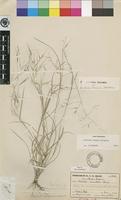
Isotype of Aristida brainii Melderis [family POACEAE]
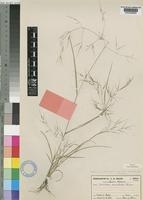
Aristida brainii Melderis [family POACEAE]
Previous
Next

Name

Identification
Aristida brainii Melderis [family POACEAE ] (stored under name); Aristida serrulata Chiov. [family POACEAE ]
Related name
  • Aristida serrulata
  • Aristida brainii

Flora

Entry for Aristida brainii Melderis [family GRAMINEAE]
Herbarium
Royal Botanic Gardens, Kew (K)
Collection
Flora Zambesiaca
Resource Type
Reference Sources
Entry From
FZ, Vol 10, Part 1, (1971) Author: E. Launert
Names
Aristida serrulata [family GRAMINEAE], sensu Stent & Rattray in Proc. Rhod. Sci. Ass. 32: 46 (1933). — Sturgeon in Rhod. Agric. Journ. 51: 505 (1954).
Aristida brainii Melderis [family GRAMINEAE], in Bol. Soc. Brot., Sér. 2, 44: 279, t. I, IV, fig. A (1970). Type: Rhodesia, Victoria Falls, 10-15.iii.1932, Brain 8866 (K, holotype; SRGH, isotype).
Information
Annual, up to 50 cm. high, delicate. Culms erect, ascending, usually branched from the lower nodes, glabrous, smooth, 3-4-noded; nodes glabrous and smooth. Leaf-sheaths rather lax, keeled; the lower ones with some scattered long, delicate hairs; the upper ones glabrous and smooth. Ligule densely short-ciliolate; auricles ciliolate, often with a few long hairs; collar glabrous. Leaf-laminae up to 16 x 0·17 cm., densely ribbed, with marginal nerves and midrib more prominent, shortly pubescent on the nerves above, glabrous and smooth beneath. Panicle up to 20 cm. long, effuse; axis terete and glabrous, smooth in the lower part, subangular, scabrid in the upper; branches 1-2 at the nodes, subangular, slightly scabrid, divaricate, naked in the lower part, bearing 1-3 spikelets, with dark, shortly pubescent glandular patches in the axils. Spikelets delicate, greenish or purplish-brown, the lateral ones divaricate, on short pedicels (up to 1·5 mm. long). Glumes broad, unequal, 2-fid at the apex, 1-nerved, keeled; the inferior 6-7·5 mm. long, scabrid on the keel, otherwise glabrous and smooth, rarely slightly minutely pubescent towards the apex, with obtuse lobes at the apex with a very short awn (up to 0·8 mm. long) from a shallow sinus, exceeding the lobes; the superior 8·5-10 mm. long, nearly smooth on the keel, with acute lobes at the apex and with a very short awn (up to 0·5 mm. long) from a deep sinus, usually not exceeding the lobes. Lemma c. 8 mm. long, keeled, glabrous and smooth, sometimes mottled with purple, deeply grooved ventrally, with enrolled margins; callus c. 1 mm. long, subobtuse, densely pubescent; column absent; awns subequal, 1-1·5 cm. long, slightly dilated towards the base, scabrid; articulation absent.
Habitat
Ecological details not available
Range
Not known from elsewhere
Distribution
Zimbabwe W Victoria Falls, 910 m., iii.1932, Brain 5830 (SRGH).
Notes
This species has been confused with A. serrulata, described by Chiovenda from Eritrea, which is closely allied to A. rhiniochloa. A. brainii differs from A. serrulata in the following diagnostic characters: its culms (including nodes) and leaf-sheaths are glabrous, smooth (with a few long scattered hairs on the lower leaf-sheaths and auricles); the branches of the panicle are glabrous, conspicuously spreading; the spikelets are smaller; glumes glabrous, or nearly glabrous, smooth, with the inferior shorter than the superior; and the awns of the lemma shorter (10-15 mm. long). A. brainii is closely related to A. scabrivalvis, from which it differs in shorter branches of the panicle, glabrous glumes, and a 2-fid inferior glume with a very short awn (up to 0·8 mm. long) from the sinus; its lemma is glabrous.

Related Materials

  • Terms and Conditions
  • Privacy Policy
  • Cookie Policy
  • Cookie Settings
  • Accessibility
  • Help
  • Contact Us
  • Facebook
  • Twitter
ITHAKA

JSTOR is part of ITHAKA, a not-for-profit organization helping the academic community use digital technologies to preserve the scholarly record and to advance research and teaching in sustainable ways.

©2000-2026 ITHAKA. All Rights Reserved. JSTOR®, the JSTOR logo, JPASS®, Aluka®, and ITHAKA® are registered trademarks of ITHAKA.

╳