JSTOR Global Plants Home
  • Home
  • Browse
  • About
  • Access
  • Account
    • Saved Items
    • Profile
  • Log in

Global Plants

Skip to Main Content
  • JSTOR Global Plants Home
  • Global Plants

    • Browse
    • About
    • Access
    • Account
      • Saved Items
      • Profile
Log in
  • Browse
  • About
  • Access
  • Account
    • Saved Items
    • Profile
Advanced Search

Compilation
Aristida aequiglumis

7 Images see all

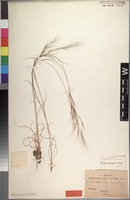
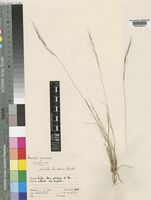
Holotype of Aristida aequiglumis Hack. [family POACEAE]
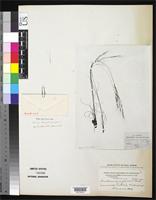
Filed as Aristida aequiglumis Hackel, E. 1895 [family POACEAE]
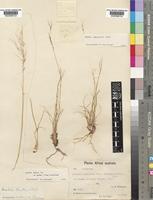
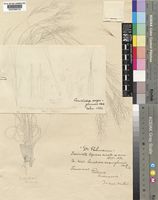
Type? of Aristida huillensis Rendle [family POACEAE]
Aristida aequiglumis Hack. [family POACEAE]
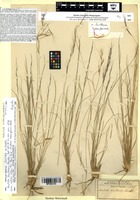
Aristida aequiglumis Hack. ex Schinz [family POACEAE]
Aristida aequiglumis Hack. [family POACEAE]
Previous
Next

Name

Identification
Aristida aequiglumis Hack. [family POACEAE ] (stored under name);
Related name
  • Aristida angustata
  • Aristida diffusa
  • Aristida huillensis
  • Aristida burkei
  • Aristida aequiglumis

Flora

Entry for Aristida aequiglumis Hack. [family GRAMINEAE]
Herbarium
Royal Botanic Gardens, Kew (K)
Collection
Flora Zambesiaca
Resource Type
Reference Sources
Entry From
FZ, Vol 10, Part 1, (1971) Author: E. Launert
Names
Aristida aequiglumis Hack. [family GRAMINEAE], in Bull. Herb. Boiss. 3: 381 (1895). — Stapf in Harv. &. Sond., F.C. 7: 555 (1899). — Henrard, Crit. Rev. Aristida 1 in Meded. Rijks-Herb. 54: 18 (1926); Monogr. Aristida 2 in Meded. Rijks-Herb. 58a: 236, t. 112 (1932). — Stent & Rattray in Proc. Rhod. Sci. Ass. 32: 46 (1933). — Schweickerdt in Bothalia, 4, 1: 145 (1941). — Sturgeon in Rhod. Agric. Journ. 51: 506 (1954). — Chippindall in Meredith, Grasses & Pastures of S. Afr.: 310 (1955). — de Winter in Bothalia, 8: 262, fig. 34, 35, 36, 159/11 (1965). Type from S. Africa (Transvaal).
Information
Perennial, usually c. 40 cm. high, densely caespitose. Culms erect, slender, usually simple, rarely branched from the upper nodes, terete, glabrous, smooth or minutely scaberulous below the nodes, c. 3-4-noded; nodes glabrous, smooth. Leaf-sheaths usually tight, glabrous, smooth, persistent. Ligule a short-ciliolate rim; auricles minutely pubescent, sometimes with long hairs; collar minutely pubescent. Leaf-laminae up to 15 x 0·1-0·15 cm. (when expanded), erect or slightly curved, usually setaceously convolute, rather firm, minutely puberulous above, glabrous, smooth beneath. Panicle 6-15 cm. long, linear-oblong, usually lax and open, sometimes contracted; axis terete in the lower part, more or less angular upwards, slightly scaberulous; branches up to 4 cm. long, solitary or 2-nate, suberect, filiform, minutely scaberulous, with 1-3 spikelets. Glumes subequal, linear-lanceolate, 1-nerved, with a prominent glabrous or scabrid keel, scabrid or shortly hirtellous on the back, often with somewhat recurved apices; the inferior 5-9 mm. long, with a short awn up to 1·5 mm. long, the superior 5·5-9·5 mm. long, usually 2-fid, with a mucro from the sinus. Lemma 6-7 mm. long, minutely scaberulous towards the apex; callus c. 0.5 mm. long, subobtuse or obtuse, shortly barbate; column 2-8 mm. long, twisted, scabrid; awns somewhat unequal, filiform, suberect or slightly spreading, scaberulous, the central 15-25 mm. long, the lateral ones 13-20 mm. long; articulation absent. 2n = 22.
Habitat
On sandy ground in open situations, seasonally flooded areas, paddocks, rock crevices and on hill slopes. Considered to be an indicator of eroded soil
Distribution
Zambia S Mapanza, Mt. Makulu Pasture Research Station, 1250 m., 14.iv.1956, Robinson 1469 (SRGH).Zimbabwe C Salisbury, 1460 m., 1.iv.1927, Eyles 4777 (K; SRGH).Zambia C Chakwenga Headwaters, 100-129 km. E. of Lusaka, 27.iii.1965, Robinson 6554 (K).
Distribution (external)
Transvaal
Notes
Closely allied to A. textilis from which it differs in having shorter leaf-laminae, the superior glume being usually slightly 2-fid with a short mucro from the sinus, a longer lemma and by the absence of long scattered hairs from minute tubercles on the lower leaf-sheaths and on the upper surface of the leaf-laminae.

Related Materials

  • Terms and Conditions
  • Privacy Policy
  • Cookie Policy
  • Cookie Settings
  • Accessibility
  • Help
  • Contact Us
  • Facebook
  • Twitter
ITHAKA

JSTOR is part of ITHAKA, a not-for-profit organization helping the academic community use digital technologies to preserve the scholarly record and to advance research and teaching in sustainable ways.

©2000-2026 ITHAKA. All Rights Reserved. JSTOR®, the JSTOR logo, JPASS®, Aluka®, and ITHAKA® are registered trademarks of ITHAKA.

╳