

Compilation
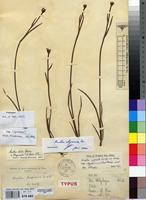
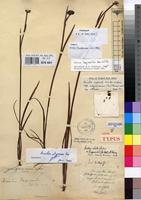
Aristea bequaertii
2 Images see all
Name
Identification
Aristea bequaertii De Wild. [family IRIDACEAE ] Verified by Not on sheet, Aristea abyssinica Pax [family IRIDACEAE ] (stored under name); Verified by Geerinck, 2000
Related name
- Aristea bequaertii
- Aristea abyssinica
Flora
Entry for ARISTEA abyssinica Pax [family IRIDACEAE]
Herbarium
Royal Botanic Gardens, Kew (K)
Collection
Flora of Tropical East Africa
Resource Type
Reference Sources
Entry From
Flora of Tropical East Africa, page 1, (1996) Author: Peter Goldblatt
Names
ARISTEA abyssinica Pax [family IRIDACEAE], in Engl., Hochgebirgsfl. Trop. Afr.: 173 (1892); Goldblatt in F.Z. 12(4): 7 (1993). Type: Ethiopia. Tigre and Begemder, Schimper 279 (B, holo., BM, K, iso.!)
ARISTEA johnstoniana Rendle [family IRIDACEAE], in T.L.S., ser. 2, Bot. 4: 48 (1895); Baker in F.T.A. 7: 346 (1898); Rendle in J.L.S. 37: 223 (1905). Lectotype, chosen here: Malawi, Mt. Mulanje, Whyte 14 (BM, lecto.!, K, isolecto.!)
ARISTEA tayloriana Rendle [family IRIDACEAE], in T.L.S., ser. 2, Bot. 4: 48 (1895). Lectotype, chosen here: Tanzania, Kilimanjaro, W.E. Taylor (BM, lecto.!)
ARISTEA homblei De Wild. [family IRIDACEAE], in F.R. 11: 509 (1913). Type: Zaire, Shaba, Welgelegen, Corbusier in Homblé 615 (BR, holo.!)
ARISTEA bequaertii De Wild. [family IRIDACEAE], in F.R. 11: 509 (1913). Lectotype, chosen by Weimarck (1940): Zaire, Shaba, Lubumbashi [Elisabethville], Bequaert 303 (BR, lecto.!)
ARISTEA alata (De Wild.) Weim. subsp. bequaertii [family IRIDACEAE], in Lunds Univ. Arssk., N.F., Avd. 2, 36: 46 (1940)
ARISTEA cognata Weim. [family IRIDACEAE], in Lunds Univ. Arssk., N.F., Avd. 2, 36: 39 (1940); Vincent in S. Afr. Journ. Bot. 51: 217 (1985); U.K.W.F., ed. 2: 323 (1994). Type: South Africa, Northern Province, Houtbosch, Rehmann 5769 (K, holo.!)
ARISTEA alata (Pax) Weim. subsp. abyssinica [family IRIDACEAE], in Lunds Univ. Arssk., N.F., Avd. 2, 36: 44 (1940); Hepper in F.W.T.A., ed. 2, 3: 139 (1968); F.P.U., ed. 2: 210 (1971)
ARISTEA cognata (Pax) Marais subsp. abyssinica [family IRIDACEAE], in K.B. 42: 932 (1987), nom. illegit.
Information
Plants 12-25(-50) cm. high. Leaves several, linear to narrowly lanceolate, 2-5(-8) mm. wide, usually ± 1/2 as long as the stem, all basal except for 1(-2) near the stem apex, this 3-5 cm. long. Stem compressed and broadly winged, 2-4 mm. wide, unbranched or with a short subapical and often axillary branch subtended by the short subapical leaf. Flower-clusters 1-2(-3), terminal or subterminal, nearly sessile or sometimes shortly stalked, usually 4-flowered; spathes broadly lanceolate, scarious with herbaceous keels, transparent or light reddish-brown, (6-)8-10 mm. long, the margins entire in bud, becoming lacerate; floral bracts similar, entirely scarious. Flowers blue, ± sessile. Tepals obovate, 4.5-12 × 6-7 mm. Filaments ± 4 mm. long; anthers 1.5-2 mm. long. Style ± 5 mm. long, apex 3-fid. Capsules ovoid-obovoid, 5-8 mm. long, ± sessile or on short pedicels 1-2 mm. Fig. 1/3.
Range
DISTR. U 1-3; K 1-3, 5; T 2-4, 6, 7;
Altitude range
1400-3800 m.;
Distribution
UGANDA W. Nile District near Paidha Dispensary, 28 Aug. 1953, Chancellor 195!;KENYA Trans-Nzoia District Mt. Elgon, ± 15 km. SW. of the Suam Sawmills, 22 Dec. 1967, Mwangangi 363!;TANZANIA Lushoto District Ambangulu Tea Estate, Mashindei [Machindei] Peak, 18 July, 1983, Polhill & Lovett 5110!;UGANDA Kigezi District Kachwekano Farm, Feb. 1950, Purseglove 3324!;UGANDA Mbale District Kapchorwa, 11 Sept. 1954, Lind 435!KENYA Elgeyo District Cherangani, Kaisungur, Feb. 1965, Tweedie 2985!; N.KENYA N. Kavirondo District road from Kakamega Forest Station to Kaimosi, Kuywa, 13 Oct. 1981, Gilbert & Mesfin Tadessa 6683!TANZANIA Ufipa District Sumbawanga, Malonje Farm, 14 Mar. 1957, Richards 8713!;TANZANIA Rungwe District Mwakaleli, Ilongelo Forest, 9 May 1975, Hepper, Field & Mhoro 5447!
Distribution (external)
Nigeria
Cameroon
Ethiopia
Zaire
Zambia
Malawi
Zimbabwe
Swaziland
South Africa as far south as Eastern Cape Province
Notes
Easily recognized by the broadly winged, leafless flowering stem and 1-3 terminal or nearly terminal flower-clusters. The taxonomy of the A. abyssinica complex requires careful investigation. Plants from South Africa and E. Zimbabwe are sometimes treated as a separate SPECIES, A. cognata, but they appear to differ in no significant way from some collections from Malawi, Zambia and Uganda. Other collections from tropical Africa have slightly broader leaves and correspond with the type of A. abyssinica from Ethiopia. It seems best to circumscribe the complex broadly and to recognize only one SPECIES here. The East African A. alata, a more robust SPECIES with broader, more softly textured leaves and stalked flowers and capsules, is undoubtedly closely related to A. abyssinica, as is the South African SPECIES, A. anceps, which has longer spathes and bracts up to 2.2 cm. long, and capsules up to 1.2 cm. long. A. alata can usually be distinguished from A. abyssinica by its capsules with stalks at least 4 mm. long, and robust habit with the leaves usually at least 4 mm. wide and flowering stem 4-5 mm. wide.A.bequaertiiwas treated as a subSPECIES of A. alataby Weimarck, but plants from Zaire corresponding to the type of A. bequaertii and of A. homblei resemble A. abyssinica more closely than A. alata in leaf dimensions and texture and in the sessile capsules. The Zairean plants differ consistently from both A. alata and A. abyssinica in having up to three leaves on the flowering stems, the lower of these sometimes remote from the flower-clusters. They may be a separate SPECIES or alternatively might best be regarded as a subSPECIES of A. abyssinica .