JSTOR Global Plants Home
  • Home
  • Browse
  • About
  • Access
  • Account
    • Saved Items
    • Profile
  • Log in

Global Plants

Skip to Main Content
  • JSTOR Global Plants Home
  • Global Plants

    • Browse
    • About
    • Access
    • Account
      • Saved Items
      • Profile
Log in
  • Browse
  • About
  • Access
  • Account
    • Saved Items
    • Profile
Advanced Search

Compilation
Arethusa racemosa

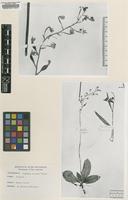
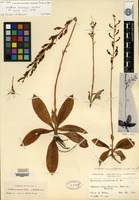
2 Images see all

Type of Arethusa racemosa Walter [family ORCHIDACEAE]
Type? of Arethusa racemosa Walter [family ORCHIDACEAE]
Previous
Next

Name

Identification
Arethusa racemosa Walter [family ORCHIDACEAE ] Ponthieva racemosa (Walter) C.Mohr [family ORCHIDACEAE ] (stored under name);
Related name
  • Arethusa racemosa
  • Ponthieva racemosa
Common name
  • Shadow witch, Flora of North America Vol. 26

Flora

Entry for Ponthieva racemosa (Walter) C. Mohr [family ORCHIDACEAE]
Herbarium
Flora of North America (FNA)
Collection
Flora of North America
Resource Type
Reference Sources
Entry From
Flora of North America, Vol 26,
Names
Ponthieva racemosa (Walter) C. Mohr [family ORCHIDACEAE], Contr. U.S. Natl. Herb., 6: 460. 1901
Arethusa racemosa Walter [family ORCHIDACEAE], Fl. Carol., 222. 1788
Neottia glandulosa Sims [family ORCHIDACEAE]
Ponthieva glandulosa (Sims) R. Brown [family ORCHIDACEAE]
Treatment Author(s)
James D. Ackerman
Information
Plants 30–60 cm. Roots 2–3 mm diam. Stems subterranean, short. Leaves green at anthesis, 2–6, subpetiolate; blade elliptic to oblanceolate, 5–17 × 2–5 cm, apex rounded to acute. Inflorescences: peduncle to 25 cm, partially enclosed by tubular sheaths, proximalmost sometimes leafy; rachis laxly 20–35-flowered, 5–25 cm; floral bracts narrowly lanceolate, clasping base of ovary, to 10 mm, apex acuminate, pubescent. Flowers: sepals greenish white, adaxially pubescent; dorsal sepal distinct, ovate-elliptic to elliptic-lanceolate, 4–7 × 2–3 mm, apex obtuse; lateral sepals broadly, obliquely ovate, 4.3–6.5 × 2.5–3.5 mm, apex acute to obtuse; petals white, green-veined, obliquely triangular, 4–6 × 3.5–5 mm, margins minutely ciliate or entire, glabrous; lip white with green, deeply concave center, distinctly clawed, suborbiculate, 5–7 × 5–7 mm, apex short-caudate; column white, 4–5 mm; pedicellate ovary 10–20 mm. Capsules 8–13 mm.
Phenology
dec-feb (winter), sep-nov (fall)
Altitude range
0–50 m;
Distribution
MexicoWest IndiesCentral AmericaSouth America.USA Ala.USA Fla.USA Ga.USA La.USA Miss.USA N.C.USA S.C.USA Tex.USA Va.
Discussion
In Florida, Ponthieva racemosa is self-compatible but not autogamous. Natural fruit-set in one population in northern Florida was 35% (J. D. Ackerman 1995). In Florida, small halictid bees were observed visiting the flowers (C. A. Luer 1972).

Related Materials

  • Terms and Conditions
  • Privacy Policy
  • Cookie Policy
  • Cookie Settings
  • Accessibility
  • Help
  • Contact Us
  • Facebook
  • Twitter
ITHAKA

JSTOR is part of ITHAKA, a not-for-profit organization helping the academic community use digital technologies to preserve the scholarly record and to advance research and teaching in sustainable ways.

©2000-2026 ITHAKA. All Rights Reserved. JSTOR®, the JSTOR logo, JPASS®, Aluka®, and ITHAKA® are registered trademarks of ITHAKA.

╳