JSTOR Global Plants Home
  • Home
  • Browse
  • About
  • Access
  • Account
    • Saved Items
    • Profile
  • Log in

Global Plants

Skip to Main Content
  • JSTOR Global Plants Home
  • Global Plants

    • Browse
    • About
    • Access
    • Account
      • Saved Items
      • Profile
Log in
  • Browse
  • About
  • Access
  • Account
    • Saved Items
    • Profile
Advanced Search

Compilation
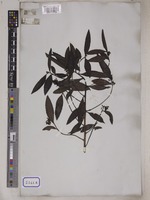
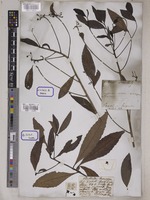
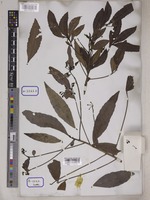
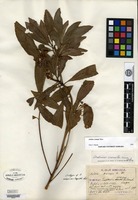
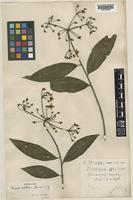
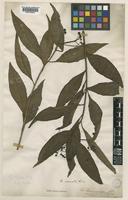
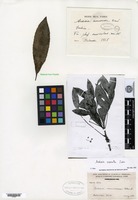
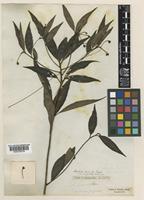
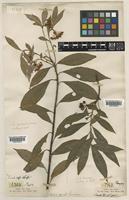
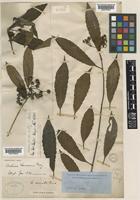
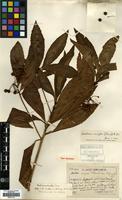
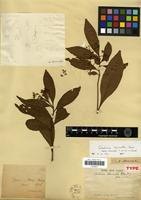
Ardisia crenata

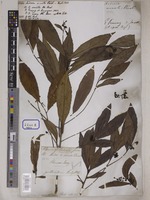
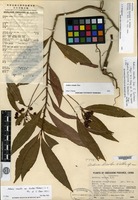
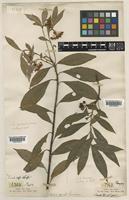
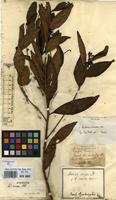
24 Images see all

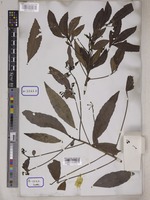
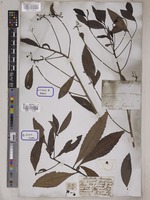
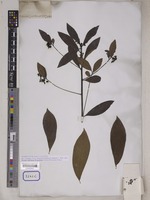
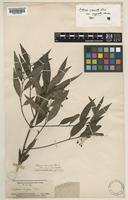
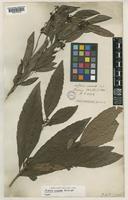
Ardisia crenata Roxb. [family MYRSINACEAE]
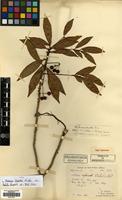
Isotype of Ardisia crispa (Thunberg) A. de Candolle var. taquetii H. Léveillé [family MYRSINACEAE]
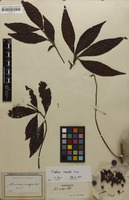
Ardisia virens Kurz [family MYRSINACEAE]
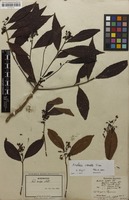
Isotype of Ardisia nemorosa Pitard [family MYRSINACEAE]
Ardisia crenata Roxb. [family MYRSINACEAE]
Ardisia crispa A.DC. [family MYRSINACEAE]
Ardisia hanceana Mez [family MYRSINACEAE]
Type of Ardisia crispa (Thunb.) A.DC. var. taquetii H.Lév. [family MYRSINACEAE]
Type of Ardisia mouretii Pitard [family MYRSINACEAE]
Ardisia crenata Roxb. [family MYRSINACEAE]
Type of Ardisia labordei H. Lév. [family MYRSINACEAE]
Filed as Ardisia crenata Sims [family MYRSINACEAE]
Ardisia crenata Roxb. [family MYRSINACEAE]
Ardisia crenata Sims [family MYRSINACEAE]
Type of Ardisia crenata Roxb. var. angusta C.B. Clarke [family MYRSINACEAE]
Type of Ardisia crenata Roxb. [family MYRSINACEAE]
Ardisia crenata Roxb. [family MYRSINACEAE]
Holotype of Ardisia bicolor E. Walker [family MYRSINACEAE]
Ardisia crispa A.DC. [family MYRSINACEAE]
Type of Ardisia crenata Roxb. [family MYRSINACEAE]
Previous
Next

Name

Identification
Ardisia crenata Sims [family EPACRIDACEAE ] (stored under name); Verified by C. Chen, 1992 Ardisia bicolor E. Walker [family MYRSINACEAE ] Verified by E. Walker, 1940
Related name
  • Ardisia penduliflora
  • Ardisia virens
  • Ardisia henryi
  • Ardisia crenata
  • Ardisia labordei
  • Ardisia hanceana
  • Ardisia crispa
  • Ardisia pauciflora
  • Ardisia bicolor
  • Ardisia mouretii
  • Ardisia radians
Common name
  • coral-berry, Flora of North America Vol. 8
  • hen’s eyes, Flora of North America Vol. 8
  • spice-berry, Flora of North America Vol. 8
  • Coral ardisia, Flora of North America Vol. 8

Flora

Entry for Ardisia crenata Sims [family MYRSINACEAE]
Herbarium
Flora of North America (FNA)
Collection
Flora of North America
Resource Type
Reference Sources
Entry From
Flora of North America, Vol 8,
Names
Ardisia crenata Sims [family MYRSINACEAE], Bot. Mag., 45: plate 1950. 1817 ,
Treatment Author(s)
John J. Pipoly III
Jon M. Ricketson
Information
Shrubs, not stoloniferous, 1–1.5(–3) m; branchlets minute-ly reddish glandular-papillate. Leaves: petiole 6–10 mm, glabrous; blade elliptic, narrowly lanceolate, or oblanceolate, 7–15 × 2–4 cm, margins crenulate or undulate, subrev-olute, (bearing large vascularized nodules), apex acute or acuminate, surfaces minutely reddish glandular-papillate. Inflorescences terminal, on specialized, 2- or 3-leaved lateral branches, umbels or cymes, 5–18+-flowered. Pedicels sometimes erect, 7–10 cm, minutely reddish glandular-papillate. Flowers: sepals (4–)5(–6), oblong-ovate, 1–1.5(–2.5) mm, margins entire, apex rounded or obtuse, glabrous; petals (4–)5(–6), white or rarely pinkish, ovate, 4–6 mm, margins entire, apex acute, punctate, glandular-papillose adaxially near base; stamens shorter than petals; anthers triangular-lanceolate, apex acute, punctate abaxially; ovary glabrous; ovules ca. 5, uniseriate. Drupes red, 6–8 mm diam., punctate.
Phenology
Flowering May–Jun; fruiting Jul–Dec
Altitude range
0–200 m
Distribution
Asia (China, sw India, Japan, Malaysia, Taiwan, Vietnam)USA Fla.USA Ga.USA La.USA Tex.USA Pacific Islands (Philippines).
Discussion
Ardisia crenata has naturalized from cultivation and does not appear invasive; it is included in some Florida invasive plant lists. It has often been misidentified as A. crispa (Thunberg) A. de Candolle in the horticulture trade. Ardisia crispa, while also belonging to subg. Crispardisia, may be easily recognized by the bacterial leaf nodules in the crenations of the leaf margins. It is often used in living potted flower arrangements; it needs little attention if planted in acidic soil. Its bacterial leaf nodule symbiosis with Phyllobacterium myrsinacearum has been well documented (B. Lambert et al. 1990); the significance of this symbiosis remains controversial (N. R. Lersten and H. T. Horner 1976; C. D. Nakahasi et al. 2005). Ardisia crenata may be easily distinguished from A. crispa by its taller habit, 1–3 (versus shorter than 1) m tall, lack of creeping rhizomes (versus rhizomes present), adaxially canaliculated (versus flat) petioles (6–)8–10 (versus 5–8) mm long, its leaf margin nodules ellipsoid (versus rounded), and obviously vascularized (versus obscurely so). We have seen A. crispa in greenhouses and in horticultural catalogs; we have not seen it cultivated in gardens or escaped from cultivation.
Native/Introduced
introduced

Related Materials

  • Terms and Conditions
  • Privacy Policy
  • Cookie Policy
  • Cookie Settings
  • Accessibility
  • Help
  • Contact Us
  • Facebook
  • Twitter
ITHAKA

JSTOR is part of ITHAKA, a not-for-profit organization helping the academic community use digital technologies to preserve the scholarly record and to advance research and teaching in sustainable ways.

©2000-2026 ITHAKA. All Rights Reserved. JSTOR®, the JSTOR logo, JPASS®, Aluka®, and ITHAKA® are registered trademarks of ITHAKA.

╳