JSTOR Global Plants Home
  • Home
  • Browse
  • About
  • Access
  • Account
    • Saved Items
    • Profile
  • Log in

Global Plants

Skip to Main Content
  • JSTOR Global Plants Home
  • Global Plants

    • Browse
    • About
    • Access
    • Account
      • Saved Items
      • Profile
Log in
  • Browse
  • About
  • Access
  • Account
    • Saved Items
    • Profile
Advanced Search

Compilation
Arbutus uva-ursi

7 Images see all

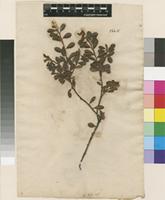
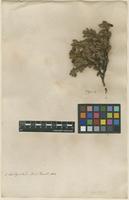
Lectotype of Arbutus uva-ursi L. [family ERICACEAE]
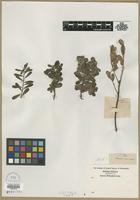
Filed as Arctostaphylos uva-ursi (L.) Spreng [family ERICACEAE]
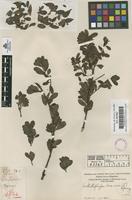
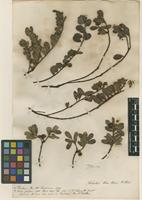
Filed as Arbutus uva-ursi L. [family ERICACEAE]
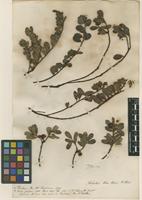
Filed as Arbutus sp. [family ERICACEAE]
Filed as Arbutus uva-ursi L. [family ERICACEAE]
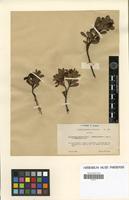
Type? of Arctostaphylos uva-ursi (L.) Spreng. [family ERICACEAE]
Filed as Arbutus uva-ursi L. [family ERICACEAE]
Previous
Next

Name

Identification
Arbutus uva-ursi L. [family ERICACEAE ] (stored under name); Verified by Not on sheet, Arctostaphylos uva-ursi (L.) Spreng. [family ERICACEAE ] Verified by Not on sheet,
Related name
  • Arctostaphylos uva-ursi
  • Arbutus uva-ursi
  • Arbutus sp.
Common name
  • kinnikinnik, Flora of North America Vol. 8
  • raisin d’ours, Flora of North America Vol. 8
  • Bearberry, Flora of North America Vol. 8
  • bousserole, Flora of North America Vol. 8

Flora

Entry for Arctostaphylos uva-ursi (Linnaeus) Sprengel [family ERICACEAE]
Herbarium
Flora of North America (FNA)
Collection
Flora of North America
Resource Type
Reference Sources
Entry From
Flora of North America, Vol 8,
Names
Arctostaphylos uva-ursi (Linnaeus) Sprengel [family ERICACEAE], Syst. Veg., 2: 287. 1825 ,
Arbutus uva-ursi Linnaeus [family ERICACEAE], Sp. Pl., 1: 395. 1753
Arctostaphylos uva-ursi subsp. adenotricha (Fernald & J. F. Macbride) Calder & Roy L. Taylor [family ERICACEAE]
Arctostaphylos uva-ursi var. adenotricha Fernald & J. F. Macbride [family ERICACEAE]
Arctostaphylos uva-ursi subsp. coactilis (Fernald & J. F. Macbride) Á. Löve, D. Löve & S. L. Kapoor [family ERICACEAE]
Arctostaphylos uva-ursi var. coactilis Fernald & J. F. Macbride [family ERICACEAE]
Arctostaphylos uva-ursi var. leobreweri Roof [family ERICACEAE]
Arctostaphylos uva-ursi subsp. longipilosa Packer & Denford [family ERICACEAE]
Arctostaphylos uva-ursi var. marinensis Roof [family ERICACEAE]
Arctostaphylos uva-ursi subsp. monoensis Roof [family ERICACEAE]
Arctostaphylos uva-ursi var. pacifica Hultén [family ERICACEAE]
Arctostaphylos uva-ursi subsp. stipitata Packer & Denford [family ERICACEAE]
Arctostaphylos uva-ursi var. stipitata (Packer & Denford) Dorn [family ERICACEAE]
Arctostaphylos uva-ursi var. suborbiculata W. Knight [family ERICACEAE]
Treatment Author(s)
V. Thomas Parker
Michael C. Vasey
Jon E. Keeley
Information
Shrubs, prostrate, mat-forming, 0.1–0.5 m; burl sometimes present, sometimes epicormic; twigs usually sparsely short-hairy, sometimes long-hairy or short and/or long glandular-hairy. Leaves separated proximally, overlapping distally, bifacial; petiole 2–4 mm; blade light green abaxially, dark green adaxially, shiny, usually oblanceolate to obovate, sometimes narrowly elliptic, 1–2.5 × 0.5–1.5 cm, base cuneate (not clasping), margins entire, often cupped, surfaces smooth, sparsely puberulent, glabrescent. Inflorescences racemes (simple or 1-branched); immature inflorescence pendent, (congested), axis 0.3–1 cm, 1+ mm diam., usually sparsely short-hairy, sometimes long-hairy or short glandular-hairy; bracts not appressed, scalelike, narrowly deltate, 2–6 mm (larger than buds), apex acuminate, surfaces glabrous. Pedicels 2–4 mm, glabrous. Flowers: corolla white to pink, urceolate; ovary glabrous. Fruits globose, 6–12 mm diam., glabrous. Stones distinct. 2n = 26, 52.
Phenology
Flowering winter–early summer
Altitude range
0–3100 m
Distribution
GreenlandSt. Pierre and MiquelonCentral America (Guatemala)Eurasia.USA AlaskaUSA Ariz.USA Calif.USA Colo.USA Conn.USA Del.USA IdahoUSA Ill.USA Ind.USA IowaUSA MaineUSA Mass.USA Mich.USA Minn.USA Mont.USA Nev.USA N.H.USA N.J.USA N.Mex.USA N.Y.USA N.Dak.USA OhioUSA Oreg.USA Pa.USA R.I.USA S.Dak.USA UtahUSA Vt.USA Va.USA Wash.USA Wis.USA Wyo.Canada Alta.Canada B.C.Canada Man.Canada N.B.Canada Nfld. and Labr.Canada N.W.T.Canada N.S.Canada NunavutCanada Ont.Canada P.E.I.Canada Que.Canada Sask.Canada Yukon
Discussion
Arctostaphylos uva-ursi exhibits great variation in indument associated with the young twigs. Most of this variation has historically been separated into subspecies, except that a recent analysis of the group suggested environmentally-based variation in these characters (T. J. Rosatti 1987b). This is the most widely distributed of all Arctostaphylos species and is the only one found outside of North America. Two ploidy levels are common, and populations sometimes contain both diploids and tetraploids. More work on this widespread species will likely elucidate its variation in morphology and ploidy. Infraspecific taxa may well be recognized once these patterns are further assessed.
A form with striking deep red to purple autumnal corollas (often blooming also in spring with normal-colored corollas) occurs on Cape Cod and Nantucket Island, Massachusetts.
Most populations lack burls and are killed by fire; throughout the range in North America are occasional populations or individuals that have small, sometimes epicormic burls. This has been noted in California, parts of Canada, and New York. With more observations this distribution may become clearer.
A form with somewhat puberulent and larger leaves has been described as Arctostaphylos ×media Greene. It occurs along the northern California coast and in Oregon and Washington. It is assumed to be a hybrid between A. uva-ursi and A. columbiana. Similarly, in the Rocky Mountains in areas with both A. uva-ursi and A. patula, hybrids have been called A. coloradensis Rollins.

Related Materials

  • Terms and Conditions
  • Privacy Policy
  • Cookie Policy
  • Cookie Settings
  • Accessibility
  • Help
  • Contact Us
  • Facebook
  • Twitter
ITHAKA

JSTOR is part of ITHAKA, a not-for-profit organization helping the academic community use digital technologies to preserve the scholarly record and to advance research and teaching in sustainable ways.

©2000-2026 ITHAKA. All Rights Reserved. JSTOR®, the JSTOR logo, JPASS®, Aluka®, and ITHAKA® are registered trademarks of ITHAKA.

╳