JSTOR Global Plants Home
  • Home
  • Browse
  • About
  • Access
  • Account
    • Saved Items
    • Profile
  • Log in

Global Plants

Skip to Main Content
  • JSTOR Global Plants Home
  • Global Plants

    • Browse
    • About
    • Access
    • Account
      • Saved Items
      • Profile
Log in
  • Browse
  • About
  • Access
  • Account
    • Saved Items
    • Profile
Advanced Search

Compilation
Arabis modesta

6 Images see all

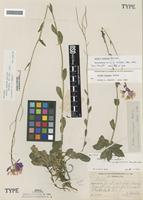
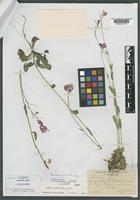
Isotype of Arabis modesta Rollins [family BRASSICACEAE]
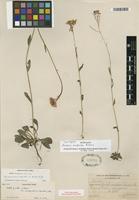
Holotype of Arabis modesta Rollins [family BRASSICACEAE]
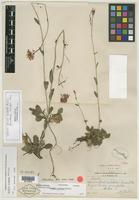
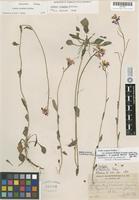
Isotype of Arabis modesta Rollins [family BRASSICACEAE]
Previous
Next

Name

Identification
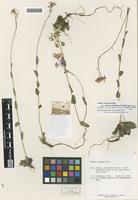
Isotype of Arabis modesta Rollins [family BRASSICACEAE ] (stored under name); Verified by Al-Shehbaz, I. A., 2004
Related name
  • Arabis furcata
  • Arabis
  • Arabis oregana
  • Arabis modesta

Flora

Entry for Arabis modesta Rollins [family CRUCIFERAE]
Herbarium
Flora of North America (FNA)
Collection
Flora of North America
Resource Type
Reference Sources
Entry From
Flora of North America, Vol 7,
Names
Arabis modesta Rollins [family CRUCIFERAE], Rhodora, 43: 350. 1941
Treatment Author(s)
Ihsan A. Al-Shehbaz
Information
Perennials; (caudex usually simple, rarely branched, covered with persistent petiolar remains); sparsely to densely pubescent, trichomes short-stalked, cruci-form, or 3-rayed stellate, (0.3–0.5 mm). Stems simple or few from base (caudex), erect, usually unbranched, rarely branched (few) distally, 2.2–5.5(–6.7) dm, (usually pubescent throughout, rarely subglabrate distally, trichomes stellate). Basal leaves: petiole 1–4(–5) cm, (rarely minutely ciliate near base); blade oblanceolate to obovate, (0.8–)2–4.5(–6) cm × (4–)10–20(–25) mm, margins entire, repand, or dentate, (not ciliate), apex obtuse, surfaces pubescent, trichomes short-stalked, stellate. Cauline leaves (2–)4–6(–9); blade oblong or ovate, 1–3.5(–4.5) cm × (3–)6–10(–20) mm, base not auriculate, margins entire, repand, or dentate, apex obtuse or acute, surfaces pubescent, trichomes short-stalked, stellate. Racemes simple, (dense). Fruiting pedicels ascending to divaricate, 7–18(–25) mm. Flowers: sepals (purple), oblong, (4–)5–6.5(–8) × 1.5–2 mm, lateral pair saccate basally; petals purple, spatulate, (10–)12–16(–20) × 4–6(–7) mm, apex rounded; filaments (4–)5–8 mm; anthers narrowly oblong, 1.3–2 mm. Fruits suberect to divaricate, sometimes slightly curved, slightly torulose, (2.8–)3.5–6 cm × 1.5–2 mm; valves each with prominent midvein extending to middle or full length; ovules 20–34 per ovary; style 0.5–1(–1.5) mm. Seeds winged distally, oblong, 1.7–2.2 × 0.9–1.2 mm; wing 0.2–0.5 mm wide. 2n = 32.
Phenology
mar-may (spring)
Altitude range
150–500 m;
Distribution
USA Calif.USA Oreg.
Discussion
Arabis modesta, known only from Napa, Siskiyou, and Yolo counties (California), and Jackson and Josephine counties (Oregon), and the following four species form a well-defined group easily separated from the first nine species above by their large, purple petals. Arabis modesta is readily distinguished from other purple-flowered Arabis by having very fine, short-stalked cruciform and 3-rayed, instead of simple and 2-rayed, forked trichomes. Arabis blepharophylla has broadly winged, orbicular seeds, and the other purple-flowered species (A. aculeolata, A. mcdonaldiana, A. oregana) have oblong seeds that are not winged or narrowly winged distally. The lines separating these three species are not as well-defined as those of A. blepharophylla and A. modesta, and further studies are needed to resolve them. I prefer to maintain all five species of purple-flowered Arabis as distinct until thorough molecular and hybridization studies are conducted. In the absence of such studies, it is unwise to make any nomenclatural changes.

Related Materials

  • Terms and Conditions
  • Privacy Policy
  • Cookie Policy
  • Cookie Settings
  • Accessibility
  • Help
  • Contact Us
  • Facebook
  • Twitter
ITHAKA

JSTOR is part of ITHAKA, a not-for-profit organization helping the academic community use digital technologies to preserve the scholarly record and to advance research and teaching in sustainable ways.

©2000-2026 ITHAKA. All Rights Reserved. JSTOR®, the JSTOR logo, JPASS®, Aluka®, and ITHAKA® are registered trademarks of ITHAKA.

╳