JSTOR Global Plants Home
  • Home
  • Browse
  • About
  • Access
  • Account
    • Saved Items
    • Profile
  • Log in

Global Plants

Skip to Main Content
  • JSTOR Global Plants Home
  • Global Plants

    • Browse
    • About
    • Access
    • Account
      • Saved Items
      • Profile
Log in
  • Browse
  • About
  • Access
  • Account
    • Saved Items
    • Profile
Advanced Search

Compilation
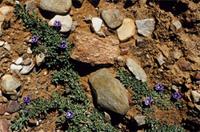
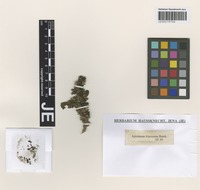
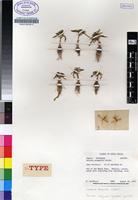
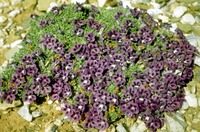
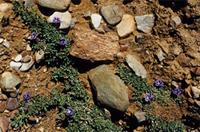
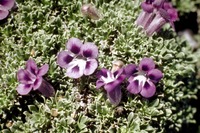
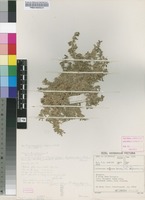
Aptosimum procumbens

9 Images see all

Aptosimum procumbens (Lehm.) Steud.
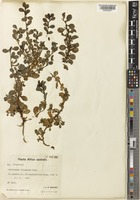
Syntype of Aptosimum depressum Burch. ex Benth. [family SCROPHULARIACEAE]
Type of Aptosimum procumbens (Lehm.) Steud. [family SCROPHULARIACEAE]
Aptosimum procumbens (Lehm.) Steud.
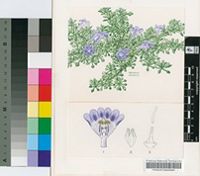
Lectotype of Aptosimum procumbens (Lehm.) Steud. var. elongatum (Hiern) Codd [family SCROPHULARIACEAE]
Aptosimum procumbens (Lehm.) Steud.
Filed as Aptosimum procumbens (Lehm.) Steud. [family SCROPHULARIACEAE]
Previous
Next

Name

Identification
Aptosimum procumbens (Lehm.) Steud. [family SCROPHULARIACEAE ]
Related name
  • Aptosimum procumbens

Flora

Entry for Aptosimum elongatum Engl. [family SCROPHULARIACEAE]
Herbarium
Royal Botanic Gardens, Kew (K)
Collection
Flora Zambesiaca
Resource Type
Reference Sources
Entry From
FZ, Vol 8, Part 2, (1990) Author: D. Philcox
Names
Aptosimum pubescens Weber [family SCROPHULARIACEAE], in Bull. Herb. Boiss., Sér. 2, 3: 903 (1903). Type from Namibia.
Aptosimum depressum var. elongatum Hiern [family SCROPHULARIACEAE], in F.C. 4, 2: 131 (1904). Type from S. Africa.
Aptosimum procumbens var. elongatum Hiern Codd [family SCROPHULARIACEAE], in Bothalia 14, 1: 80 (1982).
Aptosimum elongatum Engl. [family SCROPHULARIACEAE], Bot. Jahrb.10: 249 (1888). —Hemsl. & Skan in F.T.A. 4, 2: 273 (1906). Type from S. Africa.
Information
Procumbent undershrub, widely spreading; branches slender, up to 60 cm. long, densely covered with long, patent, simple, or slender, gland-tipped white hairs. Leaves (7)10–18 x 3.5–5(7.5) mm., sessile, oblanceolate to broadly obovate, obtuse, mucronate, tapering below into petiole-like base, subglabrous to subdensely pilose above covered with regularly forward-directed, curved, simple or glandular hairs, lower surface with similar indumentum, midrib prominent, margin frequently somewhat thickened, subciliate. Flowers shortly pedicellate, bracteate, solitary. Pedicel 1.5–2.5 mm. long, 0.75–1.25 mm. wide, linear or linear-lanceolate, very minutely papillose within, subdensely simple or glandular-hirsute with forward-directed hairs up to 0.5 mm. long, subciliate, prominently 1-nerved. Corolla deep blue to purple, tube 11–15 mm. long, shortly glandular-pubescent, wide at mouth; lobes c. 3 mm. in diam., subcircular, subequal, reticulately veined at least when dry. Anthers c. 2 mm. broad, 1.5 mm. long, with ridge of long, white, simple hairs at apex. Seeds 1 x 0.6 mm., cylindrical ellipsoid, colliculate, black.
Habitat
Scrub and open wooded grassland, mainly on Kalahari Sand
Altitude range
900–1100m.
1100
900
Distribution
Botswana SE c. 5 km. N. of Lobatsi, fl. 16..1960, Leach & Noel 132 (K; LISC; PRE; SRGH).Botswana SW Kang, 320 km. W. of Gaborone, c. 1060 m., fl. & fr. 20.x.1975, Mott 762 (GAB; K; PRE; SRGH).Botswana N between Odiakwe and Kanuy, Francistown to Maun road, fl. 9.iii.1965, Wild & Drummond 6828 (K; PRE; SRGH).
Distribution (external)
Namibia
S. Africa
Notes
It should be noted here that when Hiern used the epithet elongatum for a variety of A depressum; he gave no indication that he based it on A.elongatum Engl.Despite frequent misidentifications in the past, the plant hitherto known as A.depressum Burch. ex Benth. nom. illegit. (1836) is now correctly known as A.procumbens (Lehm.) Steud. (1841) and is a native of S. Africa and does not occur in the Flora Zambesiaca area.

Related Materials

  • Terms and Conditions
  • Privacy Policy
  • Cookie Policy
  • Cookie Settings
  • Accessibility
  • Help
  • Contact Us
  • Facebook
  • Twitter
ITHAKA

JSTOR is part of ITHAKA, a not-for-profit organization helping the academic community use digital technologies to preserve the scholarly record and to advance research and teaching in sustainable ways.

©2000-2026 ITHAKA. All Rights Reserved. JSTOR®, the JSTOR logo, JPASS®, Aluka®, and ITHAKA® are registered trademarks of ITHAKA.

╳