JSTOR Global Plants Home
  • Home
  • Browse
  • About
  • Access
  • Account
    • Saved Items
    • Profile
  • Log in

Global Plants

Skip to Main Content
  • JSTOR Global Plants Home
  • Global Plants

    • Browse
    • About
    • Access
    • Account
      • Saved Items
      • Profile
Log in
  • Browse
  • About
  • Access
  • Account
    • Saved Items
    • Profile
Advanced Search

Compilation
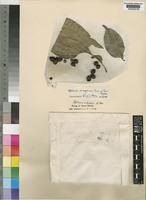
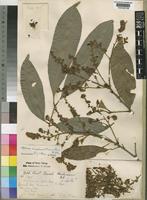
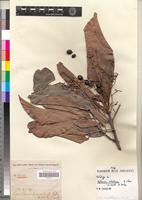
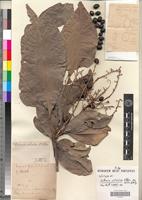
Aphania silvatica

4 Images see all

Lepisanthes senegalensis (Juss. ex Poir.) Leenh. [family SAPINDACEAE]
Holotype of Aphania silvatica Chev. [family SAPINDACEAE]
Lepisanthes senegalensis (Juss. ex Poir.) Leenh. [family SAPINDACEAE]
Previous
Next

Name

Identification
Aphania senegalensis (Juss. ex Poir.) Radlk. [family SAPINDACEAE ] Verified by Keay, R.W.J., Lepisanthes senegalensis (Juss. ex Poir.) Leenh. [family SAPINDACEAE ] (stored under name); Aphania silvatica A.Chev. [family SAPINDACEAE ]
Related name
  • Aphania senegalensis
  • Lepisanthes senegalensis
  • Aphania silvatica

Flora

Entry for LEPISANTHES senegalensis (Poir.) Leenh. [family SAPINDACEAE]
Herbarium
Royal Botanic Gardens, Kew (K)
Collection
Flora of Tropical East Africa
Resource Type
Reference Sources
Entry From
Flora of Tropical East Africa, page 1, (1998) Author: DAVIES & B. VERDCOURT
Names
LEPISANTHES senegalensis (Poir.) Leenh. [family SAPINDACEAE], in Blumea 17: 85 (1969); Vollesen in Opera Bot. 59: 58 (1980); Blundell, Wild Fl. E. Afr.: 137, t. 217 (1987); Vollesen in Fl. Ethiopia 3: 504, fig. 125.10 (1990); Beentje, K.T.S.L.: 420, fig (1994); Leenh. in Fl. Males., ser. 1, 11: 651, fig. 52a (1994). Type: Senegal, Adanson & Geoffroi f. (P, holo., K!, ?iso.)
Sapindus senegalensis Poir. [family SAPINDACEAE], in Lam., Encycl. Méth. Bot. 6: 666 (1804); F.T.A. 1: 430 (1868)
Ornitrophe thyrsoides Schumach. & Thonn. [family SAPINDACEAE], Beskr. Guin. Pl.: 185 (1827). Type: Ghana, Quitta, Thonning 342 (C, holo.)
Sapindus abyssinicus Fresen. [family SAPINDACEAE], in Mus. Senckenb. 2: 277 (1837). Type: Ethiopia, Simien Mts., Kulla, 2 days N. of Gondar, Fresenius (FR, holo.)
Schmidelia thyrsoides (Schumach. & Thonn.) Baker [family SAPINDACEAE], in F.T.A. 1: 423 (1868)
Aphania senegalensis (Poir.) Radlk. [family SAPINDACEAE], in Sitz. Akad. Wiss. München 8: 307 (1878) & in E.P. IV, 165: 703 (1932); F.P.N.A.: 522 (1948); T.T.C.L.: 555 (1949); I.T.U., ed. 2: 377 (1952); F.P.S. 2: 336 (1952); E.P.A. 1: 492 (1958); F.W.T.A., ed. 2, 1: 716 (1958); Hauman in F.C.B. 9: 343, t. 36 (1960); K.T.S.: 507 (1961); Breitenb., Indig. Trees Ethiopia: 239 (1963); Exell in F.Z. 2: 525, t. 108 (1966); Hamilton, Field Guide Uganda For. Trees: 225, fig. 420 (1981); Fouilloy & Hallé in Fl. Cameroun 16: 75, t. 15/1–9 (1973) & in Fl. Gabon 23: 75, t. 15/1–9 (1973)
Aphania silvatica Hutch. & Dalziel [family SAPINDACEAE], F.W.T.A. 1: 502 (1928); E.P. IV, 165: 705 adnot. (1932). Types: Ghana, Tano R., Chipp 345 & Chevalier 20064 (K!, syn.)
Information
Monoecious evergreen tree, 6–21 m. tall with heavy crown; bark grey or pale brown, smooth; slash pale orange. Foliage with petioles etc. and base of midribs crimson when young; leaf-rhachis 0–10 cm. long, including 0–5 cm. long petiole; petiolules 0–1 cm. long; leaflets in 1–3 pairs (sometimes reduced to 1 leaflet), the lowest pair not noticeably reduced, the upper pair opposite, drying greyish green above and paler green beneath, elliptic, 6.5–27 cm. long, 2–10 cm. wide, rounded to acuminate at the apex, cuneate at the base, entire, glabrous; secondary nerves in 12–20 pairs, ± indistinct. Inflorescence said to be ± unpleasantly scented, often appearing terminal and accompanying a new flush of leaves, paniculate, 5–20 cm. long, 5–15 cm. wide, the branches thyrsoid with both clusters and single flowers; axes at first golden pubescent, elongating in fruit; pedicels 0–3 mm. long, enlarging to 7 mm. in fruit. Flower greenish yellow; sepals 5, the outer 2 shorter than the inner, ovate or round, 2–3.5 mm. long, 1.5–3 mm. wide, glabrous apart from the white margin; petals 5 (rarely absent), ovate, 2–3 mm. long and wide, clawed, scale half as long as the limb, fringed with hairs; disk pentagonal, 3.6 mm. in diameter, lobed. Stamens 5–7, hairy at base, glabrous for most of length. Ovary 2(–3)-lobed; style entire; ovary rudiment in male flowers a cushion of hairs. Mericarps crimson, 2(–3), developed ones ellipsoid, 1–1.8 cm. long, 0.8–1.5 cm. wide, but 1–2 abortive at base. Seeds black, ± 1.2 cm. long, 9 mm. wide. Fig. 17.
Range
DISTR. U 1–4; K 1–7; T 1–3, 6, 8 west tropical Africa, Ethiopia, S. Somalia and Mozambique, also India and Malesia
Altitude range
0–1800 m.
Distribution
KENYA W. Suk District Sebit, Dec. 1964, Tweedie 2961!KENYA Masai District Mara Masai Reserve, Talek [Telek] R., 12 Sept. 1947, Bally 5331!KENYA Lamu District Utwani, 1 Mar. 1957, Rawlins 353!TANZANIA Musoma District source of Bolgonja [Bolongonya] R., 13 Nov. 1953, Tanner 1833!TANZANIA Moshi District 1.5 km. W. of Moshi, 25 Feb. 1953, Drummond & Hemsley 1320!TANZANIA Rufiji District Mafia I., Bweni–Mawalani, 17 Aug. 1937, Greenway 5134!TANZANIA Kilwa District Selous Game Reserve, Lungonya Forest, 26 Sept. 1970, Ludanga 1140!UGANDA W. Nile District Zoka Forest, Jan. 1952, Leggat 45!UGANDA Acholi District Chua, Lututuru, Feb. 1938, Eggeling 3513!UGANDA Ankole District Lake Lutoto, 4 Jan. 1953, Osmaston 2754!
Notes
In Malesia a large number of morphological races exist with different sizes of fruit, the races being correlated with different habitats (Leenh., 1969 & 1994, with extensive extra-African synonymy). Hauman (1960) claims the fruit is poisonous on account of the saponins it contains and Leenhouts says the fruit is edible but the seeds probably poisonous in quantity. There is a definite record of 14 goats being poisoned near the Tana R. The wood has been used for poles and for making small utensils; the grain is attractive. The unijugate form is rather distinctive and Gillett (adnot. K) has suggested it could be recognised. All material fromK1, 2, 4, 7,T2, 6, 8 and Mozambique is unijugate, both occur inK5, and inK6 andT1 all are 2–3-jugate. Here is an eco-geographical problem which could be investigated in the field.

Related Materials

  • Terms and Conditions
  • Privacy Policy
  • Cookie Policy
  • Cookie Settings
  • Accessibility
  • Help
  • Contact Us
  • Facebook
  • Twitter
ITHAKA

JSTOR is part of ITHAKA, a not-for-profit organization helping the academic community use digital technologies to preserve the scholarly record and to advance research and teaching in sustainable ways.

©2000-2026 ITHAKA. All Rights Reserved. JSTOR®, the JSTOR logo, JPASS®, Aluka®, and ITHAKA® are registered trademarks of ITHAKA.

╳