JSTOR Global Plants Home
  • Home
  • Browse
  • About
  • Access
  • Account
    • Saved Items
    • Profile
  • Log in

Global Plants

Skip to Main Content
  • JSTOR Global Plants Home
  • Global Plants

    • Browse
    • About
    • Access
    • Account
      • Saved Items
      • Profile
Log in
  • Browse
  • About
  • Access
  • Account
    • Saved Items
    • Profile
Advanced Search

Compilation
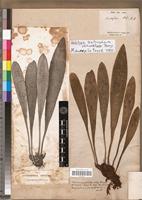
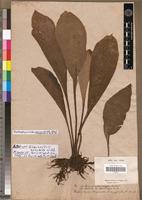
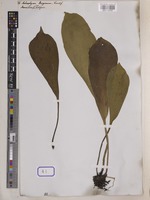
Antrophyum boryanum

5 Images see all

Holotype of Antrophyum obtusatum Bory [family PTERIDOPHYTA]
Antrophyum boryanum
Isotype of Hemionitis boryana Willd. [family PTERIDOPHYTA]
Antrophyum boryanum
Antrophyum boryanum Kaulf. [family VITTARIACEAE]
Previous
Next

Name

Identification
Antrophyum boryanum (Willd.)Kaulf. [family PTERIDOPHYTA ]
Related name
  • Antrophyum boryanum

Flora

Entry for ANTROPHYUM boryanum (Willd.) Spreng. [family VITTARIACEAE]
Herbarium
Royal Botanic Gardens, Kew (K)
Collection
Flora of Tropical East Africa
Resource Type
Reference Sources
Entry From
Flora of Tropical East Africa, page 1, (1999) Author: B. Verdcourt, B.Sc., Ph.D.
Names
ANTROPHYUM boryanum (Willd.) Spreng. [family VITTARIACEAE], Syst. Veg., ed. 16, 4: 67 (1827); Hook. & Grev., Ic. Fil., t. 74 (1828); C. Chr. in Dansk Bot. Arkiv. 7: 146 (1932); Tardieu, Fl. Madag. 5(1): 174, fig. 24/10–12 (1958); Schelpe in Contr. Bolus Herb. 1: 19 (1969). Type: Mauritius, Bory de St. Vincent (B-WILLD, holo., microfiche!)
Hemionitis boryana Willd. [family ADIANTACEAE], Sp. Pl. ed. 4, 5: 128 (1810)
Information
Epiphyte; rhizome short with narrowly lanceolate scales prolonged into a long flagellum, formed of large cells with thick black walls. Fronds tufted; lamina oblanceolate, 11–25 cm long, 2–7 cm wide, acute to round at apex, narrowed at base into a thick stipe 5–10 cm long or long-decurrent at base and frond sessile or subsessile, scaly at extreme base; nerves densely reticulate with very numerous small areoles. Sori rusty brown, very narrow, superficial, reticulate; spores ellipsoid, monolete (see note).
Notes
The frequently quoted authority (Willd.) Kaulf. (Enum. Fil.: 199 (1824)) is not correct as the combination was not in fact made, as was correctly pointed out by Schelpe. Hooker & Greville’s combination is predated by Sprengel’s.

Related Materials

  • Terms and Conditions
  • Privacy Policy
  • Cookie Policy
  • Cookie Settings
  • Accessibility
  • Help
  • Contact Us
  • Facebook
  • Twitter
ITHAKA

JSTOR is part of ITHAKA, a not-for-profit organization helping the academic community use digital technologies to preserve the scholarly record and to advance research and teaching in sustainable ways.

©2000-2026 ITHAKA. All Rights Reserved. JSTOR®, the JSTOR logo, JPASS®, Aluka®, and ITHAKA® are registered trademarks of ITHAKA.

╳