JSTOR Global Plants Home
  • Home
  • Browse
  • About
  • Access
  • Account
    • Saved Items
    • Profile
  • Log in

Global Plants

Skip to Main Content
  • JSTOR Global Plants Home
  • Global Plants

    • Browse
    • About
    • Access
    • Account
      • Saved Items
      • Profile
Log in
  • Browse
  • About
  • Access
  • Account
    • Saved Items
    • Profile
Advanced Search

Compilation
Anthoxanthum ecklonii

6 Images see all

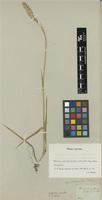
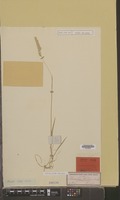
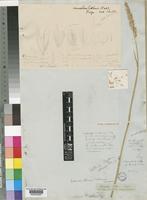
Type of Ataxia ecklonii Nees ex Trin. [family POACEAE]
Syntype of Ataxia ecklonis Nees ex Trin. [family GRAMINEAE]
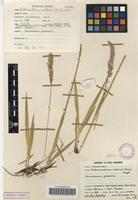
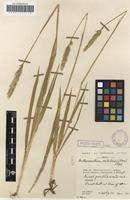
Filed as Anthoxanthum ecklonii (Nees ex Trin.) Stapf [family POACEAE]
Anthoxanthum ecklonii (Nees ex Trin.) Stapf
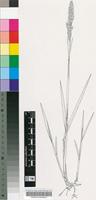
Anthoxanthum ecklonii (Nees ex Trin.) Stapf [family POACEAE]
Filed as Anthoxanthum ecklonii (Nees ex Trin.) Stapf [family POACEAE]
Previous
Next

Name

Identification
Anthoxanthum ecklonii (Nees ex Trin.) Stapf [family POACEAE ]
Related name
  • Anthoxanthum ecklonii

Flora

Entry for ANTHOXANTHUM Ecklonii Stapf [family POACEAE]
Herbarium
Royal Botanic Gardens, Kew (K)
Collection
Flora Capensis
Resource Type
Reference Sources
Entry From
Flora Capensis, Vol 7, page 310, (1900) Author: (By O. STAPF.)
Names
ANTHOXANTHUM Ecklonii Stapf [family POACEAE]
Anthoxanthum odoratum Kunth [family POACEAE], in Ann. Sc. Nat. sér. 1, xiii. 224 (not Linn.).
Ataxia Ecklonis Nees ex Trin. [family POACEAE], Phalar. 31; Steud. Syn. Pl. Glum. i. 13.
Hierochloa Ecklonii Nees [family ], Fl. Afr. Austr. 7; Durand & Schinz, Consp. Fl. Afr. v. 798.
Information
perennial; culms tufted, erect, simple, 1–3 ft. long, smooth, glabrous or scaberulous, finely striate, about 3-noded; internodes gradually longer from the base, up to 1 ft. or more long; sheaths rather tight, smooth or scabrid, rarely reversedly hispidulous, striate, usually very much shorter than the internodes except the lowest, the basal 1 or 2 bladeless, acute; ligules scarious, white, ovate, obtuse, 1–2 lin. long; blades linear, gradually tapering, acute, up to 3 in. by 1–1 1/2 lin., the upper very short, rather rigid, glabrous, smooth or scabrid, rarely reversedly hispidulous, prominently many-nerved; panicle erect, spike-like, sometimes interrupted near the base, up to 2 in. long, shiny, pallid; rhachis glabrous; pedicels with spreading hairs; spikelets oblong-lanceolate, 3 1/2–4 lin. long, pallid; glumes lanceolate to ovate-anceolate (in profile), acuminate, scaberulous on the keels, lower 2 1/2–3 lin. long, 1-nerved, hyaline, upper 3 1/2–4 lin. long, 3- (very rarely 1-) nerved, subhyaline; lowest floret ♂ or barren: valve about 2 1/2 lin. long, 5-nerved, with a short straight awn from above the middle; intermediate floret equal and very similar to the preceding, always empty, with a kneed awn 4 lin. long from below the middle; uppermost floret hermaphrodite, 1–1 1/4 lin. long; valve 5-nerved; anthers 1 1/4–1 1/2 lin. long; grain 7/8 lin. long. null
Distribution
COAST REGION Stockenstrom Div.; Kat Berg, 4000–5000 ft., in wet places, Drège! Queenstown Div.; by the Klipplaats River at Shiloh, Ecklon. King Williamstown Div.; Amatola Mountains, Buchanan, 47!EASTERN REGION Natal; Riet Vlei, 4000–5000 ft., Buchanan, 158!
Notes
A very closely allied species occurs in Madagascar.

Related Materials

  • Terms and Conditions
  • Privacy Policy
  • Cookie Policy
  • Cookie Settings
  • Accessibility
  • Help
  • Contact Us
  • Facebook
  • Twitter
ITHAKA

JSTOR is part of ITHAKA, a not-for-profit organization helping the academic community use digital technologies to preserve the scholarly record and to advance research and teaching in sustainable ways.

©2000-2026 ITHAKA. All Rights Reserved. JSTOR®, the JSTOR logo, JPASS®, Aluka®, and ITHAKA® are registered trademarks of ITHAKA.

╳