JSTOR Global Plants Home
  • Home
  • Browse
  • About
  • Access
  • Account
    • Saved Items
    • Profile
  • Log in

Global Plants

Skip to Main Content
  • JSTOR Global Plants Home
  • Global Plants

    • Browse
    • About
    • Access
    • Account
      • Saved Items
      • Profile
Log in
  • Browse
  • About
  • Access
  • Account
    • Saved Items
    • Profile
Advanced Search

Compilation
Anthospermum ternatum

12 Images see all

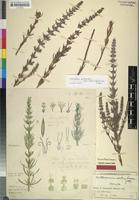
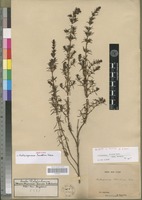
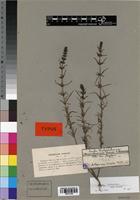
Holotype of Anthospermum erectum Suess. [family RUBIACEAE]
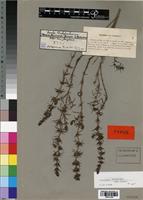
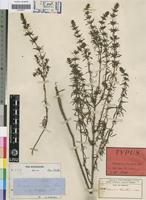
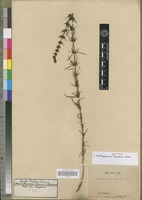
Type of Anthospermum ternatum Hiern [family RUBIACEAE]
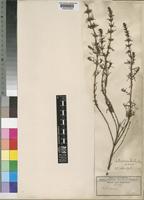
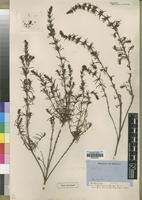
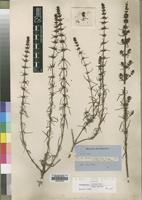
Anthospermum ternatum Hiern [family RUBIACEAE]
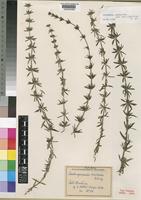
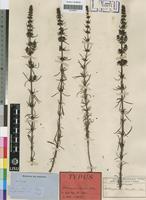
Type of Anthospermum ternatum Hiern [family RUBIACEAE]
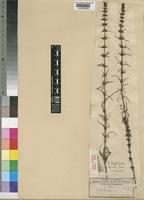
Syntype of Anthospermum ternatum Hiern [family RUBIACEAE]
Type of Anthospermum ternatum Hiern [family RUBIACEAE]
Anthospermum randii S.Moore [family RUBIACEAE]
Type of Anthospermum ternatum Hiern [family RUBIACEAE]
Syntype of Anthospermum ternatum Hiern [family RUBIACEAE]
Type of Anthospermum ternatum Hiern [family RUBIACEAE]
Previous
Next

Name

Identification
Anthospermum ternatum Hiern [family RUBIACEAE ] (stored under name);
Related name
  • Anthospermum erectum
  • Anthospermum ternatum
  • Anthospermum randii

Flora

Entry for ANTHOSPERMUM ternatum Hiern [family RUBIACEAE]
Herbarium
Royal Botanic Gardens, Kew (K)
Collection
Flora of Tropical East Africa
Resource Type
Reference Sources
Entry From
Flora of Tropical East Africa, page 1, (1976) Author: B. VERDCOURT
Names
ANTHOSPERMUM ternatum Hiern [family RUBIACEAE], Cat. Afr. Pl. Welw. 2: 499 (1898). Types: Angola, Huila, near Eme, Welwitsch 5339 (LISU, syn., BM, K, isosyn.!) & Panda Forests about Eme, Welwitsch 5340 (LISU, syn., K, isosyn.!)
Information
Erect unbranched or sparsely branched annual herb 15–70 cm. tall; stems reddish, densely covered with short white spreading pubescence but eventually glabrescent beneath. Leaves in closely placed whorls of 2–3 but appearing densely verticillate due to reduced shoots in the axils, turning reddish; blades linear, 1–2.2 cm. long, 0.8–1.2 mm. wide, sharply pointed at the apex, narrowed to the base, glabrous save for the almost obsolete petioles; upper surface reticulate, the cells often obvious at × 10; stipule-sheath 0.5 mm. long with 1 seta 2 mm. long, pubescent. Flowers several in the axils of the upper 5–22 verticils of short leaves, the whole inflorescence 3–12 cm. long; pedicels very short; flowers unisexual or sometimes hermaphrodite . Male: calyx-tube ovoid, 1.5 mm. long, hairy around the rim but lobes ± obsolete; corolla cream; tube narrow, 1.8 mm. long; lobes elliptic-lanceolate, 2 mm. long, 1 mm. wide, with a few scattered hairs outside; anthers exserted 1.4 mm., ± 1–1.2 mm. of filaments showing; styles joined for 0.3 mm., lobes 1 mm. long. Female: calyx similar to ♂, lacking real lobes; corolla cream; tube small, 0.5–0.8 mm. long; lobes 0.5–1 mm. long, 0.2 mm. wide; styles joined for 1 mm., arms 0.6–1.3 cm. long, pubescent. Hermaphrodite: calyx-tube similar, hairy at apex; corolla greenish, tube ± 3 mm. long; lobes narrowly elliptic-lanceolate, 2.5 mm. long, 0.8 mm. wide, hairy outside; filaments exserted 2 mm.; styles joined at base for 0.8 mm., free arms 6.2 mm. long. Fruits pubescent or glabrous save at apex, the cocci 2 mm. long, 0.8 mm. wide, not crowned by the calyx-limb.
Range
DISTR. T4, 5, 7, 8
Altitude range
880–1695 m.
Distribution
TANZANIA Njombe District about 4 km. N. of Njombe District Boundary on Songea road, 6 July 1953, Milne-Redhead & Taylor 10760!TANZANIA Songea District about 44 km. N. of R. Hanga bridge on Njombe road, 30 June 1956, Milne-Redhead & Taylor 10934!TANZANIA Tunduru District just E. of Songea District Boundary, 5 June 1956, Milne-Redhead & Taylor 10602!
Distribution (external)
Malawi
Zambia
Angola
Notes
The material from East Africa has more coarsely pubescent stems than the Angolan types and much of the material from south-central Africa is similar but the differences are scarcely of varietal significance. What may be a ± hairy-leaved variant occurs in Mozambique.

Related Materials

  • Terms and Conditions
  • Privacy Policy
  • Cookie Policy
  • Cookie Settings
  • Accessibility
  • Help
  • Contact Us
  • Facebook
  • Twitter
ITHAKA

JSTOR is part of ITHAKA, a not-for-profit organization helping the academic community use digital technologies to preserve the scholarly record and to advance research and teaching in sustainable ways.

©2000-2026 ITHAKA. All Rights Reserved. JSTOR®, the JSTOR logo, JPASS®, Aluka®, and ITHAKA® are registered trademarks of ITHAKA.

╳