JSTOR Global Plants Home
  • Home
  • Browse
  • About
  • Access
  • Account
    • Saved Items
    • Profile
  • Log in

Global Plants

Skip to Main Content
  • JSTOR Global Plants Home
  • Global Plants

    • Browse
    • About
    • Access
    • Account
      • Saved Items
      • Profile
Log in
  • Browse
  • About
  • Access
  • Account
    • Saved Items
    • Profile
Advanced Search

Compilation
Antennaria anaphaloides

19 Images see all

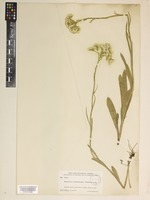
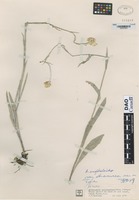
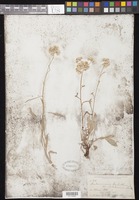
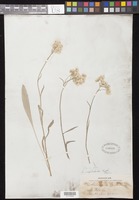
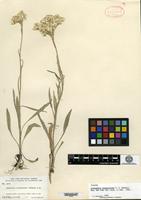
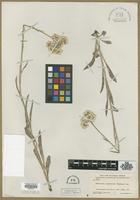
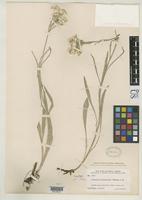
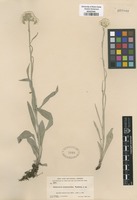
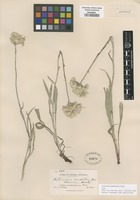
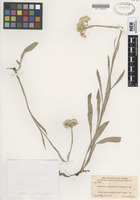
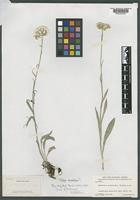
Type of Antennaria anaphaloides Rydb. [family ASTERACEAE]
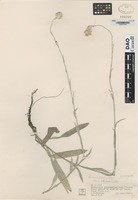
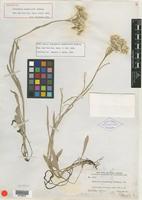
Antennaria anaphaloides Rydb. [family COMPOSITAE]
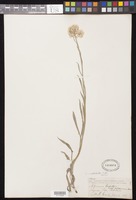
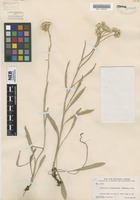
Antennaria anaphaloides Rydb. [family ASTERACEAE]
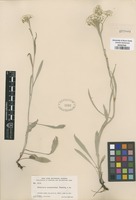
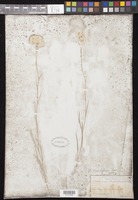
Isotype of Antennaria anaphaloides Rydberg, P.A. 1900 [family ASTERACEAE]
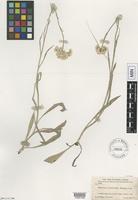
Isotype of Antennaria anaphaloides Rydb. [family ASTERACEAE]
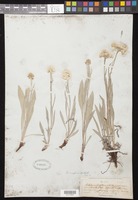
Antennaria anaphaloides Rydb. [family ASTERACEAE]
Type of Antennaria anaphaloides Rydberg variety straminea Boivin [family ASTERACEAE]
Antennaria anaphaloides Rydb. [family ASTERACEAE]
Isotype of Antennaria anaphaloides Rydberg [family ASTERACEAE]
Type? of Antennaria anaphaloides Rydb. [family ASTERACEAE]
Isotype of Antennaria anaphaloides Rydberg variety straminea Boivin [family ASTERACEAE]
Type of Antennaria anaphaloides Rydb. [family ASTERACEAE]
Antennaria anaphaloides Rydb. [family ASTERACEAE]
Isotype of Antennaria anaphaloides Rydb. [family ASTERACEAE]
Type of Antennaria anaphaloides Rydb. [family ASTERACEAE]
Holotype of Antennaria anaphaloides Rydb. [family ASTERACEAE]
Antennaria anaphaloides Rydb. [family ASTERACEAE]
Previous
Next

Name

Identification
Isotype of Antennaria anaphaloides Rydberg [family ASTERACEAE ] (stored under name); Verified by Rydb., 1900
Related name
  • Antennaria anaphaloides
Common name
  • Pearly or handsome or tall pussytoes, Flora of North America Vol. 19

Flora

Entry for Antennaria anaphaloides Rydberg [family COMPOSITAE]
Herbarium
Flora of North America (FNA)
Collection
Flora of North America
Resource Type
Reference Sources
Entry From
Flora of North America, Vol 19,
Names
Antennaria anaphaloides Rydberg [family COMPOSITAE], Mem. New York Bot. Gard., 1: 409. 1900
Antennaria anaphaloides var. straminea B. Boivin [family COMPOSITAE]
Antennaria pulcherrima (Hooker) Greene subsp. anaphaloides (Rydberg) W. A. Weber [family COMPOSITAE]
Antennaria pulcherrima var. anaphaloides (Rydberg) G. W. Douglas [family COMPOSITAE]
Treatment Author(s)
Randall J. Bayer
Information
Dioecious. Plants 15–35(–50) cm. Stolons none. Basal leaves (ephemeral) 3–5-nerved, narrowly oblanceolate or narrowly elliptic, 25–150(–200) × 4–20(–25) mm, tips mucronate, faces gray-pubescent. Cauline leaves oblanceolate or linear, 10–80 mm, usually flagged. Heads 8–30(–50+) in corymbiform arrays. Involucres: staminate (4–)5–6.5 mm; pistillate 4.5–7 mm. Phyllaries (each with dark brown or blackish spot in middle) distally white or cream (sometimes suffused pink to rose). Corollas: staminate 2.5–4 mm; pistillate 3–4.5 mm. Cypselae 1–1.8 mm, glabrous; pappi: staminate 3–4.5 mm; pistillate 3.5–4.5(–5.5) mm. 2n = 28.
Phenology
jun-aug (summer)
Altitude range
1000–3400 m;
Distribution
USA Colo.USA IdahoUSA Mont.USA Nev.USA Oreg.USA UtahUSA Wash.USA Wyo.Canada Alta.Canada B.C.Canada Sask.
Discussion
Antennaria anaphaloides is native to the northern Rocky Mountains and is characterized by whitish phyllaries, each with a black spot at the base. Some morphologic overlap occurs between A. anaphaloides and A. pulcherrima; the two occur in different habitats: A. anaphaloides grows in dry meadows and aspen forest openings; A. pulcherrima is usually found in moist willow thickets along streams (K. M. Urbanska 1983). Antennaria anaphaloides is closely related to the other members of the Pulcherrimae group (R. J. Bayer 1990; Bayer et al. 1996).

Related Materials

  • Terms and Conditions
  • Privacy Policy
  • Cookie Policy
  • Cookie Settings
  • Accessibility
  • Help
  • Contact Us
  • Facebook
  • Twitter
ITHAKA

JSTOR is part of ITHAKA, a not-for-profit organization helping the academic community use digital technologies to preserve the scholarly record and to advance research and teaching in sustainable ways.

©2000-2026 ITHAKA. All Rights Reserved. JSTOR®, the JSTOR logo, JPASS®, Aluka®, and ITHAKA® are registered trademarks of ITHAKA.

╳