JSTOR Global Plants Home
  • Home
  • Browse
  • About
  • Access
  • Account
    • Saved Items
    • Profile
  • Log in

Global Plants

Skip to Main Content
  • JSTOR Global Plants Home
  • Global Plants

    • Browse
    • About
    • Access
    • Account
      • Saved Items
      • Profile
Log in
  • Browse
  • About
  • Access
  • Account
    • Saved Items
    • Profile
Advanced Search

Compilation
Anredera vesicaria

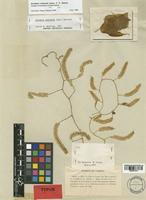
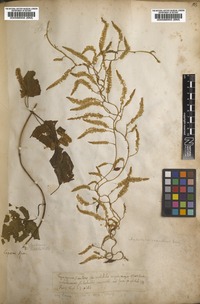
10 Images see all

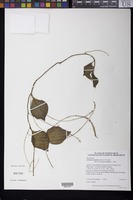
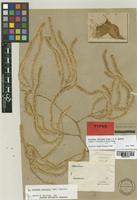
Filed as Anredera vesicaria (Lam.) C.F. Gaertn. [family BASELLACEAE]
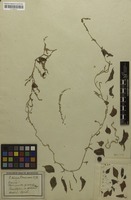
Isosyntype of Boussingaultia leptostachys Moq. [family BASELLACEAE]
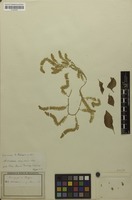
Filed as Basella vesicaria Lam. [family BASELLACEAE]
Isotype of Anredera cumingii Hassk. [family BASELLACEAE]
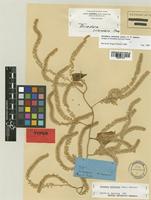
Anredera cumingii Hassk. [family BASELLACEAE]
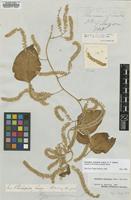
Isotype of Anredera cumingii Hassk. [family BASELLACEAE]
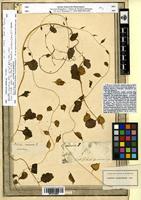
Anredera cumingii Hassk. [family BASELLACEAE]
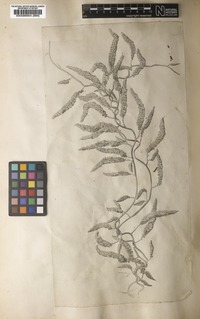
Type of Basella vesicaria Lam. [family BASELLACEAE]
Anredera cumingii Hassk. [family BASELLACEAE]
Filed as Basella vesicaria Lam. [family BASELLACEAE]
Previous
Next

Name

Identification
Anredera vesicaria (Lam.) Gaertn.f. [family BASELLACEAE ] (stored under name); Verified by Roger Eriksson, Anredera vesicaria (Lam.) Gaertn.f. [family BASELLACEAE ] Verified by Calvin Ross Sperling, Isotype of Anredera cumingii Hassk. [family BASELLACEAE ] Verified by Roger Eriksson, Anredera cumingii Hassk. [family BASELLACEAE ] Verified by Elmer Drew Merrill, Anredera scandens Moq. [family BASELLACEAE ] Verified by Elmer Drew Merrill,
Related name
  • Anredera cumingii
  • Anredera scandens
  • Anredera vesicaria
  • Basella vesicaria
Common name
  • Sacasile, Flora of North America Vol. 4

Flora

Entry for Anredera vesicaria (Lamarck) C. F. Gaertner [family BASELLACEAE]
Herbarium
Flora of North America (FNA)
Collection
Flora of North America
Resource Type
Reference Sources
Entry From
Flora of North America, Vol 4,
Names
Anredera vesicaria (Lamarck) C. F. Gaertner [family BASELLACEAE], Suppl. Carp., 176. 1807
Basella vesicaria Lamarck [family BASELLACEAE], in J. Lamarck et al., Encycl., 1: 382. 1785
Anredera leptostachys (Moquin-Tandon) Steenis [family BASELLACEAE]
Boussingaultia leptostachys Moquin-Tandon [family BASELLACEAE]
Information
Stems twining to 8 m, axillary tubers absent. Leaves: petiole 3–18 mm; blade ovate to elliptic, 2–16 × 0.5–9 cm, base of larger leaves proximal to inflorescence acute to cuneate, apex acute to obtuse. Inflorescences racemes or in branched panicles of racemes, 3–35(–70) cm; single bract subtending each pedicel oblong-oblanceolate, 1–2 × 0.2–0.5 mm; paired bracts subtending each flower deciduous, triangular, 0.6–1 × 0.5–0.8 mm, distinct. Flowers bisexual or functionally unisexual; sepals basally adnate to petals, keeled, becoming winged in fruit, cream-white, elliptic, 1.7–2 × 1–1.3 mm, apex obtuse; petals basally connate, cream-white, elliptic, 1.5–2.3 × 0.8–1.1 mm, apex obtuse, spreading at anthesis; stamens of bisexual and functionally staminate plants fleshy; filaments basally connate and dilated, 2.5–3.8 mm; anthers 0.8–1 mm; stamens of functionally pistillate plants reduced and sterile; pistils in bisexual and functionally pistillate plants 0.4–0.6 mm; styles 0.8–1.5 mm, basally connate 1/3–1/2 their length; stigmas clavate to bifid; pistils of functionally staminate plants reduced; pedicel 1–3 mm. Utricles with style bases persistent, not [rarely] produced in functionally staminate plants, obovoid, 1–1.4 mm.
Phenology
jun-aug (summer), sep-nov (fall)
Altitude range
0–500 m;
Distribution
MexicoWest IndiesCentral AmericaSouth AmericaEurasiaAfricaPacific IslandsAustralia.USA Fla.USA Tex.
Discussion
Anredera vesicaria as treated here has two morphologically distinct forms, which C. R. Sperling (1987) considered as functionally staminate and functionally pistillate forms of the same species. Functionally pistillate plants (traditional A. vesicaria) apparently do not produce pollen, yet produce fruit. Functionally staminate plants (traditional A. (Boussingaultia) leptostachys) produce pollen, but rarely produce fruit. Both forms produce tubers at the base of the stem and below ground, and it is the apparent means of reproduction of the staminate plants. Further biosystematic and molecular study of these organisms is warranted to determine whether this treatment is valid.
Anredera vesicaria is cultivated for its showy inflorescences and fragrant flowers (C. R. Sperling 1987).

Related Materials

  • Terms and Conditions
  • Privacy Policy
  • Cookie Policy
  • Cookie Settings
  • Accessibility
  • Help
  • Contact Us
  • Facebook
  • Twitter
ITHAKA

JSTOR is part of ITHAKA, a not-for-profit organization helping the academic community use digital technologies to preserve the scholarly record and to advance research and teaching in sustainable ways.

©2000-2026 ITHAKA. All Rights Reserved. JSTOR®, the JSTOR logo, JPASS®, Aluka®, and ITHAKA® are registered trademarks of ITHAKA.

╳