JSTOR Global Plants Home
  • Home
  • Browse
  • About
  • Access
  • Account
    • Saved Items
    • Profile
  • Log in

Global Plants

Skip to Main Content
  • JSTOR Global Plants Home
  • Global Plants

    • Browse
    • About
    • Access
    • Account
      • Saved Items
      • Profile
Log in
  • Browse
  • About
  • Access
  • Account
    • Saved Items
    • Profile
Advanced Search

Compilation
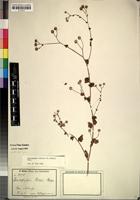
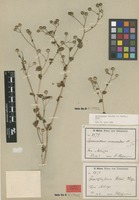
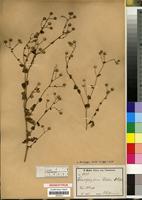
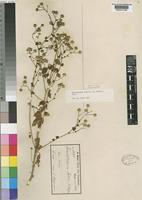
Anisopappus holstii

6 Images see all

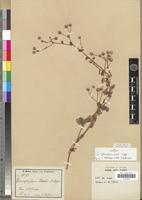
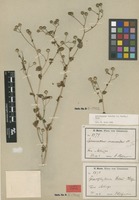
Isoneotype of Anisopappus holstii (O.Hoffm.) Wild [family COMPOSITAE]
Isoneotype of Sphacophyllum holstii O.Hoffm. [family ASTERACEAE]
Isoneotype of Anisopappus holstii (O. Hoffm.) Wild [family COMPOSITAE/ASTERACEAE]
Anisopappus holstii (O.Hoffm.) Wild [family COMPOSITAE]
Neotype of Sphacophyllum holstii O.Hoffm. [family ASTERACEAE]
Filed as Anisopappus holstii (O.Hoffm.) Wild [family ASTERACEAE]
Previous
Next

Name

Identification
Anisopappus holstii (O. Hoffm.) Wild [family COMPOSITAE/ASTERACEAE ] (stored under name); Verified by HBG-formal name change, 2008 Sphacophyllum holstii O. Hoffm. [family COMPOSITAE/ASTERACEAE ] Verified by Not on sheet,
Related name
  • Sphaeranthus suaveolens
  • Anisopappus holstii
  • Sphacophyllum holstii

Flora

Entry for ANISOPAPPUS holstii (O. Hoffm.) Wild [family COMPOSITAE]
Herbarium
Royal Botanic Gardens, Kew (K)
Collection
Flora of Tropical East Africa
Resource Type
Reference Sources
Entry From
Flora of Tropical East Africa, page 315, (2002) Author: H.J. BEENTJE
Names
ANISOPAPPUS holstii (O. Hoffm.) Wild [family COMPOSITAE], in Kirkia 4: 69 (1964); U.K.W.F. ed. 2: 214 (1994); S. Ortiz, Paiva & Rodr.-Oubiña in Anal. Jard. Bot. Madrid 54: 389 (1996). Type: Tanzania, Usambara, Holst 3915 (B†, holo.); neotype (selected here): Tanzania, Lushoto District, Usambara, Kwa Mshuza, Holst 8898 (K!, neo., P!, isoneo.)
Sphacophyllum holstii O. Hoffm. [family COMPOSITAE], in P.O.A. C: 412 (1895)
Information
Annual herb, 0.1–1 m high, with straggling branches; stems thinly pubescent to sparsely pilose. Leaves petiolate, the petiole 0.2–2.5 cm long, blade ovate to cordiform, 1–8 cm long, 0.6–6 cm wide, base cordate, truncate or less often cuneate, margins dentate-crenate, sometimes (especially in Kenya) slightly lobed, rarely almost entire, apex acute, densely to sparsely pilose on both surfaces, glandular beneath. Capitula 3–8 mm long, in few-headed leafy cymes; stalks of individual capitula 0.5–3 cm long, filiform; phyllaries lanceolate, 2.5–5 mm long, attenuate, distally ciliate or pectinate, sparsely glandular; receptacle conical, the paleae similar to the phyllaries. Florets yellow; outer florets few, pale yellow, tube cylindric, 0.8–1.1 mm long, ray 1–2(–3) mm long, 0.5–2 mm wide, style 1–1.6 mm long; inner florets 15–35, pale to dark yellow, tube infundibuliform, 0.8–1.5 mm long and sparsely glandular, lobes 0.3–0.4 mm long and sparsely glandular, anthers 0.5–0.7 mm long, style 1.3–1.8 mm long. Achenes ellipsoid, grooved, 0.8–1.2 mm long, glabrous or very sparsely pilose; pappus absent.
Range
DISTR. U 1, 3; K 2–4, 6, 7; T 1, 3, 5, 7 not known elsewhere
Altitude range
750–1900 m
Distribution
UGANDA Karamoja District Moroto, Oct. 1952, Verdcourt 754! & Lolet, Oct. 1958, J. Wilson 518!;KENYA Naivasha District Longonot, May 1960, Kerfoot 1866!;TANZANIA Shinyanga, Apr. 1932, Burtt 3765!;UGANDA Teso District Arapai, July 1926, Maitland 1193!KENYA Masai District Olenyamu, June 1962, Glover & Samuel 2910!;KENYA Teita District Tsavo, Loosioto Hill, July 1966, Gilbert C86!TANZANIA Dodoma District 40 km S of Itigi Station on Chunya road, Apr. 1964, Greenway & Polhill 11667!;TANZANIA Iringa District Ruaha National Park, upper Mdonya sand river, Aug. 1970, Thulin & Mhoro 666!
Notes
The neotype indicated above was determined as this species by O. Hoffmann.

Related Materials

  • Terms and Conditions
  • Privacy Policy
  • Cookie Policy
  • Cookie Settings
  • Accessibility
  • Help
  • Contact Us
  • Facebook
  • Twitter
ITHAKA

JSTOR is part of ITHAKA, a not-for-profit organization helping the academic community use digital technologies to preserve the scholarly record and to advance research and teaching in sustainable ways.

©2000-2026 ITHAKA. All Rights Reserved. JSTOR®, the JSTOR logo, JPASS®, Aluka®, and ITHAKA® are registered trademarks of ITHAKA.

╳