JSTOR Global Plants Home
  • Home
  • Browse
  • About
  • Access
  • Account
    • Saved Items
    • Profile
  • Log in

Global Plants

Skip to Main Content
  • JSTOR Global Plants Home
  • Global Plants

    • Browse
    • About
    • Access
    • Account
      • Saved Items
      • Profile
Log in
  • Browse
  • About
  • Access
  • Account
    • Saved Items
    • Profile
Advanced Search

Compilation
Angelonia biflora

13 Images see all

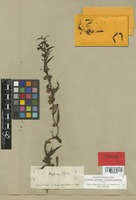
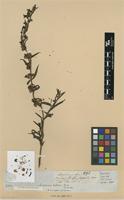
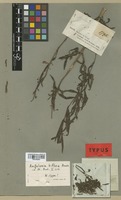
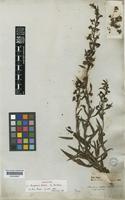
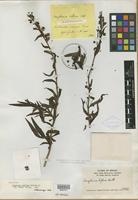
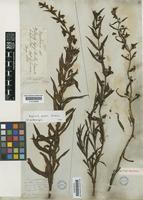
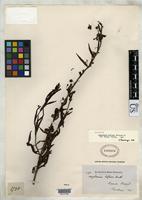
Isotype of Angelonia biflora Benth. [family SCROPHULARIACEAE]
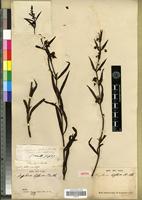
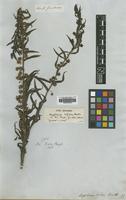
Isotype of Angelonia biflora Benth [family SCROPHULARIACEAE]
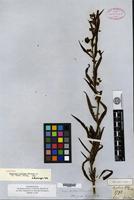
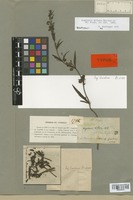
Isotype of Angelonia biflora Bentham [family SCROPHULARIACEAE]
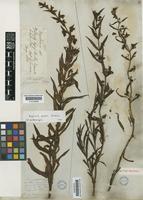
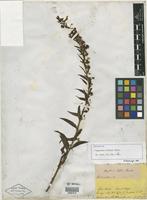
Angelonia biflora Benth. [family SCROPHULARIACEAE]
Type of Angelonia biflora Benth. [family SCROPHULARIACEAE]
Isotype of Angelonia biflora Benth. [family SCROPHULARIACEAE]
Holotype of Angelonia biflora Benth. [family SCROPHULARIACEAE]
Isotype of Angelonia biflora Benth. [family SCROPHULARIACEAE]
Isotype of Angelonia biflora Bentham, G. 1846 [family SCROPHULARIACEAE]
Previous
Next

Name

Identification
Angelonia biflora Benth. [family SCROPHULARIACEAE ] (stored under name);
Related name
  • Angelonia gardneri
  • Angelonia sp
  • Angelonia biflora

Flora

Entry for Angelonia biflora Benth. [family SCROPHULARIACEAE]
Herbarium
Royal Botanic Gardens, Kew (K)
Collection
Flora of Tropical East Africa
Resource Type
Reference Sources
Entry From
Flora of Tropical East Africa, page 1, (2008) Author: S.A. GHAZANFAR, F.N. HEPPER & D. PHILCOX
Names
Angelonia biflora Benth. [family SCROPHULARIACEAE], in DC., Prodr. 10: 254 (1846); Hepper in Fl. Masc. 129: 5 (2000). Type: Brazil, Ceara, Gardner 1795 (K!, holo.)
Information
Perennial herb 40–60 cm high, viscid-pubescent throughout; stems several, simple, ± quadrangular. Leaves linear to narrowly linear-ovate, 3–9 cm long, 5–9(–14) mm wide, sessile, ± cuneate at base, very acute at apex, margins shallowly serrate. Bracts similar to leaves diminishing in size upwards, longer than the pedicels; pedicels 1–2 cm long, curved in fruit. Flowers blue-purple, with white throat, usually 2 in each upper axil. Calyx ± 4 mm long, 5-lobed, lobes ± equal, acuminate. Corolla 2-lipped, ± 1 cm long and 2 cm across, with small glands all over; lobes 5, ± equal; lower lip with a central cavity and thrust forward; style and stigma glabrous. Capsule rotund, ± 5 mm in diameter. Fig. 4, p. 17.
Range
DISTR. T 3 South Africa, Madagascar; Reunion, Mauritius, Rodrigues. Apparently introduced recently, but now naturalised. Native to Brazil, now widely cultivated and often naturalized throughout tropical Asia and parts of tropical Africa
Altitude range
± 950 m
Distribution
TANZANIA Lushoto District Amani Nature Reserve, road from Kwamkoro Forest Reserve, Ngua area, Ntemi, Sallu & Athumani 479! & Amani Nature Reserve, 10 Mar. 2000, Ntemi Sallu & Madege 517! & Amani Nursery, 22 Apr. 1930, Greenway 2226!
Notes
USES. None recorded on specimens from our area. CONSERVATION Least Concern (LC). This species has been misidentified as A. salicariifolia Humb. & Bonpl., A. goyazensis Benth. and A. grandiflora Morren.

Related Materials

  • Terms and Conditions
  • Privacy Policy
  • Cookie Policy
  • Cookie Settings
  • Accessibility
  • Help
  • Contact Us
  • Facebook
  • Twitter
ITHAKA

JSTOR is part of ITHAKA, a not-for-profit organization helping the academic community use digital technologies to preserve the scholarly record and to advance research and teaching in sustainable ways.

©2000-2026 ITHAKA. All Rights Reserved. JSTOR®, the JSTOR logo, JPASS®, Aluka®, and ITHAKA® are registered trademarks of ITHAKA.

╳