JSTOR Global Plants Home
  • Home
  • Browse
  • About
  • Access
  • Account
    • Saved Items
    • Profile
  • Log in

Global Plants

Skip to Main Content
  • JSTOR Global Plants Home
  • Global Plants

    • Browse
    • About
    • Access
    • Account
      • Saved Items
      • Profile
Log in
  • Browse
  • About
  • Access
  • Account
    • Saved Items
    • Profile
Advanced Search

Compilation
Anemia dregeana

14 Images see all

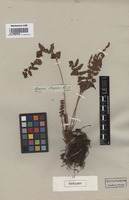
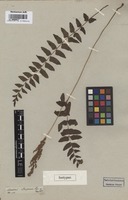
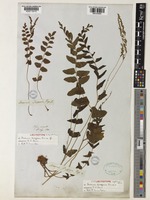
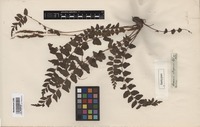
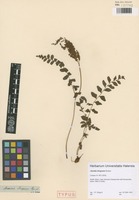
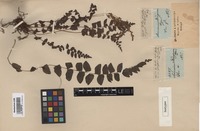
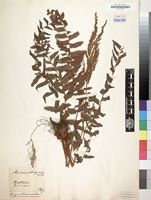
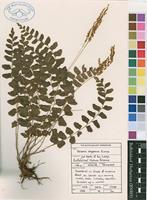
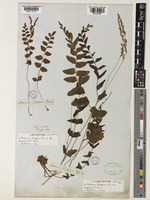
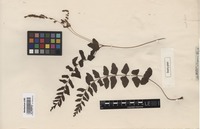
Isotype of Anemia dregeana Kunze var. β [family SCHIZAEACEAE]
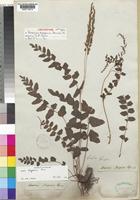
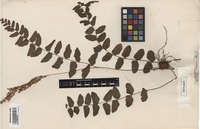
Isotype of Anemia dregeana Kunze var. α [family SCHIZAEACEAE]
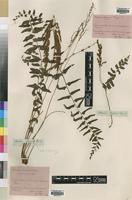
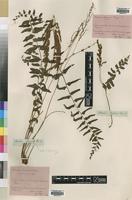
Isolectotype of Anemia dregeana Kunze [family SCHIZAEACEAE]
Isotype of Anemia dregeana Kunze var. α [family SCHIZAEACEAE]
Isolectotype of Anemia dregeana Kunze [family SCHIZAEACEAE]
Isotype of Anemia dregeana Kunze var. α [family SCHIZAEACEAE]
Syntype of Anemia dregeana Kunze [family SCHIZAEACEAE]
Isotype of Anemia dregeana Kunze var. β [family SCHIZAEACEAE]
Type of Anemia dregeana Kunze [family SCHIZAEACEAE]
Filed as Anemia dregeana Kunze [family ANEMIACEAE]
Anemia dregeana Kunze [family SCHIZAEACEAE]
Isolectotype of Anemia dregeana Kunze [family SCHIZAEACEAE]
Isotype of Anemia dregeana Kunze var. α [family SCHIZAEACEAE]
Previous
Next

Name

Identification
Anemia dregeana Kunze [family SCHIZAEACEAE ] (stored under name); Verified by Not on sheet.,
Related name
  • Anemia dregeana

Flora

Entry for Anemia dregeana Kunze [family ANEMIACEAE]
Herbarium
South African National Biodiversity Institute, Compton Herbarium, Cape Town (SAM)
Collection
Swaziland ferns and fern allies
Resource Type
Reference Sources
Entry From
Swaziland Ferns and Fern Allies, (2003) Author: J.P. Roux
Names
Anemia dregeana Kunze [family ANEMIACEAE]
Common names
Anemia dregeana Kunze forma b Kunze in Linnaea 10: 493 (1836). Type: Inter Omsamwubu et Omsamcaba ad catarractam magnam, Drège s.n. [LZ†, K, lecto.!, designated by Roux (1986); HBG, S, isolecto.].
dregeana = after J.F. Drège (1794-1881), a German horticulturist, botanical collector and traveller who collected extensively in South Africa from 1826 to 1834.
Vernacular names: Drège's flowering fern, Sorghum fern; Drège-se-blomvaring (Afr.)
Information
Plants terrestrial or epilithic. Rhizome short-decumbent to suberect, to 4 mm in diameter, closely set with roots, persistent stipe bases and hairs, hairs ferrugineus, pluricellular, uniseriate, to 8 mm long. Fronds crowded, caespitose, hemidimorphic, to 370 mm long; stipe firm, proximally castaneus, stramineous higher up, shallowly sulcate adaxially, to 150 mm long, to 1.6 mm in diameter, proximally densely set with hairs similar to those on the rhizome, higher up moderately set with similar, but shorter hairs; lamina anadromous and/or catadromous, sterile 1-pinnate, oblong-acuminate to narrowly elliptic, with up to 14 petiolated pinna pairs, to 190 mm long, to 58 mm wide, fertile with a pair of highly modified basal pinnae; rachis stramineous, adaxially sulcate, closely haired, hairs thinly crustaceous, ferrugineus, pluricellular, uniseriate, to 2 mm long; pinnae: sterile herbaceous, sessile, broadly ovate to inaequilaterally trullate, acute to obtuse, base inaequilateral, basiscopically narrowly to broadly cuneate, acroscopically truncate to narrowly cuneate, larger often acroscopically auricled, crenate, to 37 mm long, to 20 mm wide, adaxially and abaxially with hairs similar to those on rachis along veins, to 1.5 mm long, the fertile erect, petiolate, petiole to 125 mm long, to 2-pinnate-pinnatifid, lamina highly skeletonised, to 120 mm long. Venation anadromous and/or catadromous, free, evident, forked, ending near the margin. Sporangia borne singly at vein endings, sessile, ovoid, with a subapical, uniseriate annulus with a well-defined stomium, dehiscing by a vertical slit. Spores numerous, globose to tetrahedral-globose, trilete, with coarse ridges and grooves, the ridges coarsely tuberculate, exospore 50 x 57 (m in diameter. Figure 13C & D.
Habitat
Ecology: Terrestrial or epilithic, on moss-covered rocks or in leaf-litter, in moist or seasonally moist conditions in forest and along forest margins, often deeply shaded. Hemicryptophyte, mesophyte; fronds mesomorphic, the sterile parts long-lived, fertile pinnae short-lived. Vegetative reproduction not effective, rhizome rarely sparsely and closely branched. Seasonal pattern apparently nonexistent, but could be determined by the availability of moisture. Fertile material collected in May.
Range
Distribution: In Swaziland the species appears to be confined to the Sondeza mountains along the northern border of the country, occurring at altitudes between 500 and 1 200 m. The species is restricted to the eastern parts of South Africa and Swaziland.

Related Materials

  • Terms and Conditions
  • Privacy Policy
  • Cookie Policy
  • Cookie Settings
  • Accessibility
  • Help
  • Contact Us
  • Facebook
  • Twitter
ITHAKA

JSTOR is part of ITHAKA, a not-for-profit organization helping the academic community use digital technologies to preserve the scholarly record and to advance research and teaching in sustainable ways.

©2000-2026 ITHAKA. All Rights Reserved. JSTOR®, the JSTOR logo, JPASS®, Aluka®, and ITHAKA® are registered trademarks of ITHAKA.

╳