JSTOR Global Plants Home
  • Home
  • Browse
  • About
  • Access
  • Account
    • Saved Items
    • Profile
  • Log in

Global Plants

Skip to Main Content
  • JSTOR Global Plants Home
  • Global Plants

    • Browse
    • About
    • Access
    • Account
      • Saved Items
      • Profile
Log in
  • Browse
  • About
  • Access
  • Account
    • Saved Items
    • Profile
Advanced Search

Compilation
Androsace gormanii

9 Images see all

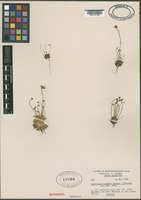
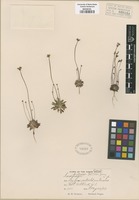
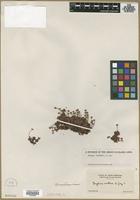
Isotype of Androsace gormanii Greene [family PRIMULACEAE]
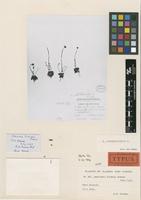
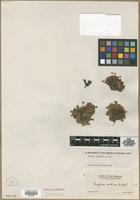
Type of Androsace gormanii Greene [family PRIMULACEAE]
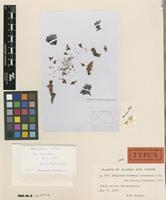
Type? of Douglasia gormanii Constance [family PRIMULACEAE]
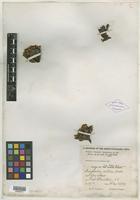
Type of Douglasia gormanii Constance [family PRIMULACEAE]
Isotype of Douglasia gormanii Constance [family PRIMULACEAE]
Original material of Androsace gormanii Greene [family PRIMULACEAE]
Type of Douglasia gormanii Constance [family PRIMULACEAE]
Filed as Douglasia gormanii Lindl. [family PRIMULACEAE]
Previous
Next

Name

Identification
Androsace gormanii Greene [family PRIMULACEAE ] (stored under name); Verified by Not on sheet, Androsace septentrionalis L. [family PRIMULACEAE ] Verified by Hultén, E.,
Related name
  • Androsace septentrionalis
  • Androsace gormanii
Common name
  • rock jasmine, Flora of North America Vol. 8
  • androsace septentrionale, Flora of North America Vol. 8
  • Pygmyflower, Flora of North America Vol. 8

Flora

Entry for Androsace septentrionalis Linnaeus [family PRIMULACEAE]
Herbarium
Flora of North America (FNA)
Collection
Flora of North America
Resource Type
Reference Sources
Entry From
Flora of North America, Vol 8,
Names
Androsace septentrionalis Linnaeus [family PRIMULACEAE], Sp. Pl., 1: 142. 1753 ,
Androsace arguta Greene [family PRIMULACEAE]
Androsace gormanii Greene [family PRIMULACEAE]
Androsace puberulenta Rydberg [family PRIMULACEAE]
Androsace septentrionalis var. diffusa (Small) R. Knuth [family PRIMULACEAE]
Androsace septentrionalis subsp. glandulosa (Wooton & Standley) G. T. Robbins [family PRIMULACEAE]
Androsace septentrionalis var. glandulosa (Wooton & Standley) H. St. John [family PRIMULACEAE]
Androsace septentrionalis subsp. puberulenta (Rydberg) G. T. Robbins [family PRIMULACEAE]
Androsace septentrionalis var. puberulenta (Rydberg) R. Knuth [family PRIMULACEAE]
Androsace septentrionalis subsp. robusta (H. St. John) G. T. Robbins [family PRIMULACEAE]
Androsace septentrionalis var. robusta H. St. John [family PRIMULACEAE]
Androsace septentrionalis subsp. subulifera (A. Gray) G. T. Robbins [family PRIMULACEAE]
Androsace septentrionalis subsp. subumbellata (A. Nelson) G. T. Robbins [family PRIMULACEAE]
Douglasia ochotensis (Roemer & Schultes) Hultén subsp. gormanii (Greene) Á. Löve & D. Löve [family PRIMULACEAE]
Treatment Author(s)
Sylvia Kelso
Information
Plants annual or biennial, highly variable in size from inconspicuous to moderately robust, not mat-forming. Leaves in single rosette; petiole obscure to absent; blade oblanceolate to spatulate, 5–30 × 3–10 mm, base obscurely narrowing to stem, margins often ciliate, surfaces glabrescent to hairy, hairs straight. Scapes 1–5(–10), 1–10(–15) cm, glabrescent, puberulent, or, sometimes, stipitate-glandular. Inflorescences 5–20-flowered; involucral bracts narrowly lanceolate to linear-lanceolate, relatively narrow. Pedicels erect to arcuate, slender, unequal, 0.3–6 cm. Flowers: calyx narrowly campanulate, with prominent ridges, 3–5 mm, lobes erect, broadly lanceolate, apex acute; corolla tube equaling or shorter than calyx, limb to ca. 3 mm diam. Capsules ± equaling calyx, 3–5 mm. 2n = 20.
Phenology
Flowering spring–early fall
Altitude range
0–3500 m
Distribution
GreenlandEurasia.USA AlaskaUSA Ariz.USA Calif.USA Colo.USA IdahoUSA Minn.USA Mont.USA Nev.USA N.Mex.USA N.Dak.USA Oreg.USA S.Dak.USA Tex.USA UtahUSA Wash.USA Wyo.Canada Alta.Canada B.C.Canada Man.Canada Nfld. and Labr. (Nfld.)Canada N.W.T.Canada NunavutCanada Ont.Canada Que.Canada Sask.Canada Yukon
Discussion
Androsace septentrionalis is broadly distributed and ruderal, occurring from low elevations at high latitudes to the alpine tundra in the Rocky Mountains. It is the most common species of Androsace across western North America and is variable in morphology, depending on elevation, exposure, and light. This plasticity has resulted in a plethora of infraspecific names. Most infraspecific taxa show little geographic coherence, and variants representing all the infraspecific taxa can be found throughout the range of this species, sometimes mixed within single populations. High-elevation individuals tend to have very short scapes and a diminutive growth habit; lowland individuals begin flowering when the scapes are barely developed, and elongate throughout anthesis, ultimately often producing robust individuals with relatively tall scapes. Shaded areas produce plants with “long” pedicels; exposed areas produce plants with “very short” ones. The location and degree of glands and other hairs can vary widely as well. The most readily identifiable morphotype is subsp. glandulosa, seen most commonly in Arizona, southern Colorado, New Mexico, and Texas; even in it, nonglandular individuals occur together with glandular plants. Given the lack of coherence in morphological variation within A. septentrionalis and its environmental variation, it seems best to view the complex as a single, highly variable species.

Related Materials

  • Terms and Conditions
  • Privacy Policy
  • Cookie Policy
  • Cookie Settings
  • Accessibility
  • Help
  • Contact Us
  • Facebook
  • Twitter
ITHAKA

JSTOR is part of ITHAKA, a not-for-profit organization helping the academic community use digital technologies to preserve the scholarly record and to advance research and teaching in sustainable ways.

©2000-2026 ITHAKA. All Rights Reserved. JSTOR®, the JSTOR logo, JPASS®, Aluka®, and ITHAKA® are registered trademarks of ITHAKA.

╳