JSTOR Global Plants Home
  • Home
  • Browse
  • About
  • Access
  • Account
    • Saved Items
    • Profile
  • Log in

Global Plants

Skip to Main Content
  • JSTOR Global Plants Home
  • Global Plants

    • Browse
    • About
    • Access
    • Account
      • Saved Items
      • Profile
Log in
  • Browse
  • About
  • Access
  • Account
    • Saved Items
    • Profile
Advanced Search

Compilation
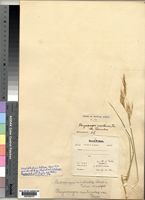
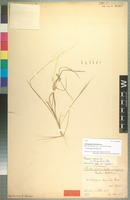
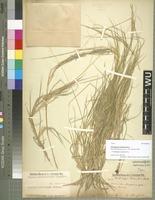
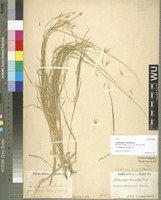
Andropogon tremulus

4 Images see all

Chrysopogon serrulatus Trin. [family POACEAE]
Type of Andropogon tremulus Hack. [family POACEAE]
Previous
Next

Name

Identification
Andropogon tremulus Hack. [family POACEAE ] Chrysopogon serrulatus Trin. [family POACEAE ] (stored under name); Chrysopogon montanus Trin. [family POACEAE ] Verified by Stapf,O., Andropogon monticola Schultz [family POACEAE ]
Related name
  • Andropogon tremulus
  • Chrysopogon serrulatus
  • Andropogon monticola
  • Chrysopogon montanus

Flora

Entry for CHRYSOPOGON montanus Stapf var. tremulus [family POACEAE]
Herbarium
Royal Botanic Gardens, Kew (K)
Collection
Flora of Tropical Africa
Resource Type
Reference Sources
Entry From
Flora of Tropical Africa, Vol 9, page 1, (1917) Author: (By O. STAPF.)
Names
CHRYSOPOGON montanus Stapf var. tremulus [family POACEAE]
Andropogon monticola Stapf var. Trinii [family POACEAE], in Dyer, Fl.Cap. vii. 349.
Andropogon tremulus Hack. [family POACEAE], in Bull. Herb. Boiss. 2me sér. i. 764.
Information
Perennial, compactly cæspitose, up to 3 ft. high. Culms slender, 4–6-noded, erect, more or less compressed downwards, glabrous. Leaf-sheaths quite glabrous and smooth, the lower crowded, laterally compressed, keeled, subflabellate-imbricate, the upper shorter; ligules reduced to a minutely ciliolate rim; blades linear, acute, plicate or opening out, at the base passing imperceptibly into the sheath or the upper slightly contracted, up to over 1/2 ft. by 2 lin., somewhat firm, pale green to glaucous, quite glabrous or with a few tubercle-based stiff hairs at the lower margins, smooth, midrib very slender, lateral nerves about 3 on each side. Panicle shortly exserted, erect, ovate-oblong, 3–4 in. long, loose or somewhat contracted; rhachis very slender, smooth; branches in about 5 or 6 whorls of up to 10 rays, finely filiform, 1/2 to over 1 in. long, almost quite smooth, flexuous, tips slightly thickened and oblique, minutely ciliate; pedicels gradually thickened, glabrous below, ciliate-bearded upwards, 1 1/2 lin. long; uppermost hairs 1 1/2 lin. long, bright fulvous. Sessile spikelet linear-subulate (seen from the back), acute, 3–4 lin. long, pale. Glumes chartaceous, laterally much compressed, glabrous; lower distinctly shorter, 4-nerved, keel minutely scabrid upwards; upper 3-nerved, keeled, keel hispidulous towards the tip, produced into a scaberulous bristle of the length of the glume. Valve of lower floret lanceolate, up to almost 2 1/2 lin. long, of upper up to 1 1/2 lin. long, 1-nerved; awn 3/4–1 in. long, pale. Anthers 1 1/2 lin. long. Pedicelled spikelet as long as the sessile, narrowly lanceolate, glabrous. Glumes thin, almost membranous, lower 7-nerved, passing into an awn up to 2 lin. long; upper of equal length with a fine point, 3-nerved, hyaline margins reversedly ciliate. Valves linear, 2–2 1/2 lin. long, muticous, delicately hyaline, reversedly ciliate, lower finely 3-, upper 1-nerved.
Distribution
Portuguese East Africa Mozamb. Dist. Boruma, Menyharth.Rhodesia Mozamb. Dist. Victoria Falls, Rogers, 5712!
Distribution (external)
South Africa
Madagascar
Notes
One of the several races which constitute the rather polymorphic species C. montanus, Trin., whose area includes Southern Africa, Madagascar and India. The var. tremulus approaches very closely the var. elatior, Stapf, a large-spikeleted parallel to the var. serrulatus, Stapf (Chrysopogon serrulatus, Trin.), and differs from it apparently only in the almost quite smooth rhachis and branchlets (a few sharp-pointed hairs may be found under a high power) and the pedicels, which are glabrous almost up to the middle, and not ciliate from the base. The type from which the species was originally described has much smaller spikelets and is distributed through India from Ceylon to Lower Bengal. A plant collected in Madagascar (Perrier de la Bâthie, 30!) may be referred to var. tremulus .

Related Materials

  • Terms and Conditions
  • Privacy Policy
  • Cookie Policy
  • Cookie Settings
  • Accessibility
  • Help
  • Contact Us
  • Facebook
  • Twitter
ITHAKA

JSTOR is part of ITHAKA, a not-for-profit organization helping the academic community use digital technologies to preserve the scholarly record and to advance research and teaching in sustainable ways.

©2000-2026 ITHAKA. All Rights Reserved. JSTOR®, the JSTOR logo, JPASS®, Aluka®, and ITHAKA® are registered trademarks of ITHAKA.

╳